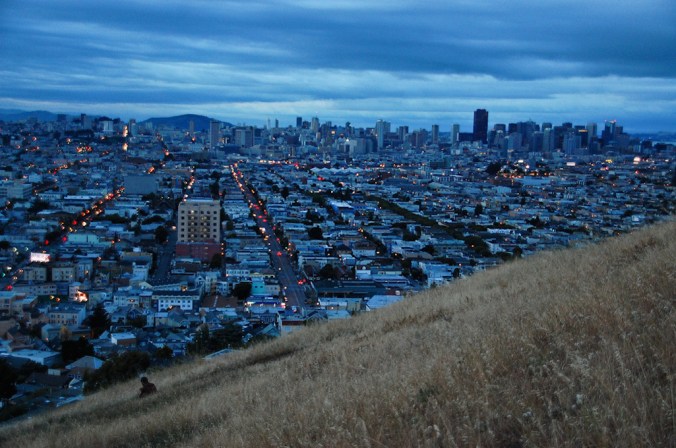
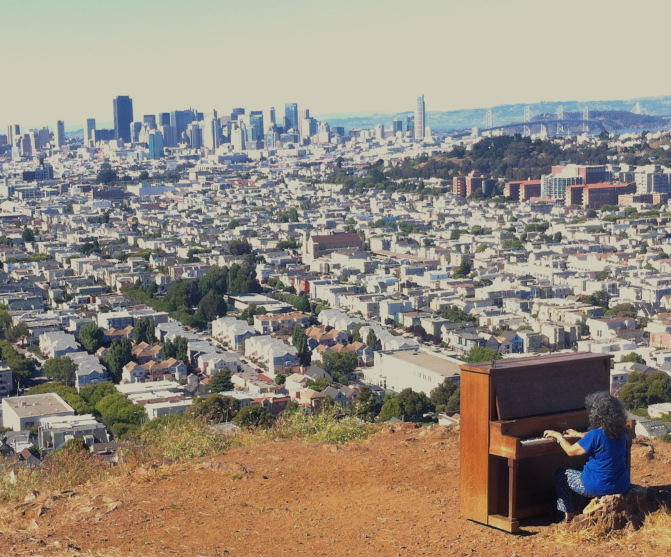
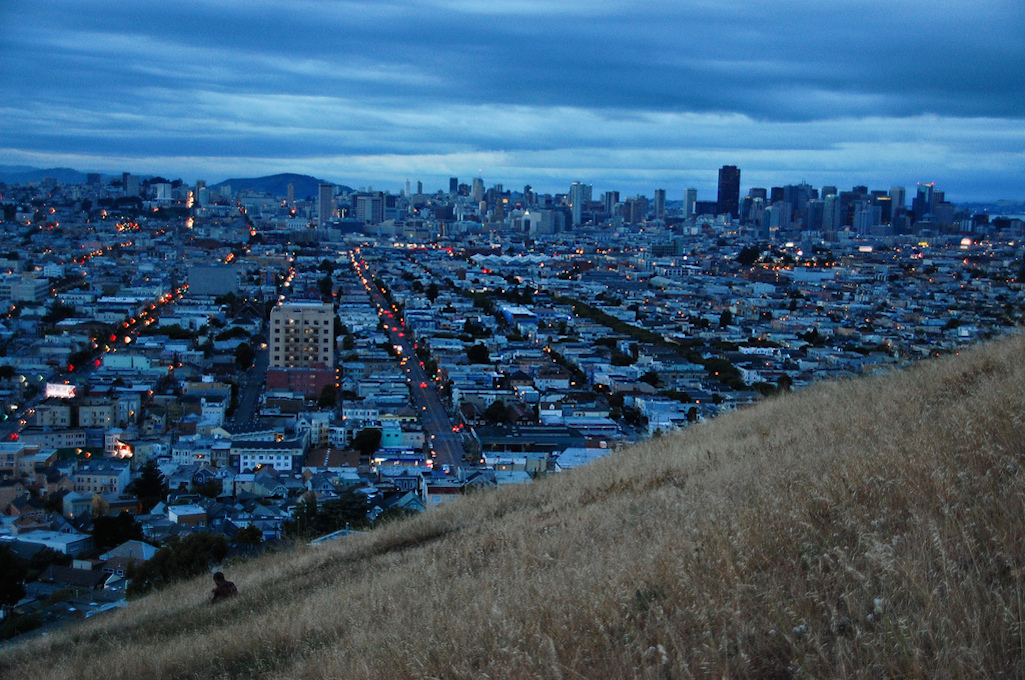
Let’s take a moment took to survey the City of San Francisco, which we can see so clearly from our elevated perch in Bernal Heights.
As you know, San Francisco is a place that was, in no small part, created by great economic booms. (We even named our NFL team after one.) We are now in the midst of the latest boom, fueled largely — but not entirely — by the growth of our local technology industry.
Fun Fact: Did you know that since 2007, the City of San Francisco has generated more new private sector jobs than 47 out of 50 states? Only Texas, New York, and North Dakota created more jobs than San Francisco. Wow. That’s kind of nuts.
Yet as every true student of San Francisco history knows, prosperity is an awkward thing. Prosperity brings new problems in San Francisco — most of all in the domains of housing and urban culture. Our current boom is no exception, and there has been ample grousing about the perils of gentrification, evictions, displacement, cultural homogenization, and the goddamn kids these days. Bernal Heights often appears as a backdrop in these teeth-gnashing pieces about the changes taking place in San Francisco, and some of the most cranky grumbling has even come from our very own Bernal neighbors.
So what is to be done? How did we get here? Who is to blame? What are we becoming?
Thankfully, a few thoughtful essays have been written recently that transcend the ideological hysteria and self-absorbed nostalgia that have dominated the conversation thus far. If you’re in the mood, they make for good weekend reading.
The first is a must-read piece of analysis by Kim-Mai Cutler, entitled “How Burrowing Owls Lead To Vomiting Anarchists (Or SF’s Housing Crisis Explained).” It’s a longread that masterfully combines quantitative data with historical perspective, economics, and policy analysis to clearly explain how and why San Francisco ended up being so darn expensive right now:
Everyone who lives in the Bay Area today needs to accept responsibility for making changes where they live so that everyone who wants to be here, can.
The alternative — inaction and self-absorption — very well could create the cynical elite paradise and middle-class dystopia that many fear. I’ve spent time looking into the city’s historical housing and development policies. With the protests escalating again, I am pretty tired of seeing the city’s young and disenfranchised fight each other amid an extreme housing shortage created by 30 to 40 years of NIMBYism (or “Not-In-My-Backyard-ism”) from the old wealth of the city and down from the peninsula suburbs.
Here is a very long explainer. Sorry, this isn’t a shorter post or that I didn’t break it into 20 pieces. If you’re wondering why people are protesting you, how we got to this housing crisis, why rent control exists or why tech is even shifting to San Francisco in the first place, this is meant to provide some common points of understanding.
This is a complex problem, and I’m not going to distill it into young, rich tech douchebags-versus-helpless old ladies facing eviction. There are many other places where you can read that story.
It does us all no justice.
If you read nothing else on this topic in 2014, Kim-Mai Cutler’s essay is the one to curl up with. The smartness will make your brain so much bigger you may need to buy new hats.
On the cultural side of the ledger, left-leaning San Francisco journalist (and former Bernal neighbor) Gary Kamiya just published a refreshing perspective on San Francisco’s current circumstances, and the phenomenon he calls The Change:
The Change is an unconquerable force of nature, like death. And much of the reaction to it recalls the first three stages of Elisabeth Kübler-Ross’s five stages of grieving: a combination of denial, anger, and bargaining. If we yell and rage loudly enough, if we find someone to blame, if we replace reason with hyperbole— [Leftist writer Rebecca] Solnit memorably compared newly arrived techies to ivory collectors in China—then somehow the city we know will come back. This reaction is not surprising. Cities are always dying—their phenomenology is harsh, irrevocable, tragic. The building or business that you saw yesterday, that was an old friend for decades, today is gone forever. Enormous changes are never easy to deal with, and it’s human nature to want to fight back, to assert control. So it’s understandable that many progressive San Franciscans, people whose values and vision I share, are kicking and screaming and spray-stenciling sidewalks as they watch their city turning into something they don’t recognize.
But cities are also always being reborn. And as I wander through our new city, I find myself open to it. I’m not convinced that it is really going to become a soulless simulacrum of Manhattan (or worse, Atherton). I’m curious to know what San Francisco in 2025 or 2050 will look and feel like. I’m interested in the young people who are pouring in. When I wander through Dolores Park on a hot Saturday afternoon and watch the throngs hanging out, talking, drinking wine, smoking weed, and listening to music, I don’t examine them suspiciously, trying to figure out which ones are the bad techies and which ones are the good baristas (except for the people playing that inane toss-the-beanbag game—they gotta go). As I walk through Nob Hill or the Mission or mid-Market and see the fancy single-family homes or the sleek high-rise apartments that are sprouting up here and there, I don’t inwardly groan (except with real estate envy). Mostly, I view them with equanimity, as if they’re seedlings growing in the forest.
For even if it were possible to keep San Francisco exactly the way it is—and it isn’t—why would anyone want to? Any such attempt would be antithetical to the very things that I value most about the city: its youth, its vigor, its ability to reinvent itself. Responding to the Change by calling for a culture war—as several leading voices of the left have done—is a recipe for personal bitterness and public divisiveness. Ultimately, it transforms tragedy, which is painful yet fruitful, into politics, which is painful and fruitless.
The intelligence and perspective Kamiya provides will have you thinking for days.
Happy reading, and have a great weekend.
PHOTO: Telstar Logistics









 Bernalwood