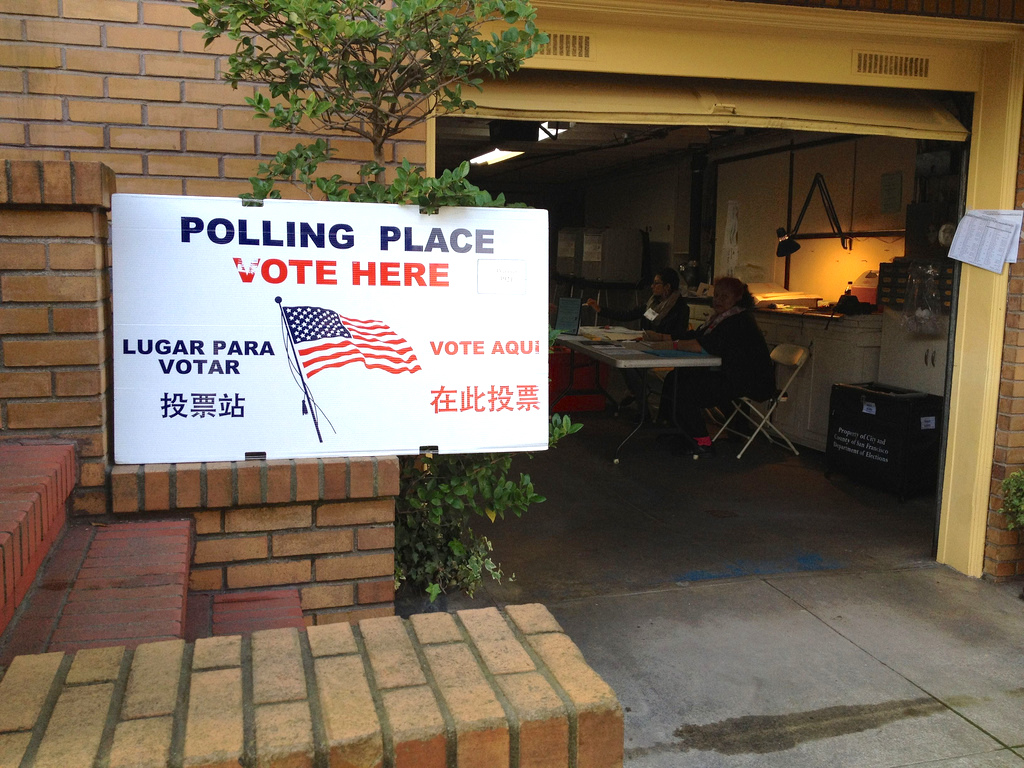
Citizens! Neighbors! There’s an election coming! On Tuesday, November 3, 2015. Soon!
This is a weird one, with no major federal or statewide candidates on the ballot and an incumbent mayor running for re-election largely unopposed. (Yadda yadda protest candidates blah blah blah.) The mayoral race isn’t expected to be much of a contest, yet this is still a crucial moment for San Francisco.
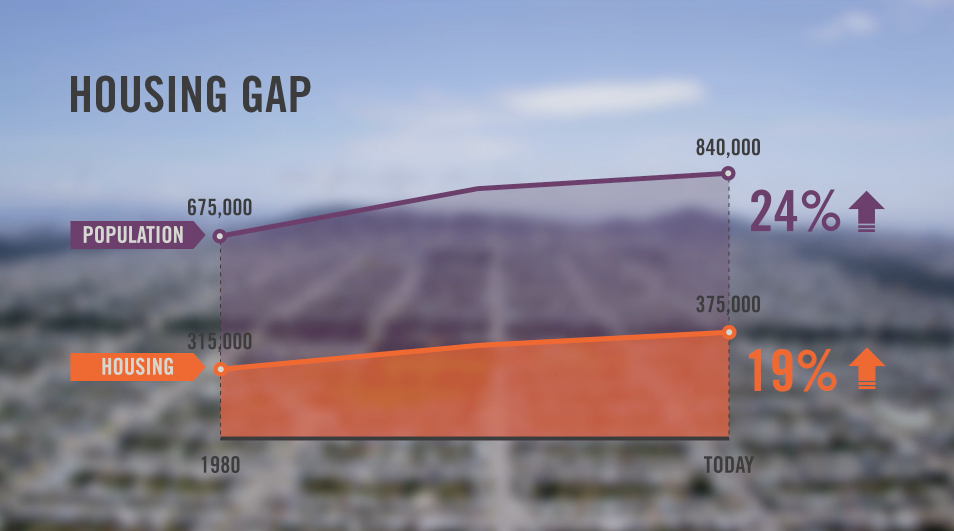
On the one hand, these are the best of times. The economy is booming, unemployment in San Francisco hovers at around 3.5%, and the City’s finances are stable. But the pressures of prosperity have exacerbated old problems and contradictions. Tens thousands of new residents are arriving in San Francisco each year, Gold Rush-style. But we don’t have enough places for them to live, which is throwing lots of things out of whack, Gold Rush-style.
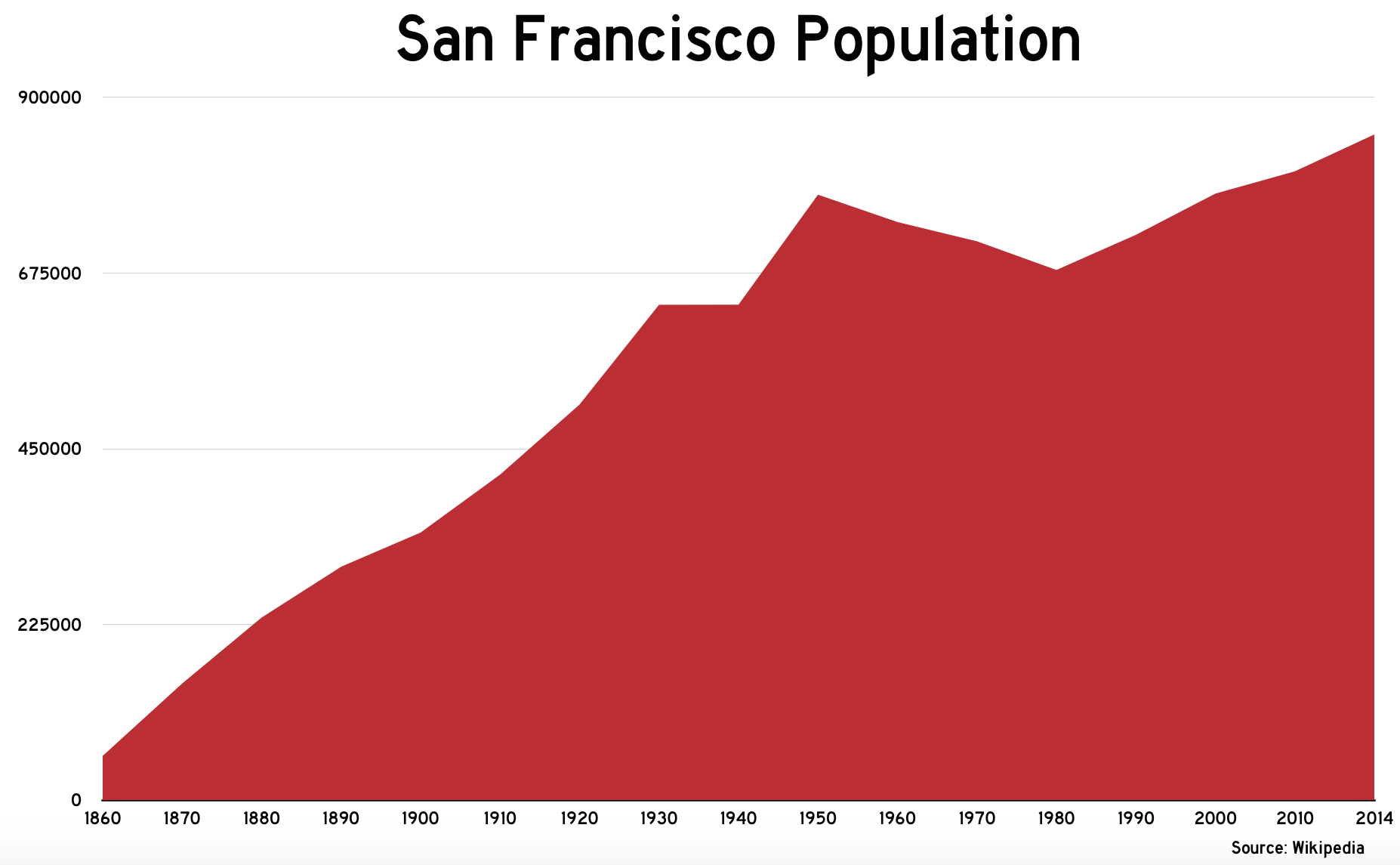
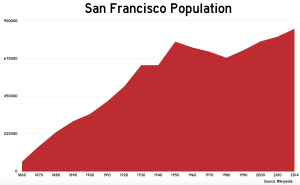 20 years ago, in 1995, San Francisco’s population stood at 745,000, a high-water mark after decades of postwar decline and political realignment. Today, our population has climbed far higher, to more than 852,000 — a historic peak. Yet according to the Planning Department, during the last 20 years San Francisco built a net total of just 35,000 new units of housing for those 110,000 new residents . No one should be surprised our prosperity isn’t going smoothly.
Yet here we are: Five of the 11 propositions on this ballot are about housing, but a few of them were put on the ballot by the same factions that have done much to create our housing crisis in the first place. Ballot measures are generally a terrible way to handle planning policy, because the remedies are blunt and the propositions are often crafted by special interests. (That’s certainly true in this election.) So with “Let’s Not Make Things Worse” as our mantra, here are Bernalwood’s endorsements for San Francisco’s November 2015 election…
San Francisco Elected Offices
Bernalwood attended the meeting a few months ago when the San Francisco Democratic Party voted to endorse its preferred candidates. Hearing the back-and-forth of their debates gave us more confidence about where their endorsements landed. Bernal Heights doesn’t have much real skin in these races, so we will tepidly echo the San Francisco Democratic Party here:
Mayor: Ed Lee (Meh)
City Attorney: Dennis Herrera
District Attorney: George Gascon
Treasurer: Jose Cisneros
Sheriff: Vicki Hennessy
Community College Board: Alex Randolph
Supervisor, District 3: Julie Christensen (D3 isn’t our district, but Bernal’s Dissident Parrots have spoken)
Ballot Propositions
Since the mayor is basically running unopposed, the propositions are where this election gets interesting for the citizens of Bernal Heights. Let’s make some choices.
Prop A (Affordable Housing Bond) – YES, BUT
Placed on the ballot by Mayor Lee, Prop A would authorize the City to borrow $310 million by issuing general obligation bond to fund more affordable housing. That’s definitely something we should do. But we shouldn’t kid ourselves: Prop A won’t put much of a dent in our housing shortage. Two new affordable housing development projects demonstrate why. Unveiled last July, 1950 Mission Street is a 165-unit development that will be built near 16th Street. The City already owns the land at 1950 Mission, yet each unit there will cost about $600,000 to build. Think that’s expensive? Actually, it’s cheap; Consider the other development, at 490 South Van Ness, just around the corner. At 490 South Van Ness, the City doesn’t own the land, which jacks up the cost to taxpayers even more. Each of the 72 affordable units at 490 South Van Ness will cost a breathtaking $889,000 to build. With those comparables, Prop A’s $310 million is great, but it won’t go very far. A two-thirds supermajority of voters is required for Prop A to pass. Let’s do it.
Prop B (Paid Parental Leave for City Workers) – YES
San Francisco offers City workers from 12 to 16 weeks of paid parental leave to care for a child after a birth or adoption. Owing to a quirk in the City Charter, if two City employees qualify to take paid parental leave for the same child, they both can’t take the full parental leave. Prop B would revise the Charter so thatif both parents are City employees, both cantake the maximum amount of paid parental leave. Makes sense.
Prop C – (Lobbyist Expenditure Ordinance) – YES
Prop C could make it easier to keep tabs on special interest groups that play politics with City Hall. Prop C would require any individual or organization that spends more than $2,500 on media, organizing, or research on issues under consideration by City government to register with the city’s ethics commission, submit monthly reports, and pay a $500 fee. (Nonprofit organizations would be exempted from the fee). Sunlight is the best disinfectant, and Prop C will help bring astroturf groups and professional “activists” out of the darkness and into the light. It also comes from a credible source: Prop C was placed on the Ballot by the San Francisco Ethics Commission.
Prop D – (Mission Rock Development) – YES
Prop D was placed on the ballot by the San Francisco Giants. It would allow the team to develop part of the parking lot on the south side of McCovey cove into ‘Mission Rock,’ a new 28-acre neighborhood with 1500 apartments, 1.5 million square feet of commercial space, eight acres of parks, plazas and open space. At least 33 percent of the residential units will priced for low- and middle-income residents. Added bonus: The development plan also includes a new Anchor Brewery on Pier 48. Mission Rock includes two tall buildings (one 190′ and the other 240′) so under Prop B, passed in 2014, Mission Rock requires voter approval. Ballot box zoning is a terrible way to craft policy, but Mission Rock was designed with ample community input, and we need 1500 mixed-income housing units far more than we need the parking lot that sits there now. Build it.
Prop E – (New Public Meeting Requirements) – YES
It’s pretty easy to argue that our City government is already buried under a crippling amount of public input. Nothing happens here without hours of public meetings and comment, which is both wonderful and disastrous at the same time. Yet our current system effectively excludes people who have regular jobs and/or residents with children. As the Electronic Frontier Foundation (a Prop E backer) explains: “Public comment is a crucial element in local democracies, since it is one of the chief ways for residents to air their grievances, propose their ideas, and give feedback to their elected leaders. But too often these public comment periods do not represent a wide variety of perspectives, since they’re biased in favor of a specific demographic: people who have the ability to travel to city hall to attend often inconveniently scheduled meetings.” Prop E would address this by requiring the City to simulcast public meetings live on the Internet, and allow members of the public submit testimony at public meetings electronically. If we don’t want to actually streamline our government, and an active, participatory democracy is what San Francisco wants, then simple fairness dictates we should enable as many citizens as possible to participate.
Prop F – (Short Term Rental Ordinance) – NO
San Francisco faces a big housing shortage, so we need good legislation to ensure that Airbnb-style short-term rentals don’t remove too many viable housing units from our rental inventory. Trouble is, Prop F isn’t good legislation. In addition to creating plenty of new bureaucracy and paperwork — inevitable, perhaps — it caps short-term rentals at a property to 75 nights a year and contains a blanket prohibition on the use of “in-law” units for short-term rentals. Most alarming of all, Prop F encourages neighbors to take each other to court, by authorizing anyone living within 100 feet of a potential short-term rental to sue homeowners suspected of violating the initiative. Meanwhile, Prop F would eliminate short-term rentals that make it possible for many struggling San Franciscans to stay in their homes. This is not theoretical; Bernal neighbors and artists Toby Klayman and Joe Branchcomb tell Bernalwood:
“We’ve been in our house for 40 years, and our bills now are enormously high! Our PG&E bill is often $400 a month. Last year we needed a new section of roof: $16,000. Another recent expense was a new sewer pipe: $4000. We live in a home that is more than 100 years old. There’s always extra money needed for repairs, a new window, a new set of stairs etc. We rent one extra room we have in our home via Airbnb — a space that would never work as a permanently rented room — to provide some much-needed income. As we approach age 81, we would have to move without Airbnb. The laws San Francisco already has in place have enough teeth to get rid of property owners who improperly evict tenants to create short-term rentals. But 75 nights a year won’t help us enough to pay our bills. We are against Prop F.”
Prop G – (Renewable Energy Disclosures) – NO
The process through which proposed initiatives end up on the ballot is due for reform. To get on the ballot, you just need to collect a few thousand signatures. To get a few thousand signatures, you just need to pay enough people to collect them. (This is why those paid signature gatherers are such a fixture on the sidewalk outside the Good Life on Cortland.) The result is that anyone can pretty much turn a ham sandwich into a San Francisco ballot proposition — so long as they’re willing to pay enough to get the required signatures. That’s how Props I and F ended up on this ballot, but Prop G shows how broken the proposition system really is. The funding to put Prop G on the ballot came from PG&E and IBEW 1245, a union that represents some PG&E employees. There’s a lot of legalese goofiness involved, but Prop G would basically make it harder for the City of San Francisco to compete with PG&E by selling electricity generated from the City’s own renewable sources. Except, the City and PG&E eventually agreed on other ways to resolve these issues, so now not even PG&E wants Prop G on the ballot. Too late. No on G, and thanks for wasting our time.
Prop H (Clean Energy Right to Know Act) – YES
The obvious awfulness of Prop G prompted Supervisors John Avalos, London Breed, Julie Christensen, and Scott Wiener to put Prop H on the ballot to counteract it. Prop H defines “clean energy” and “renewable greenhouse gas-free energy” in ways that are similar to California’s state standards, and makes it easier for the City’s forthcoming electricity-sale program to market clean electricity. If both Prop G and Prop H are approved, the one that receives the most “yes” votes will be enacted, but as this awkwardness demonstrates, the City’s proposition process will remain as broken as ever.
Prop I (Mission District Housing Moratorium) – NO, NO, NO
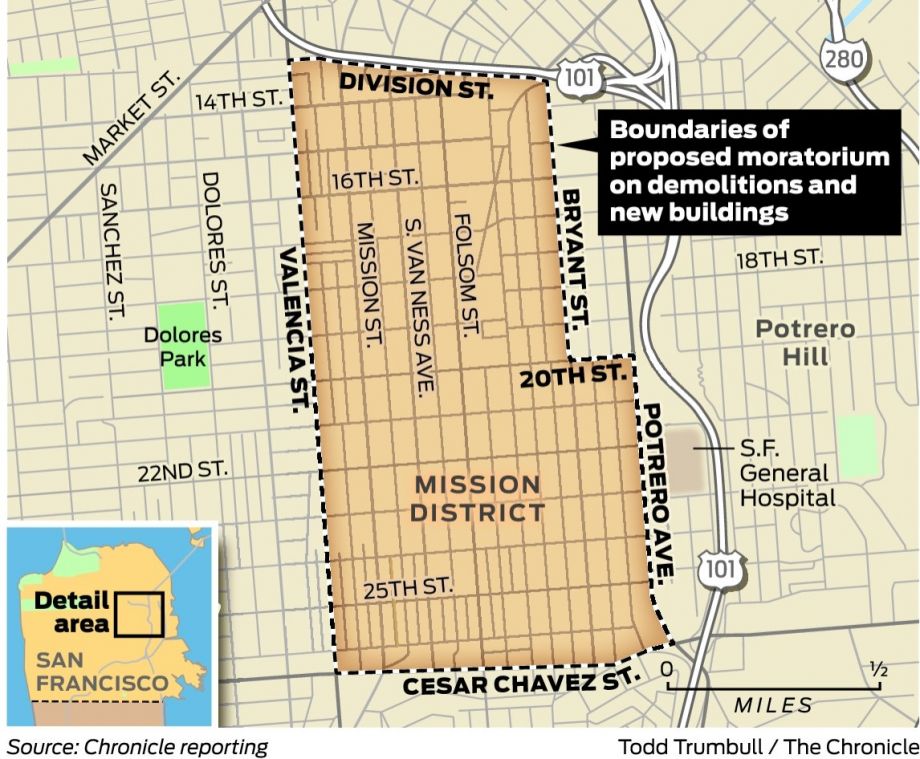
Prop I would halt all market rate housing development in the Mission District for 18 months. Here’s what it will not do: Prop I will not make housing in the Mission more affordable. Prop I will not slow the pace of displacement or evictions. It will not reduce gentrification. It will not lower rents or create more affordable housing. If anything, Prop I is likely to increase rents and make gentrification and affordability in the Mission even worse. Those are just a few of the conclusions reached by the City’s chief economist, Ted Egan, in an analysis of Prop I which also found that relatively little housing of any kind has been built in the Mission in the last 15 years anyway. Egan says there’s “no reason to believe that either a temporary moratorium, or an indefinite prohibition, of market rate housing will reduce the number of upper- income residents in the Mission, or slow the process of gentrification.” Ouch. This may explain why Prop I’s supporters are eager to change the subject. They now say Prop I is about holding new market-rate housing hostage for at least 18 months to force the City to create a more aggressive affordable housing plan in the Mission. The only real question here is: Are they delusional, dishonest, or both? San Francisco can’t agree on a plan to install a new bike lane in just 18 months — never mind reaching consensus to build thousands of units of publicly funded affordable housing in the Mission at a cost of at least $600 million, according to David Campos. And in the meantime, 1200 units of privately funded, mixed-income housing already in the planning pipeline would be put on hold. It makes no sense to address a housing shortage by banning the construction of new housing. Prop I will make the crisis worse, while empowering the NIMBYs and nativists who seek to preserve Burger Kings, laundromats, and abandoned warehouses instead of building housing for San Franciscans. Vote NO on Prop I.
Prop J – (Legacy Business Historic Preservation Fund) – NO
As regular readers know, Bernalwood loves our local merchants. We love our history. We love our merchants with history. Yet even as certified history geeks and militant locavores, we just can’t get behind Prop J. The goal here is to provide public subsidies to “legacy” San Francisco businesses or nonprofits at risk of displacement that have existed for at least 20 years, and which have “significantly contributed to the history or identity of a neighborhood or community.” It’s sweet idea, but Prop J would likely be an expensive boondoggle rife with cronyism and abuse. To be eligible for public subsidies, a legacy business would require a nomination from a member of the Board of Supervisors or the Mayor, which creates an obvious opportunity for elected officials to reward generous donors and political pals with a subsidy from taxpayers. Want a preview of what that looks like? Try this: D9 Supervisor David Campos spearheaded the effort to put Prop J on the ballot, with active guidance from Calle 24, the Mission’s 24th Street merchants association, where 21 merchants (!!!) would be eligible for Prop J subsidies. In addition to being ripe for corruption, Prop J would also be very expensive; if it passes, the City Controller estimates Prop J’s subsidies would cost taxpayers $4 million next year, rising to somewhere between$51 million and $94 million annually within 25 years. No on J.
Prop K – (Housing Development on Surplus City Land) – YES
Introduced by D6 Supervisor Jane Kim, this is a reasonable plan to make it somewhat easier to transfer excess or underused City-owned land to nonprofit affordable housing developers, who would receive the land for free. For-profit developers could also acquire surplus City land, but they’d have to pay for it. Prop J also expands the range of incomes that qualify for inclusion in affordable housing on surplus city land so it would span very low income to households that make up to 120% of the area median income. Developments with more than 200 units on former City land could be mixed-income, with some units having no income limit. This all sounds sensible enough, although it also seems like the kind of stuff the Board of Supervisors should be able to tackle on their own, without the use of a clumsy ballot proposition. Because that’s what we pay our Supervisors to do.
>>> CLIP N’ SAVE *** COPY N’ PASTE *** CLIP N’ SAVE *** COPY N’ PASTE <<<
Bernalwood’s November 2015 Slate Card
Mayor: Ed Lee
City Attorney: Dennis Herrera
District Attorney: George Gascon
Treasurer: Jose Cisneros
Sheriff: Vicki Hennessy
Community College Board: Alex Randolph
Supervisor, District 3: Julie Christensen
Prop A: YES, BUT…
Prop B: YES
Prop C: YES
Prop D: YES
Prop E: YES
Prop F: NO!
Prop G: NO
Prop H: YES
Prop I: NO, NO, NO
Prop J: NO
Prop K: YES
>>> CLIP N’ SAVE *** COPY N’ PASTE *** CLIP N’ SAVE *** COPY N’ PASTE <<<
COMMENT MODERATION UPDATE: Per usual, Bernalwood welcomes robust discussion about the issues that impact our neighborhood and our City. Comments about the Bernalwood Slate Card and any of the issues or candidates on the November ballot are encouraged. However, comments containing links to other slate cards will be removed. Let’s debate the issues here, instead of waging tribal battles over competing lists.










 Bernalwood