Wednesday: D9 Supervisor Candidates Debate at Brava Theater

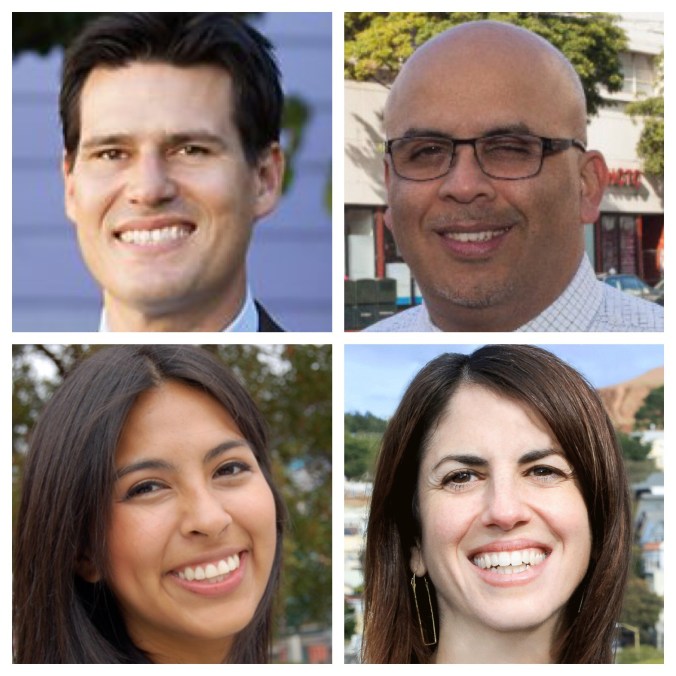
The D9 Candidates: Clockwise from top left: Joshua Arce, Iswari Espana, Hillary Ronen, and Melissa San Miguel

The D9 Candidates: Clockwise from top left: Joshua Arce, Iswari Espana, Hillary Ronen, and Melissa San Miguel

The face-off between Hillary and Donald isn’t the only debate people are talking about this week; Here in San Francisco’s glamorous District 9, the four candidates hoping to replace David Campos on the San Francisco Board of Supervisors will be onstage together for a debate at the Brava Theater on Wednesday evening, September 28.

All D9 voters are welcome, and admission is free:

The Board of Supervisor representative for District 9 ~ Supervisor David Campos term expires at the end of 2016.

Four candidates are running for election to replace Supervsior Campos: Joshue Arce, Melissa San Miguel, Hillary Ronen and Iswari Espana.

The debate will focus on key issues that affect District 9: Youth, Seniors, Housing, Business, Immirgration.

Sponsored by: Mission Merchants Association, Calle 24 Latino Cultural District, Our Mission No Eviction, Mission Peace Collaborate, San Francisco Lowrider Council, Cultural Action Network.

Wed, September 28, 2016
6:00 PM – 8:00 PM
Brava! for Women In the Arts
2781 24th Street
San Francisco, CA

Get your free tickets here


Go See Bernal Artist Deb Caperton’s Work at Paxton Gate

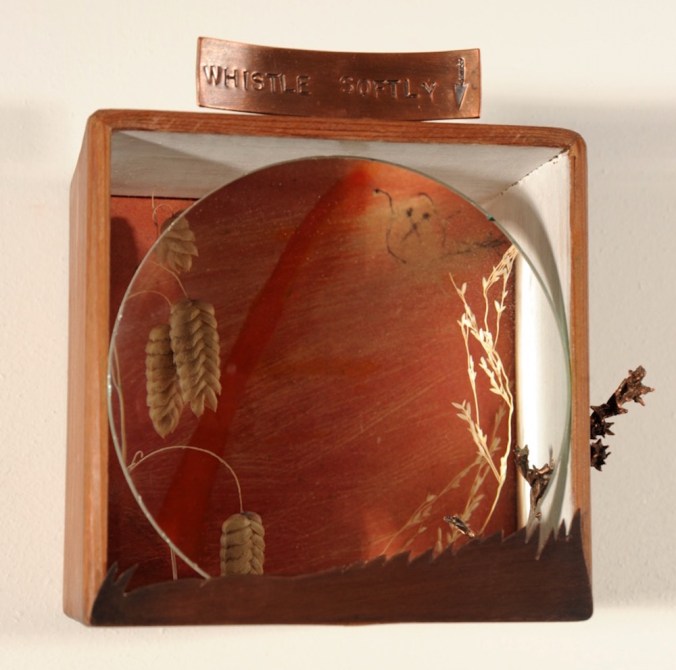
dc_departure-wish-box-5

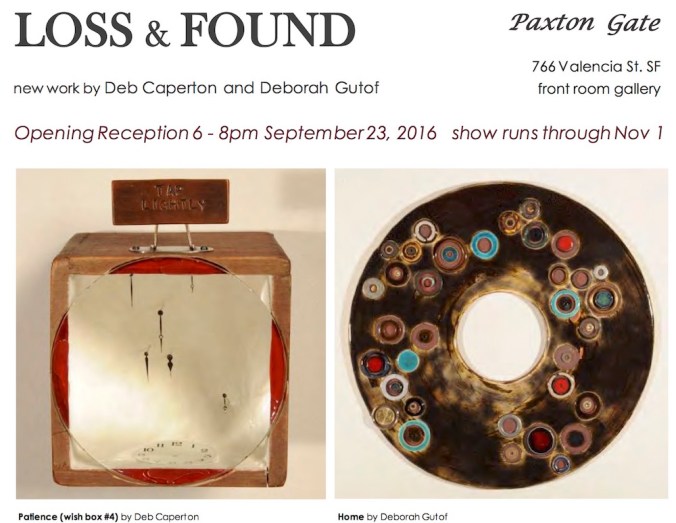
Bernal artist Deb Caperton has some of her work on display at the stylishly strange Paxton Gate store at 766 Valencia (near 19th) in The Mission.  Neighbor Deb tells Bernalwood:

My name is Deb Caperton (Bernal resident since 1994).  I wanted to invite you to check out my art show at Paxton Gate in the Mission. The show will be up until Nov. 1st.

My recent work, Loss & Found is at once playful and funny as well as melancholic and ironic. My vocabulary are metaphors made of bits and pieces, things found and made. The signage provides the observer with some riddles, instructive hints and directions making the viewer a collaborator. The work comes alive with interaction. For example: one can blow, whistle or slide a door to create a reaction that helps tell the story. The narratives are sensory, requiring participation and discovery. My hope is that this active participation beckons the viewer to be affected by what they see and feel, making these stories their own.

lossfound-invite

PHOTO: Departure (wish box #5) by Deb Caperton, courtesy of Deb Caperton

Neighbors Establish Recovery Fund for Bernal Family Displaced by Prospect Fire

prospectfirebaker

We’ll start with the good news: Everyone is okay.

But beyond that, the two-alarm fire that damaged the house at 158 Prospect last Friday morning has turned the life of Bernal’s Grant-Weisler family upside down, because their home is no longer habitable and much of their stuff is destroyed. At the time of the fire, the house was occupied by a family of two parents and three kids, their au pair, and two visiting houseguests.

But that brings us to another silver lining: This is Bernal Heights, and neighbors here help one another during times of need. A crowdfunding effort has gotten underway to help the Grant-Weisler family begin to rebuild, and all Bernalese are invited to contribute.

We’ll have more detail on the crowdfunding effort in a moment. But first, here’s a note from Neighbor Sam, the mom of the house at 158 Prospect:

Tonight I am grateful. So grateful. And I feel lucky. So lucky.

That’s not what I would expect to be feeling after standing on the sidewalk and watching my home of the past 15 years, the home where all 3 of my kids were born, the home where JJ Wiesler and I have built our whole adult life together, go up in flames.

But it’s amazing how quickly your priorities come clear when you are forced to choose, in a second, what is most important to you. People, memories, photos, videos, musical instruments, the kitchen table around which so much of my life has unfolded, my dads lap desk and typewriter, cameras, journals…

Everyone is OK. The girls are pretty shaken up, but they’re going to be fine. And the baby is just going with the flow. To him, it’s just another day of new experiences.

The only person who was injured was one of the 66 amazing firefighters from the San Francisco Fire Department who risked their lives today to save our home. I am so moved, overwhelmed with gratitude, by the moments of kindness that we experienced in this insane day from hell. The female firefighters, who are also moms, who took the time to rescue the kids lovies. The other firefighter who returned our emergency cash stash that was about to disappear into the flames. The other firefighters who went back into an active fire to recover all our family photos and videos. The neighbors who boxed up and stored our salvaged belongings without even being asked. The other neighbors who quietly pressed their keys into our hands, offering beds, pillows, towels, food, and even a friends apartment where we are staying right now. I’m so moved.

The “Grant-Wiesler Onward & Upward Fund” was launched by Bernal Neighbors Aaron and Bronwyn Ximm. They write:

Thankfully, and most importantly, everyone is fine.

Their warm and welcoming home however is unlivable, and most of the family’s posessions were lost.

The Grant-Wielsers are bracing for for a very long climb to restore, remake, and rebuild.

As friends and family, many of us immediately wonder how we can help in this time of need.

One certain thing is that during the next few months especially, the family’s cash flow is going to be both complicated and unpredictable.

There will be hundreds of compounding expenses small and large to re-acquire the tools of modern life.

One way we can help is to build the Grant-Wielsers a ‘slush fund’ for those occasions.

There will be many ways to help West, the girls, and Sam and JJ!

But if you can make a donation–and of course, of any size at all!–it will make a real difference, one that will be received with profound gratitude.

About the campaign organizers: we are Aaron, Bronwyn, Ember, and Juniper Ximm. We are a family of close neighbors and friends of the Grant-Wieslers.

Our families shared the same world-class nanny over many years. Only a few days ago our girls traded morse code messages from our front porch to their back one.

We can’t believe it’s going to be a year or more before we can trade more morse code. We love them one and all, and wanted to immediatley get some help organized on their behalf!

If you’re so inclined, please contribute to the fire recover fund here. As of this writing, the fund has raised $5500, with a goal of hitting $12,500.

You know what to do, Bernal neighbors: Let’s hit that goal — and then exceed it.

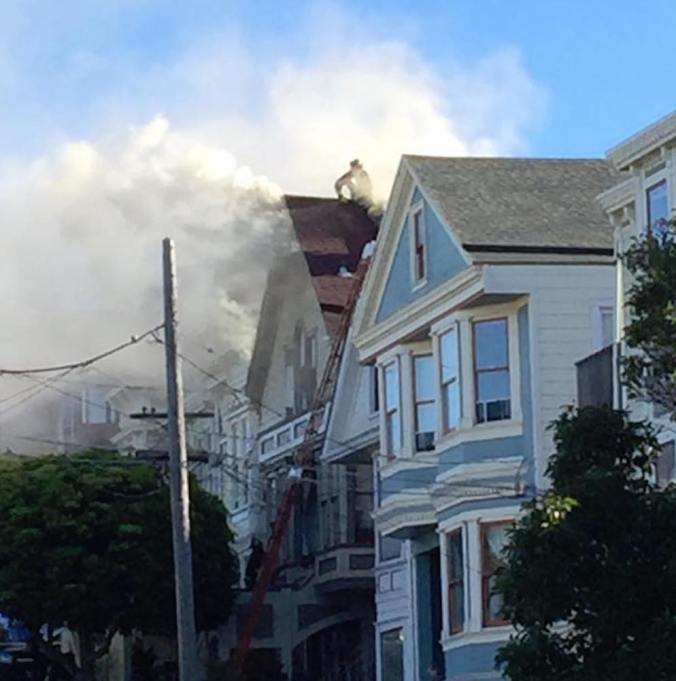
PHOTO: Fire at 158 Prospect, by Tom Baker

UPDATED: Two-Alarm Fire on Prospect Ave., Firefighter Injured, Eight Residents Displaced

prospectfire

prospectfirefromnoe

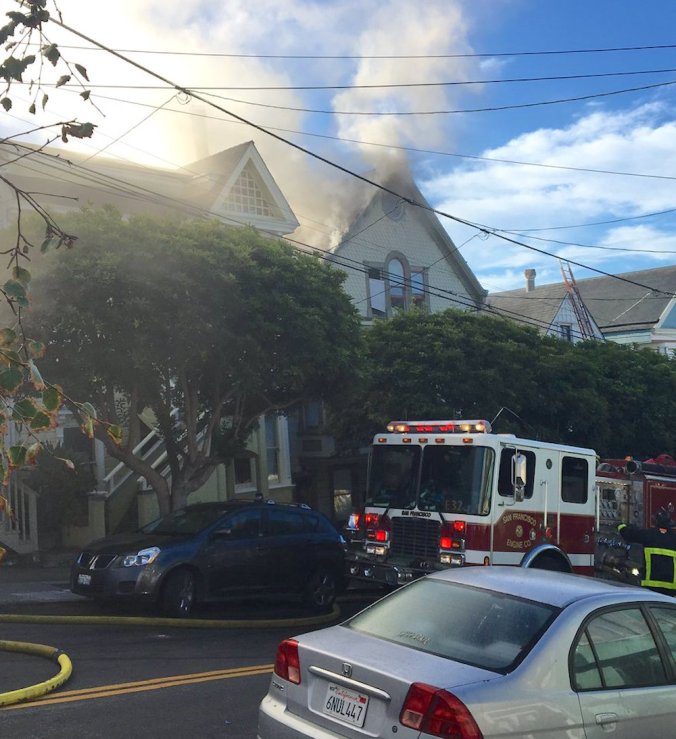
This morning firefighters are extinguishing a two-alarm fire at 158 Prospect Avenue, between Virginia and Esmeralda.

Firefighters report 8 people live in the building, but all escaped safely.

UPDATE, 9:40 am: One firefighter suffered a head injury while battling the blaze. The injury was described as moderate, and the firefighter was taken to the hospital.

Neighbor Valerie is on the scene:

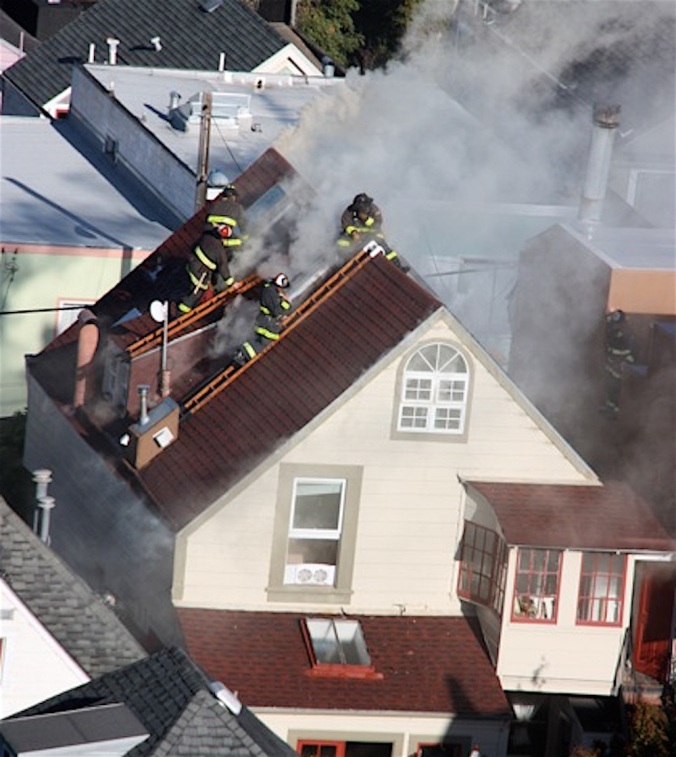
Neighbor Mary shared this photo. She says, “These were taken from my west-facing deck on the hill. I first noticed the smoke about 8:30 and documented the courageous firefighters working on a steeply sloped roof. As of 9:25 the smoke is still very visible.”

prospectfirefromabove

Additional coverage:

UPDATE: As of 9:45 am, the fire is reported as contained.

Bernalwood will update this story as additional information becomes available.

PHOTO: Top, via Neighbor Valerie. Below, Prospect fire as seen from Noe Valley, courtesy of Christopher Baker 

José Quiñonez from Mission Asset Fund Wins MacArthur “Genius” Grant

maf_quinonez

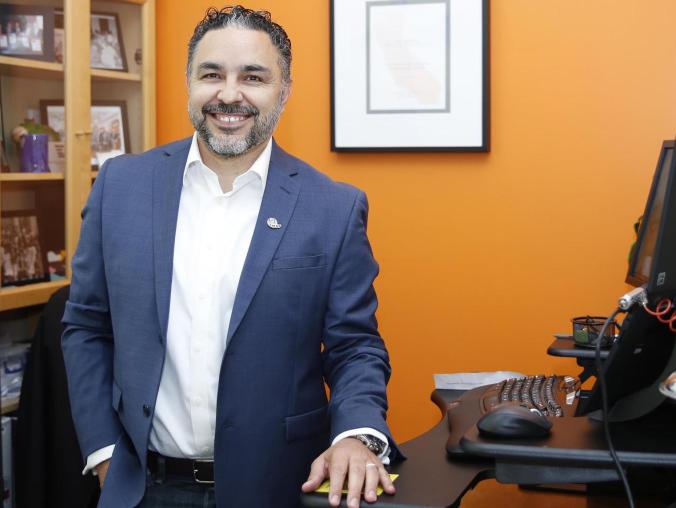
Brilliant! José Quiñonez from the Mission Asset Fund just won a McArthur “Genius” grant! Mission Asset Fund is headquartered at 3269 Mission Street (near 29th) here in Bernal, and José Quiñonez is MAF’s founder and CEO. His spiffy new MacArthur Fellows page says:

José A. Quiñonez is a financial services innovator creating a pathway to mainstream financial services and non-predatory credit for individuals with limited or no financial access. A disproportionate number of minority, immigrant, and low-income households are invisible to banks and credit institutions, meaning they have no checking or savings accounts (unbanked), make frequent use of nonbank financial services (underbanked), or lack a credit report with a nationwide credit-reporting agency. Without bank accounts or a credit history, it is nearly impossible to obtain safe loans for automobiles, homes, and businesses or to rent an apartment.

Quiñonez is helping individuals overcome these challenges by linking rotating credit associations or lending circles, a traditional cultural practice from Latin America, Asia, and Africa, to the formal financial sector. Lending circles are typically informal arrangements of individuals pooling their resources and distributing loans to one another. Through the Mission Asset Fund (MAF), Quiñonez has created a mechanism for reporting individuals’ repayment of small, zero-interest loans to credit bureaus and other financial institutions. MAF participants are able to establish a credit history and gain access to credit cards, bank loans, and other services, and lending circles focused on youth provide individuals with fees for Deferred Action for Childhood Arrival applications and apartment security deposits (which are particularly needed by youth aging out of foster care). All participants are required to complete a financial training class and are provided with financial coaching and peer support. Since the lending circles were established in 2008, participants’ credit scores, collectively, have increased an average of 168 points.

Quiñonez has established a network of partnerships with the financial services industry to enable other organizations to replicate his approach. With Quiñonez and MAF providing the technology necessary to disperse and track loans (a significant hurdle for many nonprofits) and assisting in securing local partners and investors, 53 nonprofit providers in 17 states and the District of Columbia are now using this powerful model in their communities. Quiñonez’s visionary leadership is providing low-income and minority families with the means to secure safe credit, participate more fully in the American economy, and obtain financial security.

José A. Quiñonez received a B.A. (1994) from the University of California at Davis and an M.P.A. (1998) from Princeton University. He founded Mission Asset Fund in 2007 and continues to serve as CEO. His prior affiliations include the Center for Community Change (2001–2004) and Bread for the World (2000–2001). From 2012 to 2014, he was the inaugural chair of the Consumer Advisory Board of the Consumer Financial Protection Bureau.

Felicidades, José and MAF!

HAT TIP: Neighbor Kathy
PHOTO: via John D. and Catherine T MacArthur Foundation

Carlos Santana’s Former House on Mullen Avenue Is For Sale

205mullen2016

Last week, the house at 205 Mullen Ave. in northeast Bernal Heights was listed for sale. The asking price is $975K for the 2BR house, which prompted our friends at the CurbedSF blog to weep that “a starter home in San Francisco is now officially a touch under one million” — which is a totally legit thing to weep about.

Yet with that said, CurbedSF didn’t account for the fact that 205 Mullen comes with one very, very unique feature: Carlos Santana used to live in it.

It’s true.  Sanata lived in northeast Bernal in the late 1960s and early 1970s, and during the early years, when he was playing epic, ad hoc concerts in Precita Park, he lived here, at 205 Mullen.  Later, a few members of Journey lived there too (Trivia Fun Fact: Journey was founded by a manager and musicians who started out working with Santana.)

Anyway, Neighbor N owns the Santana House now, so Bernalwood asked him to describe what it’s been like to live there:

I still think about the first time I came to the house. Stupidly, I had no real conceptions of Bernal’s north slope view. It was also probably the first house I looked at in Bernal.

I walked in the door and said, “Wow, I had no idea the view was that good.”

I didn’t find out till later (possibly from a certain neighborhood blog) that Santana (and some members of Journey) used to live here. A few people came by to snap pics that week. Everyone is always very respectful.

I really do wonder what the house was like when Santana lived here. At some point, someone put up a solid, nearly seven-foot-tall fence, with spikes above that. There were shutters on the bay window, closing off the southern light. The house was very, very walled off from the street. Here’s how it looked in 2012:

old205mullen2

That never felt like Santana to me.

When I refaced the fence with pickets, we worked hard to get both the height and the spacing just right. I didn’t want another Wall on Mullen, as I used to call the old fence. But I wanted privacy. I also didn’t want the house to be hidden behind the fence. From the beginning, I wanted to open up the house, because it’s such a quintessentially San Francisco house.

I’d like to think we got it pretty right. As soon as the new fence was up, there was a much nicer sense of connection to the rest of the neighborhood, and the light was totally different. Same when I replaced the shutters with curtains and added a new frosted front door to let in more of that southern light. I get a ton of light now, and I still have that crazy-good view from the back.

Now, when you walk by the house, you can see the sun setting through the house. I think that’s pretty special.

After the fence, the other big thing I changed was the color. I have always liked dark houses. I used to own a funny little ranch house on eastern Long Island that I painted charcoal about 15 years ago. I liked the idea of all dark on the outside and all light on the inside.

For San Francisco, I wanted dark, but definitely a color, so I chose this charcoal-y blue, but it’s definitely blue. I really like it when neighbors say “You live in the blue house!” To me, that means they get it.

I like monochromatic houses because it makes it more about the house and less about the paint *on* the house. I wanted to really show off the house.

I’d like to think Santana would like it too. I really tried to let the house be what it should have been all along, which is probably more like it was when Santana lived here.

PHOTOS: 2012 photo by Telstar Logistics. Contemporary photos courtesy of Neighbor N.

ALERT! Neighbor Amos Goldbaum’s “Interceptor” Work Vehicle Has Been Stolen

amosinterceptor
Well, this sucks.

Amos Goldbaum is a wonderful Bernal artist whose work we have celebrated here often. Neighbor Amos grew up here, and he still lives in Precitaville, and he earns much of his income by selling t-shirts of his work at street fairs and events around the city. To do that, he uses an old parking enforcement Interceptor as his work vehicle to carry merchandise from Bernal to sites around town.

Until now. Neighbor Amos says his Interceptor was stolen yesterday.

There have been a few reported sightings of the vehicle, but if you see it, please tweet Amos with a location, or contact the SFPD at(415) 553-0123.  Grrrrr.

Wednesday: Phonographic Memory with Bernal Rockstar Matt Nathanson

nathansonmemory

Oh, how time flies when you’re enjoying the memories…

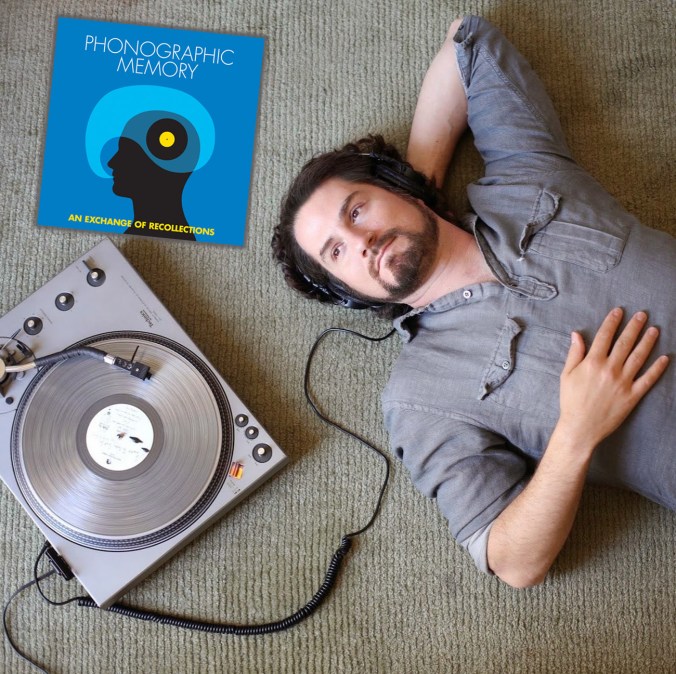
On Wednesday evening the fabulous Phonographic Memory project celebrates its second anniversary. First launched in 2014, Phonographic Memory was created by Bernal Neighbor Corey Bloom. It’s an exchange of recollections through vinyl records, during which guests are given a few minutes to share a personal story or memory about a song or the record, and then play a song from that album. Since then, Phonographic Memory has also spawned a podcast, so you can listen some of the stories presented in the series as they were shared at our very Bernal Heights library.

Wednesday’s second anniversary edition of Phonographic Memory will be pretty special,  with a memory presentation by Bernal’s own celebrity rockstar-in-residence, Neighbor Matt Nathanson.

Bernal library’s celebrity branch manager Valerie Reichert tells Bernalwood:

Bernal Branch Library is psyched to announce a very special guest participating in Wednesday’s anniversary celebration of Phonographic Memory: Bernal neighbor, platinum artist, Matt Nathanson will be on board!

The program format will be as always — a story in mind and a record in hand. It’s an evening about vinyl records, personal attachments and storytelling. Special guests also include David Bustamante, Dug Infinite, and Jon Bernson, The event will be held upstairs in the main area of the branch.

Phonographic Memory: 2nd Anniversary Celebration!
with Special Guest presenters:

  • Matt Nathanson – Singer/ Songwriter
  • David Bustamante – 70s Rock Band Dakila
  • Dug Infinite – Hip-Hop Producer/ DJ
  • Jon Bernson – Vocalist, ExRays

Wed. Sept 21
7 -9 pm – FREE
SFPL Bernal Heights Branch Library
500 Cortland Ave., SF, CA 94110

phonographicmemory_poster-sept2016-1-1-1

PHOTO: Top, Bernal neighbor Matt Nathanson, courtesy of Phonographic Memories

Tuesday: Community Meeting About Prospect Community Garden Water Pipeline Plan

prospectcommgarden

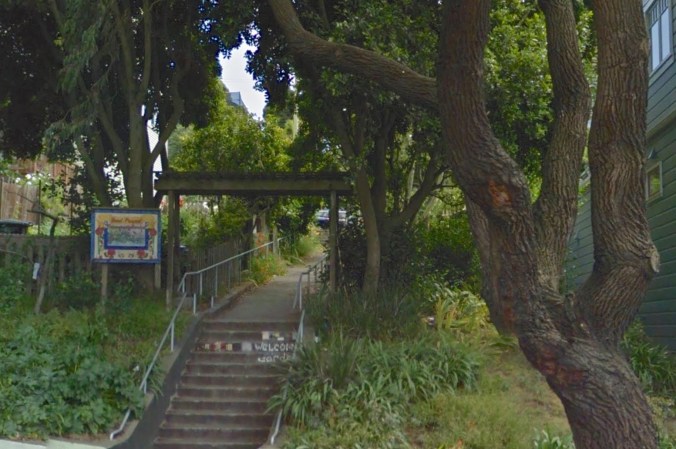
Planned repair work to a pipeline that carries water from the College Hill Reservoir near Holly Park will bring change to the Good Prospect Community Garden that runs between Santa Maria St. and Cortland Ave.

Roberto A Lopez from the San Francisco Public Utilities Commission invites Bernal residents to learn more about the project on Tuesday evening:

Notice that has been mailed out to residents who live near the Good Prospect Community Garden on Cortland Ave. regarding a community meeting being held at the Bernal Heights Branch Library (Bernal Heights Room) on Tuesday, September 20 at 6:00 p.m.

This is the 2nd meeting to discuss a project that will impact the Good Prospect Community Garden.  We (SFPUC) have met already a couple of times with the members of the community garden as well as residents that live nearby.

The project will replace two existing pipelines that supply water to SF General Hospital and City Hall.  The existing pipelines run from the College Hill Reservoir and underneath the community garden.  The project is tentatively scheduled to begin construction in late 2017/early 2018.

pipelinepeeting

PHOTO: Good Prospect Community Garden, as seen from Cortland via Google Maps

Reminder: Please Do NOT Feed the Bernal Hill Coyote

coyotecar

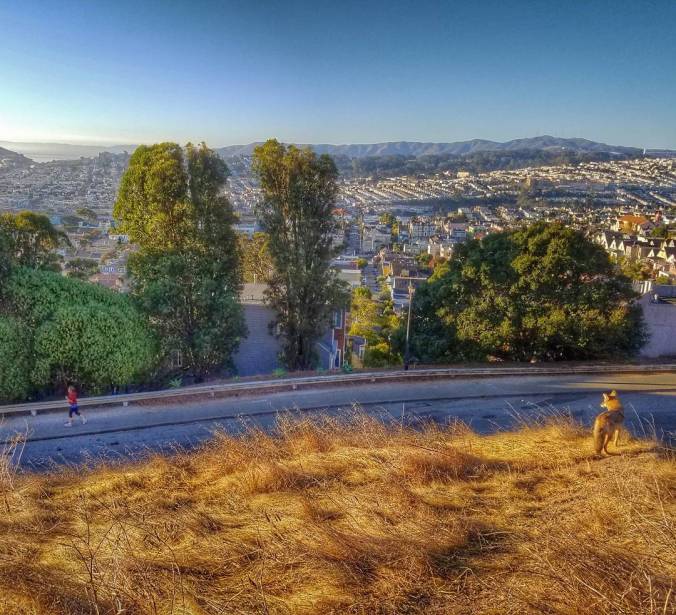
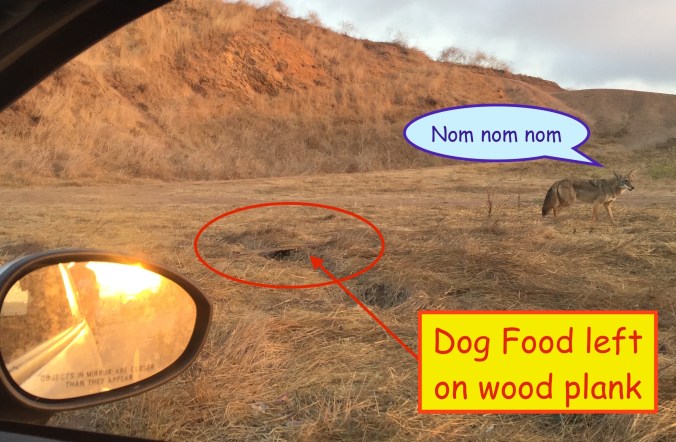
This week Neighbor Rachel noticed that someone has been leaving dog food out for our coyote neighbor who lives around Bernal Hill.

We saw the coyote eating the dog food. It was on the southern side of the hill. I was in my car watching, and a runner came by and we both watched him eat. Argh!

Photo evidence:

dogfoodz

coyotefoodsite

Argh, indeed. That’s not good.

Please take a moment to re-read the comprehensive Guide to Sharing Bernal Hill With Our Coyote, where you find this admonition:

Please don’t feed the Bernal coyote. Feeding breaks down the barrier that keeps coyotes wild. If they become food-conditioned — which is different from “habituation” — big problems can develop, including approaching people, which increases the chances for negative incidents to occur. Feeding coyotes also encourages them to hang around yards, where people don’t want them.

To feed the coyote is to create additional risk for the coyote and increase the chances that our co-habitation of shared urban spaces will end badly. Please, please, do not feed the Bernal coyote.

PHOTOS: Photos, and photo annotations, courtesy of Neighbor Rachel

Supervisor Campos Announces Support for Permanent Alex Nieto Memorial on Bernal Hill

nietomemorial0916

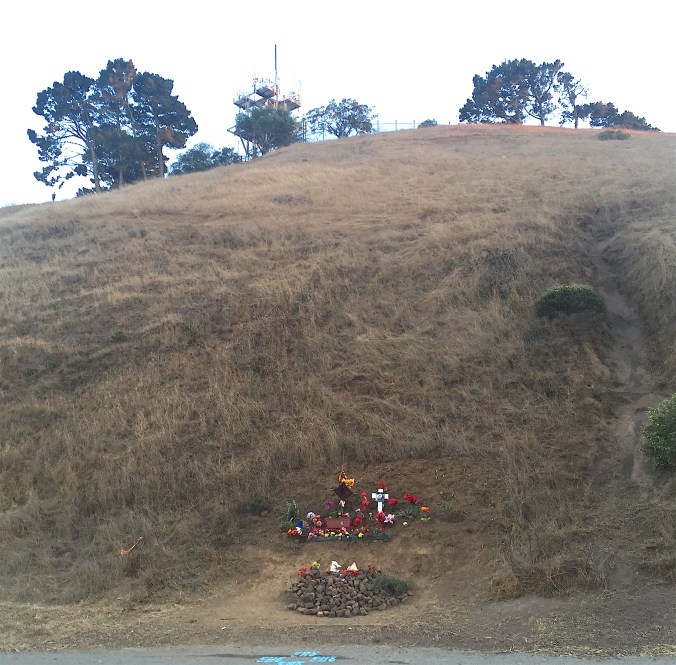
On Tuesday Supervisor David Campos announced his support for an effort to install a permanent, City-funded memorial to Alex Nieto on Bernal Hill. However, Bernal Heights neighborhood groups say they have not been informed about the proposal.

Alex Nieto was a 28 year-old Bernal neighbor who died in an officer-involved shooting in March 2014. The San Francisco District Attorney’s investigation of the incident determined Nieto had a history of clinical psychosis and behavioral problems, alleging that he pointed a pistol-shaped taser at police officers who approached him after receiving reports of an armed man acting erratically on Bernal Hill. During a subsequent wrongful death suit initated by the Nieto family, a jury ruled that the SFPD officers involved in the incident had not used excessive force.  Friends of Alex Nieto maintain his death was a byproduct of gentrification.

Alex’s parents,  Cortland Avenue residents Elvira and Refugio Nieto, appeared before the Board of Supervisors on Tuesday to request that the City establish a memorial to Alex Nieto on Bernal Hill. An event announcement posted on Facebook described the effort:

A resolution to establish a permanent memorial in honor of Alex Nieto, unlawfully killed by the San Francisco Police Department.

Supervisors John Avalos and David Campos will be sponsoring this noble resolution.

Press conference at the front steps of San Francisco City Hall at 1:00 p.m. on Tuesday, September 13, 2016. Board of Supervisors meeting to follow immediately. Bring your friends and family and arrive early for the lowrider caravan of justice and the danzante blessing.

WHY AN ALEX NIETO MEMORIAL?

In order to honor Alex Nieto, a permanent memorial will be established at Bernal Hill Park, the place where he was unlawfully killed by the SFPD.

Through no fault of his own, Alex Nieto, a 28 year old full-time student and security guard who had never been arrested in his life, was shot at fifty nine times and killed by SFPD officers. Even though there were many witnesses that claimed Alex had done nothing wrong and was just peacefully eating his burrito, the San Francisco District Attorney did not pursue criminal charges against officers. Then in a sham of a civil trial, the killers were released of liability by a mostly white jury that was comprised of no Latinos or African-Americans.

After Tuesday’s Board of Supervisors meeting, Supervisor Campos confirmed his intention to establish a City-sponsored memorial to Alex Nieto:

campostwweet

Bernalwood is unaware of any public meetings that have been or will be held in Bernal Heights to consider the idea of a permanent memorial on Bernal Hill. Bernalwood also reached out to leaders of several Bernal Heights neighborhood groups, and none were familiar with the proposal. One Bernal Heights community organizer said, “No, we weren’t consulted about this, but this is the kind of thing we normally expect to be notified about.”

According to the Justice For Alex’s group’s summary of Tuesday’s Board of Supervisors meeting:

About a dozen supporters supported the Nietos by asking the Supervisors to recognize that harm had been done to the Nieto Family and the Latino community; that altars carried cultural significance to the Latino community; that the request for a permanent and protected altar and memorial was a most basic act of restoration; that Alex’s death was tied to gentrification policies of the City that allow newcomers to arrive in droves to the Mission without understanding the cultural differences and their privileges in the communities of color they come to displace and inhabit.

Justice For Alex says Supervisor Campos committed to support an ordinance that would mandate the installation of a permanent memorial to Alex Nieto on Bernal Hill. The group says the ordinance will be introduced by D11 Supervisor John Avalos at an upcoming Board of Supervisors meeting, within the next two weeks.

See all of Bernalwood’s previous coverage of Alex Nieto.

PHOTO: Top, ad hoc Alex Nieto memorial on Bernal Hill, September 14, 2016, by Telstar Logistics

Fiesta On the Hill Cancelled as Bernal Heights Neighborhood Center Struggles With Change

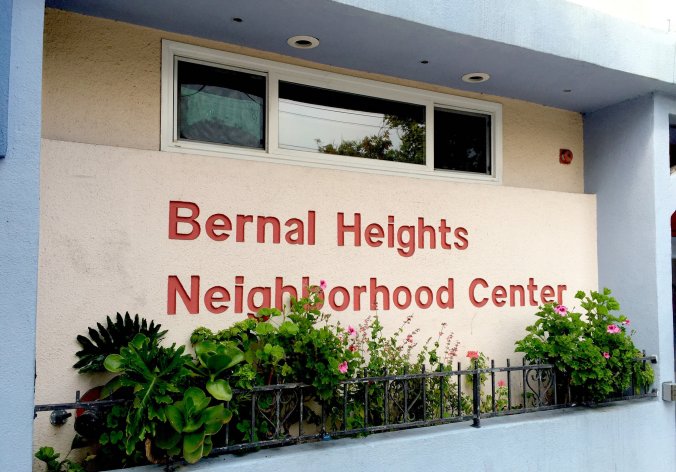
bhncfacade3


This story was reported by David Young and edited by Todd Lappin

For as long as many can remember, Fiesta on the Hill has been a Bernal Heights tradition. Organized each year by the Bernal Heights Neighborhood Center (BHNC), Fiesta on the Hill is a time when Cortland Avenue shuts down to traffic to play host to a sprawling street party that fills Bernal’s main street with a colorful cross-section of neighbors, families, bands, merchants, food stalls, community organizations, and kiddie rides. Fiesta usually happens in October. But this year, it’s been canceled.

“Fiesta on the HIll was our annual fundraiser, but for the past several years the organization has actually paid out more to put it on instead of it being a fundraiser,” says Gina Dacus, BNHC’s new executive director, “Where we are as an organization is, we have to really be cognizant of our finances.”

The cancellation of Fiesta isn’t the only sign that BHNC is rethinking its priorities. Last year, BHNC executive director Rachel Ebora left the organization abruptly. This year, BHNC shuttered Gifts on the Hill, the thrift shop it operated from a BHNC-owned storefront next door to the organization’s headquarters on Cortland. Most worrisome of all, when the devastating Cole Hardware fire ripped through four buildings at the foot of Bernal Hill on June 18, BHNC was conspicuously absent from efforts to organize assistance for the fire victims — even though the fire took place across the street from Coleridge Park Homes, the BHNC-operated affordable-housing facility on Mission Street above the Big Lots store. The fire left 56 Bernal residents homeless and facing an uncertain future, until activist Edwin Lindo, the Mission-based Mission Economic Development Agency, and an ad hoc group of Bernal neighbors stepped into fill the void by organizing fundraising drives that raised $140,000 for the fire victims. (Lindo is a BHNC board member, but his fundraising effort was undertaken independently.)

Together, such incidents and absences fuel the perception that the BHNC has become a diminished organization. “Basically, what happened is that BHNC got stale,” says Buck Bagot, a longtime Bernal activist and original co-founder of BHNC during the late 1970s.

Though few are willing to comment publicly, some observers point to systemic mismanagement as root cause of BHNC’s woes, while others claim the Center failed to keep up with the times. Cortland merchants say BHNC has become disorganized and aloof. Left-leaning activists point to the gentrification of Bernal Heights as proof that BHNC’s has failed to fulfill its core mission to “preserve and enhance the ethnic, cultural, and economic diversity of Bernal Heights.” Newer Bernal residents say BHNC’s political agenda is part of the problem, as BHNC uses its resources and connections to oppose the construction of new housing in Bernal Heights.

Undeniably, however, BHNC’s most urgent concern right now is to get its finances in order. Since the Great Recession, BHNC has struggled as revenues plunged 43% between 2008 and 2014:

bhnc-yearlyrevenue

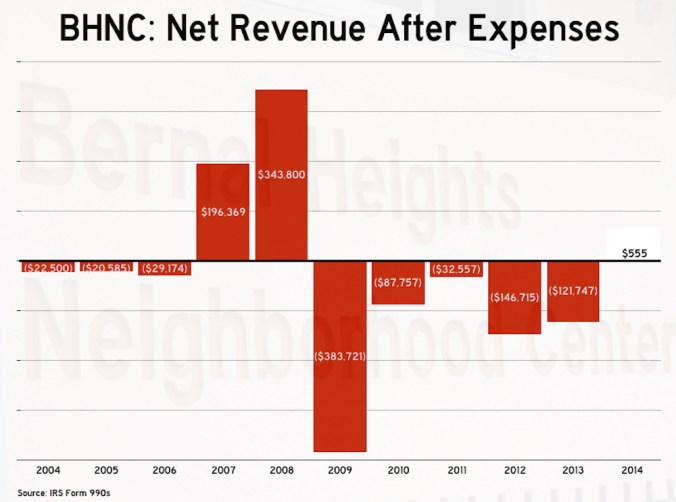
As funding sources shriveled, BHNC was slow to reduce expenses, and the result was a  series of painful years during which the organization operated deep in the red.  In 2009 alone, BHNC recorded a massive net loss of $383,000 due, in large part, to a sharp decrease in contributions and grants. The steep losses continued until 2014, the most recent year for which filings are available, when BHNC managed to eke out positive net revenue of $555:
bhncnetrevenue

In September 2015, the San Francisco City Controller placed BHNC on a list of nonprofit contractors receiving City funds that do not meet the City’s financial monitoring standards. With 16 such findings, BHNC ranked third on the list of noncompliant organizations, which Controller’s office says “can signal potential instability in the organizational and financial health of a nonprofit – and ultimately an organization’s ability to provide effective and sustainable services to residents in need.”

Originally called the Bernal Heights Community Foundation, BHNC was founded in 1978, at a time when some Bernal residents sought to combat City Hall neglect, market-rate housing construction, and an influx of new residents moving to Bernal to take advantage of cheap rents and inexpensive homes. In the 1980s, the BHNC began working with at-risk teens and collaborating with St. Kevin’s Church to provide services to local seniors. In the 1990s, the BHNC spread beyond Bernal by launching community-service programs in Bayview/Hunters Point, the Mission, and Visitacion Valley.

Today, BHNC operates 15 publicly subsidized-affordable housing developments throughout the City, including the Bernal Gateway apartments on Mission at Cesar Chavez, the Market Heights apartments adjacent to the Alemany Flea Market, and the Coleridge Park Homes above the Big Lots on Mission. All told, BHNC manages 369 units that provide homes to 600 low-income seniors, adults, and youth.

Along the way, the BHNC has also been a key player in Bernal’s own brand of left-wing politics, and political action has always been an integral part of the neighborhood center’s agenda. The Bernal Heights Democratic Club, which still meets regularly in BHNC’s community room, was first established in the early 1980s by BHNC co-founder Buck Bagot. Over the years, many BHNC board members and staff have left the organization to work directly in politics.  In 2011 Joseph Smooke, who was BHNC’s executive director at the time, quit to pursue opportunities in the offices of supervisors Eric Mar and David Campos. Edwin Lindo, the former Frisco Five hunger striker and D9 Supervisoral candidate (and Cole Hardwire fire fundraiser), remains a member of the BHNC board of directors. Recent BHNC board member Sheila Chung Hagen now works as a legislative aide Supervisor David Campos’s office, and the ties between Supervisor Campos’s office and BHNC remain close.

In previous decades, this mix of community engagement and political connections helped BHNC win lucrative grants and public funds. A decade ago, BHNC established youth scholarship programs and completed two then-new affordable housing projects: the Crocker Amazon Senior Apartments and the Excelsior Teen Center. In 2006, BHNC reported that its membership had topped 1,000 — a 13 percent increase over the previous year — as the organization’s total revenues hovered at $200,000. At the time, BHNC published also published its own print newspaper, The New Bernal Journal.

Then came the Great Recession of 2008. The intense downturn transformed the economic landscape for nonprofit community organizations throughout San Francisco, and BHNC was caught flat-footed. 2008 was also the year Rachel Ebora began working with BHNC. Ebora started with BHNC as a community development coordinator, before becoming director of community engagement. In 2011, when Joseph Smooke gave up his post as BHNC’s executive director to pursue opportunities in City Hall, BHNC’s board chose Ebora as his replacement.

Critics say Ebora was chosen largely because of her political credentials, but BHNC’s finances didn’t recover after she became executive director — even as the overall economy began to improve and San Francisco entered a period of rapid growth. According to IRS filings, in Ebora’s first year, total grants and contributions fell by 20 percent.

Year after year of red ink explains many of BHNC’s recent cost-cutting moves. In 2014, the New Bernal Journal, which the BHNC had published since 1987, ceased publication. By 2011, the Center’s subsidized-affordable housing development projects had stopped altogether, beginning the longest period of inactivity since BHNC was founded. IRS filings reveal that BHNC also slashed salaries and compensation, which fell from a high of $1.8 million in 2009 to $1.2 million in 2014.

As the losses continued, Ebora left with little explanation in July 2015. Gina Dacus, BHNC’s director of operations at the time, was chosen by the board to serve as interim executive director. Throughout the second half of 2015, rumors swirled that BHNC was having a hard time finding candidates with both the managerial skills required to turn the organization around and the political alignment needed to win over BHNC’s board. (Dacus’s interim executive director position became permanent in July 2016.)

Staff turnover hasn’t been confined to the executive director position. In 2014, after a brief tenure as the director of membership and development, Adam Kinsey quit, leaving BHNC with no full-time staff dedicated to fundraising. According to executive director Dacus, BHNC’s board has hired a part-time grant writer to pursue more private funding. In addition, several board members are writing grants and assisting in renewed fundraising efforts. This year, Julia Bennett also left BHNC’s board of directors. Bennett had been seen as a reformer who wanted to bring more professionalism and financial discipline to BHNC’s operations, yet after her departure she was replaced on the board by Barbara Bagot-Lopez, a veteran activist, retired UCSF administrator, and sister of BHNC co-founder Buck Bagot.

Dacus acknowledges that BHNC is trying to rebuild. “We’ve reached huge milestones in terms of our recovery process. We feel more comfortable about the sustainability of the organization.”

Still, other remain keenly aware of the challenges ahead. “I feel like, around the time that Rachel came in, the organization began to recede,” says Buck Bagot, who served as the BHNC’s executive director from 1978 to 1982, and has remained an active member and community organizer ever since. “The board became a little distant. And Rachel, in these tough times, didn’t address the tough times as well as I wish she would have. You have to keep revitalizing.”

Buck Bagot considers BHNC’s financial problems to be more of a symptom than a cause of BHNC’s difficulties. The bigger issue, he says, is that BHNC hasn’t listened to the changing needs of the community. “You can never coast, you can never stand pat,” he says. “It’s very hard to get funding these days. I’m not saying the Neighborhood Center doesn’t deserve its funding, but if you aren’t a vibrant, active organization, continually trying to tap into your community and find out what they need and do what they need with them…” Bagot trailed off, shaking his head.

Dacus, meanwhile, insists BHNC still serves Bernal Heights and its surrounding neighborhoods. “Our community looks a lot different, but we’re still meeting challenges,” she says. “Neighbors who can no longer afford to live here still find ways to come to our senior program. We still feed 350 families in the Excelsior every week. We have over 400 families living in our properties that we currently have in our portfolio.”

She also cites a string of other BHNC projects that are underway, such as a youth leadership program that provides additional career services, and expanded senior services that include a health and wellness program.

Yet in the midst of an ongoing housing shortage, and after several years of financial struggle, some Bernal residents wonder whether this is enough. For them, what is at stake is not just a organization with deep ties to Bernal Heights, but the vibrancy of the neighborhood itself. They want a Center that will not only support the basic requirements of the community, but will be a vital force in the community, as it was during its early years.

To do that, BHNC will first have to address some important questions regarding its structure, management, and funding. Dacus acknowledges this. “We’re looking to expand our community development,” she says. “That’s an initiative that we have for 2016, because this is really teaching us the importance of pulling neighbors into all the changes that are happening in the community.”

PHOTO: Telstar Logistics