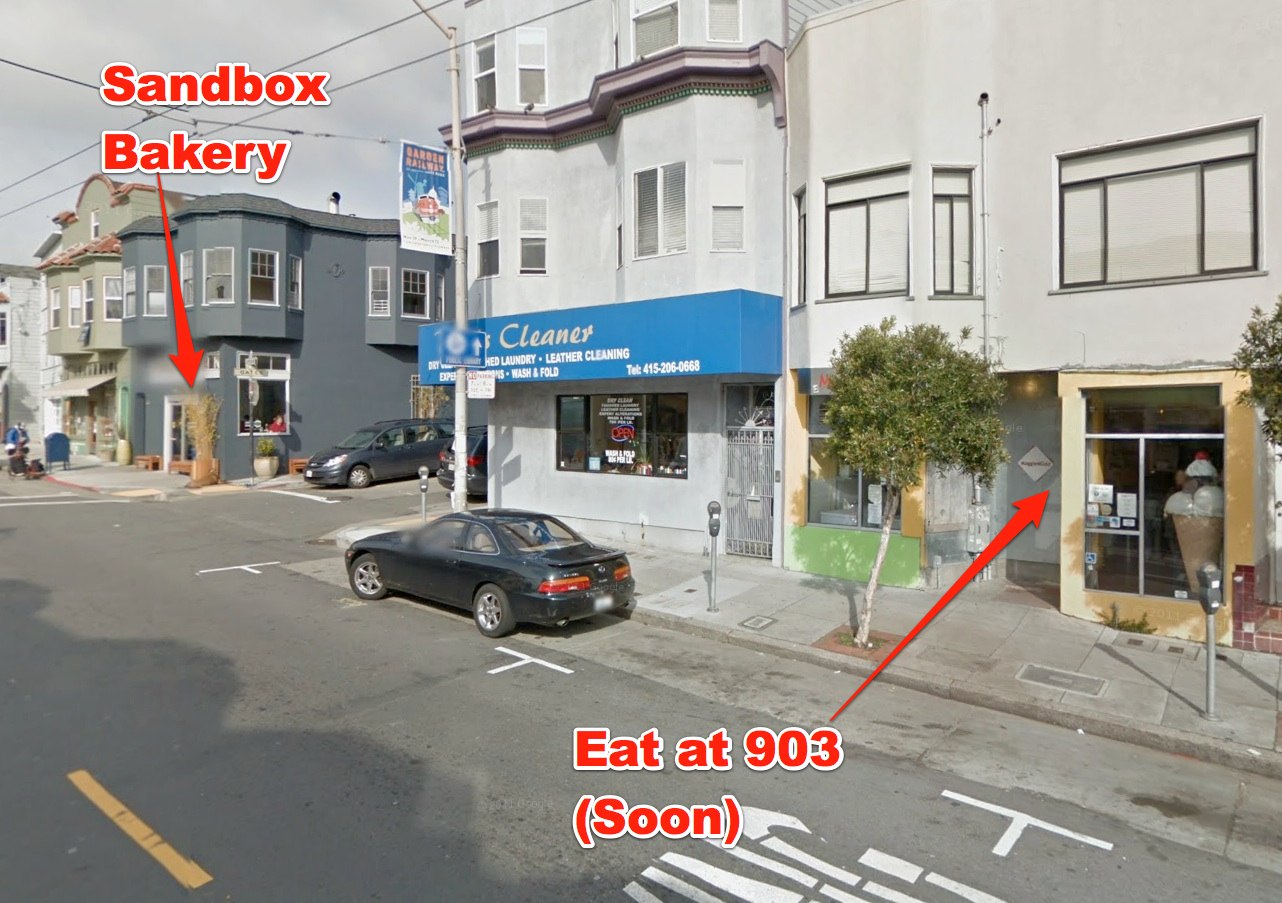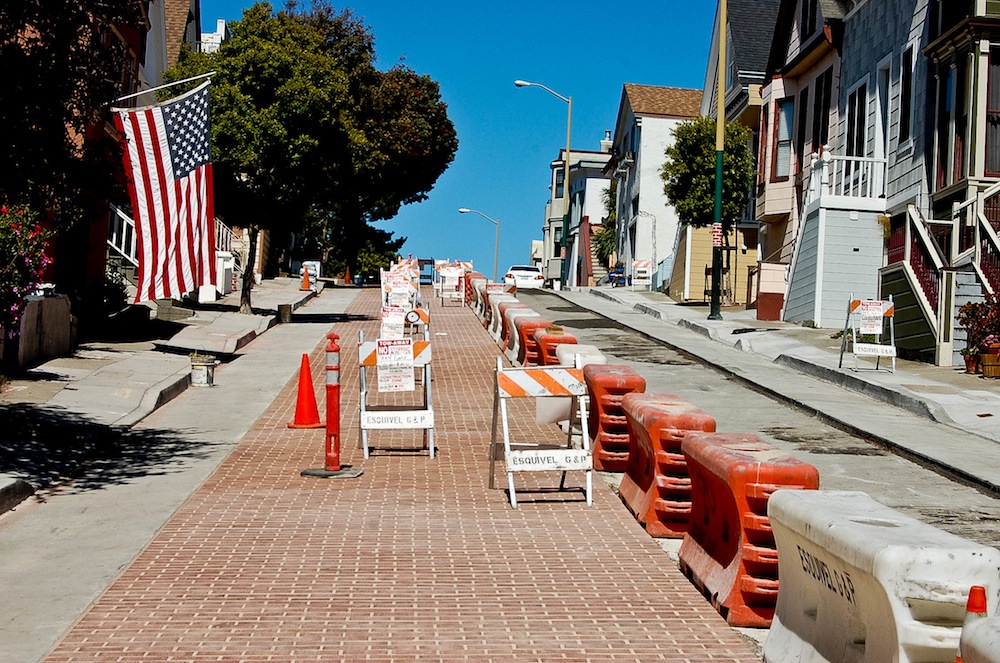
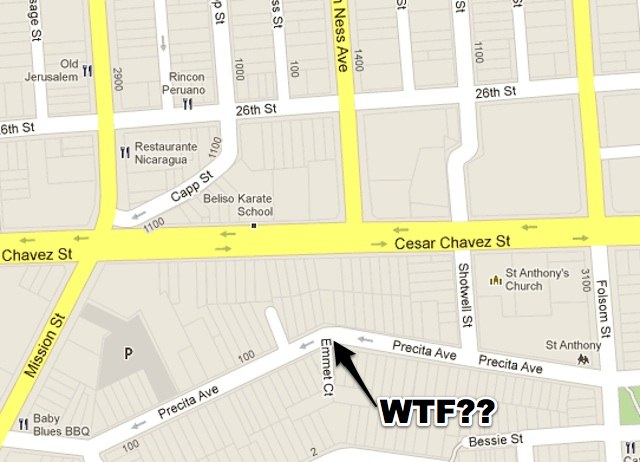
The machinations of the San Francisco Department of Public Works are obscure and mysterious, but after a long hiatus, work has resumed on Precita Avene’s sexxxy sewer replacement and street repaving project. The action is now happening just west of the sharp bend that redirects Precita on the stretch between Shotwell and Mission Streets.
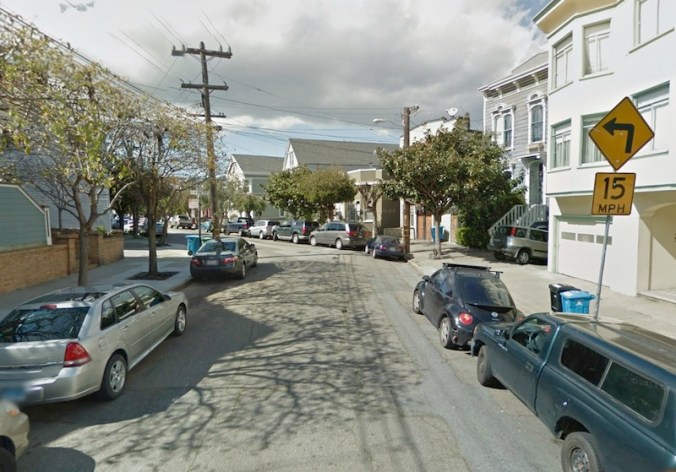
But wait… why does that bend exist at all? The hook to the left certainly seems arbitrary, given the flatness of the terrain. So what’s up with that? And why is the entire length of Precita so ziggity-zaggedy?
Happily, this question was answered — and answered well! — by Burrito Justice, the leader of the La Lengua separatist movement. When he is not fomenting geo-cultural secession from the Dominion of Bernalwood, Burrito Justice is also a bit of a map geek, and his work in this area is impressive (as we shall soon see).
Precita is a very old street by San Francisco standards, because it was first laid down sometime during the early 1850s, just a few years after the 1849 Gold Rush that transformed San Francisco from a podunk outpost into a burgeoning city. The street ran alongside a freshwater stream called Precita Creek that flowed from springs near Twin Peaks down to the wetlands that occupied present-day Bayshore.
Here’s some revealing cartography from 1876:

During the 1880s, Precita Creek was replaced by an underground sewer pipe that runs under today’s Cesar Chavez Boulevard (which is now being replaced). But before all that, Precita Avenue shadowed the banks of its eponymous waterway so closely that the road meandered in tandem with the creek.
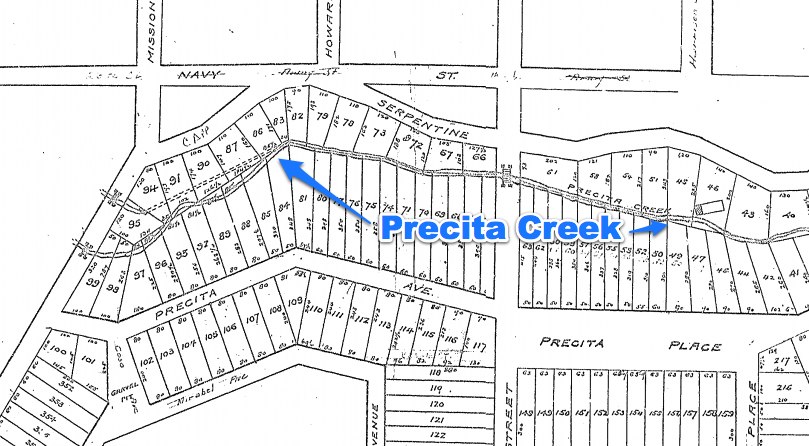
You can see that clearly in this 1859 Assessor’s Map (click to enlarge):

Other things to notice on the map: Army Street (today’s Cesar Chavez) didn’t exist yet. Also, 26th Street was called Navy Street. Also also, the little green/park on Coso just off Precita was originally a gravel pit. But most revealing of all, perhaps, is the fact that there was another street on the northern side of Precita Creek that also shadowed the stream.
That parallel road was called Serpentine, and as Burrito Justice explains:
Serpentine followed the old stone wall marking the northern border of Jose Bernal’s giant plat of land.
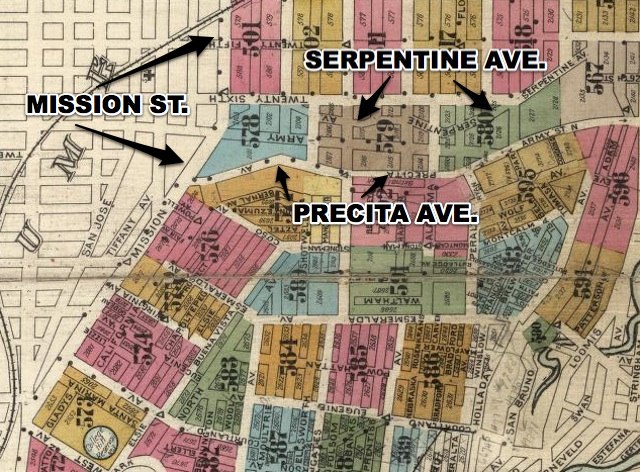
Serpentine Ave. endured even after Precita Creek was paved over to create Army Street, as you can see in this map from 1905:

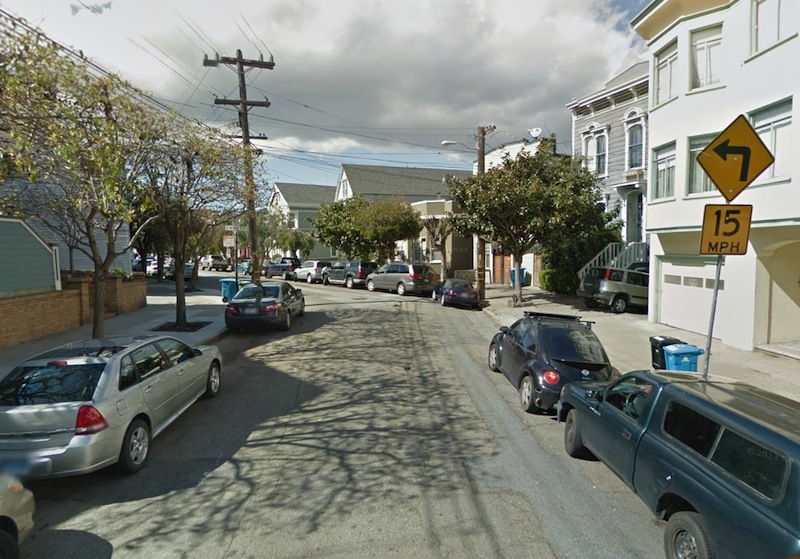
In later decades, of course, Serpentine Ave. disappeared as the land beneath it was opened up to development. Yet the weird bend in Precita Avenue survives, hinting at all the geography and topography that once defined the area. Meanwhile, one teeny-tiny stretch of Serpentine Ave. still exists, and it even parallels the bend on Precita.
And where is that?
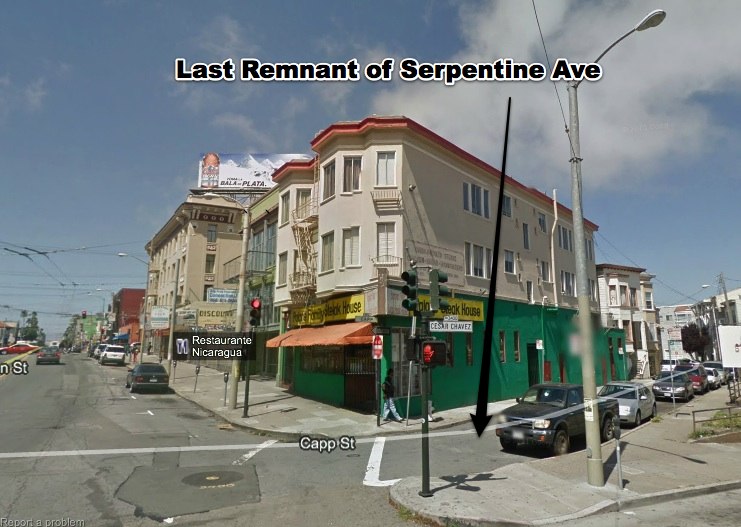
Now called Capp Street, the last remnant of Serpentine, which used to run alongside Precita Creek, now juts out at that weird angle right alongside our own Palace Steak House:

SPECIAL THANKS: Burrito Justice