Supervisor David Campos Explains His Vote to Reinstate Ross Mirkarimi as Sheriff

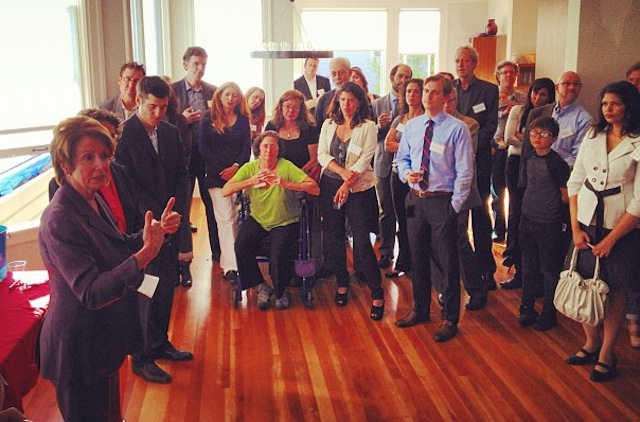
With District 9 Supervisor David Campos casting a deciding vote, the San Francisco Board of Supervisors moved to reinstate Ross Mirkarimi as Sheriff yesterday, despite Mirkarimi’s guilty plea to charges of false imprisonment, and despite the City Ethics Commission’s determination that Mirkarimi engaged in official misconduct.

The SF Chronicle reports:

Four members of the board voted against the motion to uphold the finding of the city Ethics Commission that Mirkarimi had committed official misconduct, an allegation that stemmed from a New Year’s Eve fight with his wife that resulted in him pleading guilty to misdemeanor false imprisonment. The other seven supervisors voted with the mayor.

Lee needed nine of the 11 supervisors’ votes to oust Mirkarimi. Supervisors David Campos, John Avalos, Jane Kim and – in a major blow to Lee – the mayor’s appointee, Christina Olague, voted to reinstate Mirkarimi. The four said they condemned Mirkarimi’s grabbing his wife’s arm, but that it didn’t amount to official misconduct.

“I don’t believe that we should do anything to minimize how serious this was,” Campos said. “There is simply no justification for anyone grabbing another human being’s arm and bruising that arm.

“But that egregious misconduct does not fall within the definition of official misconduct,” he continued. “We must interpret this provision narrowly or open the door, open the door wide, for potential abuse.”

Campos’s attempt to parse some sort of meaningful distinction between “egregious misconduct” and “official misconduct” seems tenuous, to say the least. Even more troubling, however, is the rather obvious fact that despite Campos’s declared intention, voting to reinstate Mirkarimi as Sheriff is precisely the kind of gesture that minimizes the seriousness of Mirkarimi’s behavior. A therapist might even call it enabling. Campos is running unopposed in next month’s District 9 election. Yet for me, his handling of this matter is disqualifying.

Agree or disagree, Bernal neighbors and District 9 constituents are invited to discuss in the comments.

PHOTO: Ross Mirkarimi (center) confers with attorneys Shepard Kopp (left) and David Waggoner during yesterday’s hearing before the Board of Supervisors. San Francisco Chronicle photo by Jason Henry.

It Is Gone: Old Bernal Heights Library Mural Painted Over


After a long and difficult community-focused mediation process, followed by additional delays triggered by opponents, the old Bernal Library mural was finally painted over today.

Next steps? Artist Ruben Rude will begin painting the Moultrie-side portion of the mural. Precita Eyes will begin the prep work on the Cortland facade, including an outline for the forthcoming tile work, so we’ll soon see the scope of the new design in actual size. (The Precita Eyes portion of the mural will be executed in hand-painted tile.) Ruben is expected complete his work this fall, but Precita Eyes will probably be hampered by winter weather, so the Cortland remuralizing may go into early next year.

Once again, this is the final design of the new murals:

PHOTOS: Repainting of the old mural this morning, by Telstar Logistics

Neighbor David Talbot Laments the Tech-Fueled Gentrification of Bernal Heights

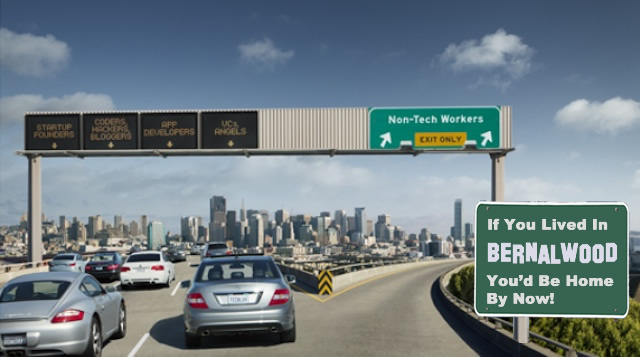
Yesterday’s post about the impact the Silicon Valley commuter shuttle network is having on Bernal Heights pairs neatly with the article by Bernal neighbor David Talbot that appears on the cover of the current issue of San Francisco magazine.

Under the headline “How Much Tech Can One City Take?” Neighbor David considers how the growth of the tech industry is changing the texture of San Francisco, and in one part of the article, he looks at this through the prism of our own Precita Park:

I’m sitting at a table outside the new Precita Park café in Bernal Heights, a gourmet sandwich shop that’s one sign of the changing times. When I moved to this neighborhood in 1993, just before the first dot-com boom, I avoided taking my two toddlers to the playground across the street from the café, because local gangs sometimes stashed their guns in the sand. And yet, despite gunfire from the old Army Street projects that often shattered the neighborhood’s sleep, Bernal Heights in those years was a glorious urban mix of deeply rooted blue-collar families, underground artists, radical activists, and lesbian settlers. The neighborhood had a funky character as well as a history. The famed cartoonist R. Crumb once hung his hat there, and his old Zap Comics sidekick, the brilliant Spain Rodriguez, still does.

But at some point the new tech boom began to make its presence felt in Bernal Heights, whose sunny hills are close to not only SoMa startups but also the Highway 101 shuttle line to Silicon Valley. Nowadays, you see Lexus SUVs parked in the driveways on Precita Avenue. Young masters of the universe in Ivy League sweatshirts buy yogurt and organic peaches at the corner stores where Cuervo flasks and cans of Colt 45 were once the most popular items.

“We cleaned up this neighborhood—stopped the violence in the projects—but now we can’t afford to live here anymore,” says Buck Bagot who has been a Bernal Heights community organizer and housing activist since 1976. “When I moved here, every house on my block had a different ethnicity. There were Latinos, blacks, American Indians, Samoans, Filipinos. They had good union jobs, and they could raise their families here. Now they’re all gone.” These days Bagot fights to block home foreclosures as the cofounder of Occupy Bernal, engaged in a battle to preserve the neighborhood’s diverse character that he admits often feels futile.

Sitting outside the café, I’m joined by another longtime Bernal resident, a 47-year-old San Francisco public school librarian. She moved to the neighborhood in 1994 with her partner, a public school teacher, when many of their lesbian friends were settling here, attracted by the relatively cheap rents. “There were a lot of us—we were young, politically active, and underpaid, but we could afford to live here in those days,” she says. “But now that we have kids, we’re being priced out.” The librarian—who asks that her name not be used because she’s concerned that any notoriety will hurt her chances of entering the tight housing market—says that she and her partner have bid on five houses this year. But they lost each time to buyers who could afford to put up tens of thousands of dollars over the sellers’ asking price—and all in cash. “Who are these people, with that kind of money?” she asks.

The librarian and her partner dread the idea of moving out of the city. San Francisco is in their souls: They fell in love here, they took to the streets here as young dyke activists, and they have a combination of 22 years seniority in the public school system. They can’t imagine moving their family to some remote suburb, where their kids would likely be the only ones with two moms. But it’s getting harder each day to hold on. To make ends meet, they have begun to moonlight as dog trainers “I don’t want to blame young tech workers,” says the librarian. “I’d hate to sound like some grumpy ‘get off my lawn’ type. I mean, I love technology. I’m an early adopter. But if people like us, who helped make San Francisco what it is, get pushed out of the city, who’s going to teach the next generation of kids? Who’s going to take care of them in the hospital?”

OK, so… This kind of “Woe Unto Bernal” essay is fast becoming a local sub-genre; Neighbor Peter Orner recently penned a similar lament, also about Precita Park, for The New York Times.

The issues both describe are very real: Gentrification, change, displacement, uncertainty, and the pain of watching longtime neighbors forced to move because of the inexorable economics of local real estate. Nevertherless, I had a much more sympathetic reaction to Neighbor’s Peter’s piece in the NYT than to Neighbor David’s piece in San Francisco.

Why? I’m not exactly sure, except perhaps because Peter’s piece felt more like an open-ended question to me, while David’s article was infused with an unfortunate kind of Baby Boomer myopia, as if all meaningful culture ended sometime around the time when Fleetwood Mac released the “Rumours” album.

More importantly, though, while the underlying issues of gentrification are real and challenging, it’s unfortunate that Neighbor David neglects to recognize that Bernal Heights is now a home to a glorious urban mix of deeply rooted families, underground artists, technology innovators, cutting-edge musicians, groundbreaking journalists, stalwart activists, assorted oddballs, and lesbian gentry. Plus: The Bikini Jogger.

Yes, the mix is changing. But it remains deeply funky, and passionately connected to this place we all love to call home. Of course we mourn the loss of friends and neighbors who, for whatever reason, cannot stay. The problems of gentrification defy easy solutions. Yet many of us also see meaningful continuity amid the tumult and change, because we know that Bernal Heights has never been a better or stronger neighborhood than it is today.

IMAGE: Original photo illustration by Peter Belanger for San Francisco, photo illustrated by Bernalwood

The Secret Sauce That Makes “Occupy Bernal” Effective

There’s an interesting new article on the KALW website that seeks to explain why, unlike so much of the Occupy movement, “Occupy  Bernal Heights” has actually been rather effective.

The secret, it turns out, is a door-to-door, block-by-block focus on local communities:

Buck Bagot is a long-time resident of Bernal Heights, and a self-described leftist activist since the early 70s. He and a handful of other activist neighbors founded Occupy Bernal in early January, coming together around another neighbor’s impending foreclosure.

Bagot says at that point, most members of the group were not facing foreclosure themselves, but wanted to take action to help those who were. At first they didn’t know much about the issue, but once they started to look into it, they found the problem was much more widespread than they would have thought.

[…]

Taking the time to talk to people and make personal connections has led to a continuous growth of the organization; Occupy Noe Valley is the most recent offshoot. Many people who wouldn’t have thought to align themselves with the Occupy movement have been drawn in, either through neighborhood door-knocking campaigns or old-fashioned word of mouth.

Larry Faulks is facing foreclosure on his Diamond Heights home, but says he was initially wary about coming to a meeting with these “Occupy people”.

“My vision of it was a group of people with tambourines and bullhorns, and that’s what’s gonna save the world,” he says. But when he went to the meeting, he says he found something different. “I was surprised to see that there was a lot of older people, like me. The group has lots of people of color, like me.” He says the diversity made him feel more comfortable.

Even a seasoned activist like Buck Bagot initially found Occupy’s approach somewhat challenging. While he did visit the San Francisco encampment in the fall of 2011, he was looking for a different way to embody the Occupy movement’s ideals.

“I’m 61 years old. I work,” he says. “I couldn’t camp out. I couldn’t spend six hours in a general assembly.”

Bagot says Occupy Bernal was formed to “try and take the possibilities created by Occupy and the ideals stated by Occupy, and root them in a concrete struggle in our neighborhood.”

PHOTO: Lily Rothrock

UPDATED: Bernal Fathers Propose Happy “Manbaby” Billboard Alternative

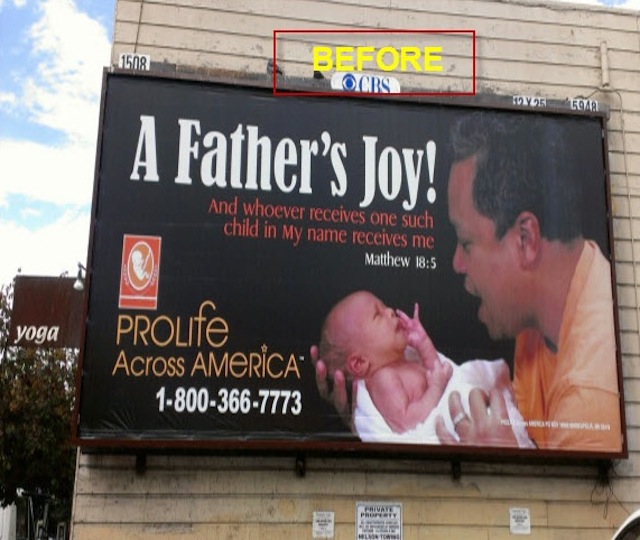
Against the backdrop of the recent pro-life billboard hacking excitement on Cortland Avenue, Neighbor Chris joined forces with a few other Bernal dads to propose a new billboard design that would be a refreshing alternative:

These are anxious times, and I wanted to reassure you about something important. Fellow Bernalites Erik Bloom, Jon Mooallem and I realized it’s incumbent on everyday citizens to ensure that this billboard absurdity continues ad nauseum. Erik (and presumably a team of top artists) put together the attached image last night. Soon as we figure out how to enlarge it 1000000000 percent, it’s going up up up.

I don’t like to use the word “hero.”

… but yet heroes they are. Let’s do this.

UPDATE: Looks like Bernal’s upstanding stoner community has some alternative ideas as well — no doubt inspired by the recent New York Times article about the joy of mixing pot with parenting. This billboard proposal just arrived from Neighbor Jon:

IMAGE: Top: Billboard design by Neighbor Eric. Photo illustration by Telstar Logistics Below: Neighbor Jon.

Pro-Life Billboard in Bernal Heights Replaced, Then Defaced Again (Rather Tastelessly)

There’s been a lively but considerate debate taking place in  the Bernalwood comment thread about the efficacy and ethics of the original Cortland pro-life billboard hack.

In the meantime, however, CBS Outdoor replaced the hacked billboard image with a brand-new version of the original ad…. which was promptly defaced yet again.

The difference is — as you can see in this photo taken today — the new modifications are unclever and rather tasteless. Yuck.

Please, make it stop.

PHOTO: Neighbor Joe

Portola Planet Interviews Supervisor David Campos

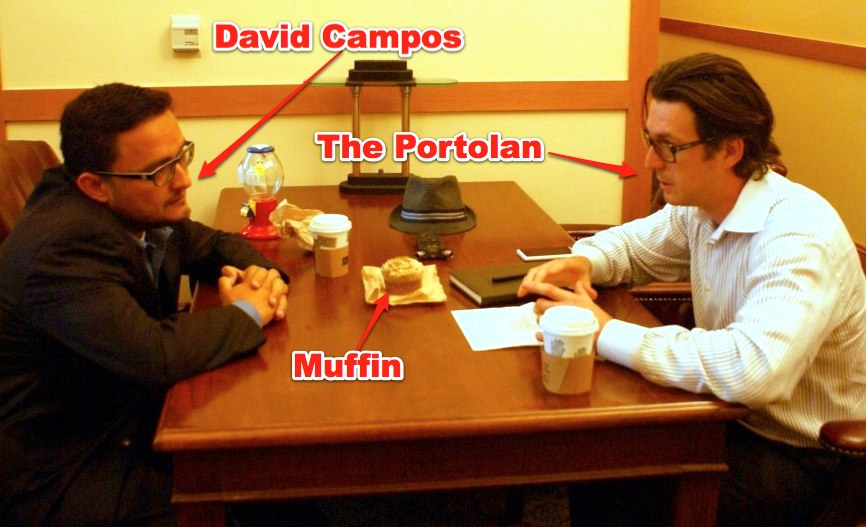
Our friendly (if somewhat less glamorous) comrades from the Portola Planet recently trekked to City Hall for a sit-down interview with District 9 Supervisor David Campos.

In the course of committing some actual journalism, the Portolans asked Campos about the new D9 redistricting, and what it means for the residents of the Portola, Bernal Heights, and The Mission:

Portola Planet: Previously, for the past 10 years, the Portola was divided into two districts, 9 and 10. With it now all in 9, you are saying that instead of looking at each neighborhood, the Portola, Bernal and the Mission, but that it is more about looking at district nine as a whole to work together as a community.

David Campos: That’s what we are trying to do. I think that another challenge we had when the neighborhood was split was it was confusing for people to know which supervisor to go to. We saw that same confusion in the north Mission when it was split between district 6 and district 9.

PP: Ahh so it isn’t just the Portola that has been united into one district now, but also the Mission?

DC: Exactly. That’s a very positive thing. It allows people to know who the point person is. It brings a level of accountability that wasn’t there before. The fact of the matter is, if you look at the geographical distance between neighborhoods, it’s not that far.

The rest of the interview is definitely worth a read; it explains what a SF Supervisor actually does, how Campos got started in politics, and various Portola development and revitalization schemes. Check it out!

PHOTOS: The Portola Planet 

Star Sighting: Invisible Obamas Seen Relaxing in Bernal Heights

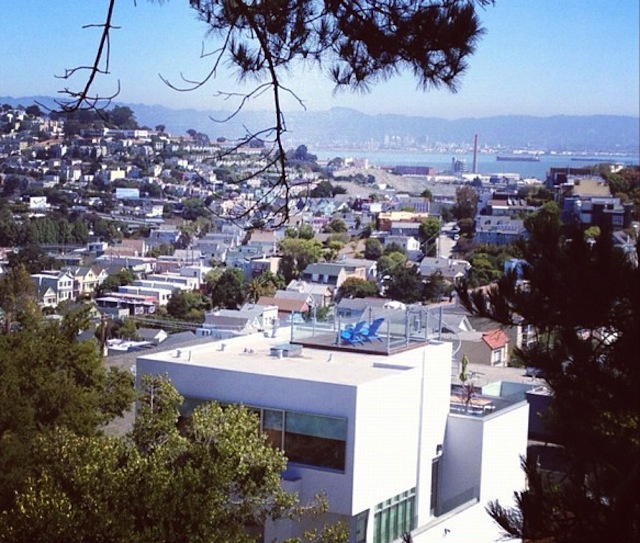
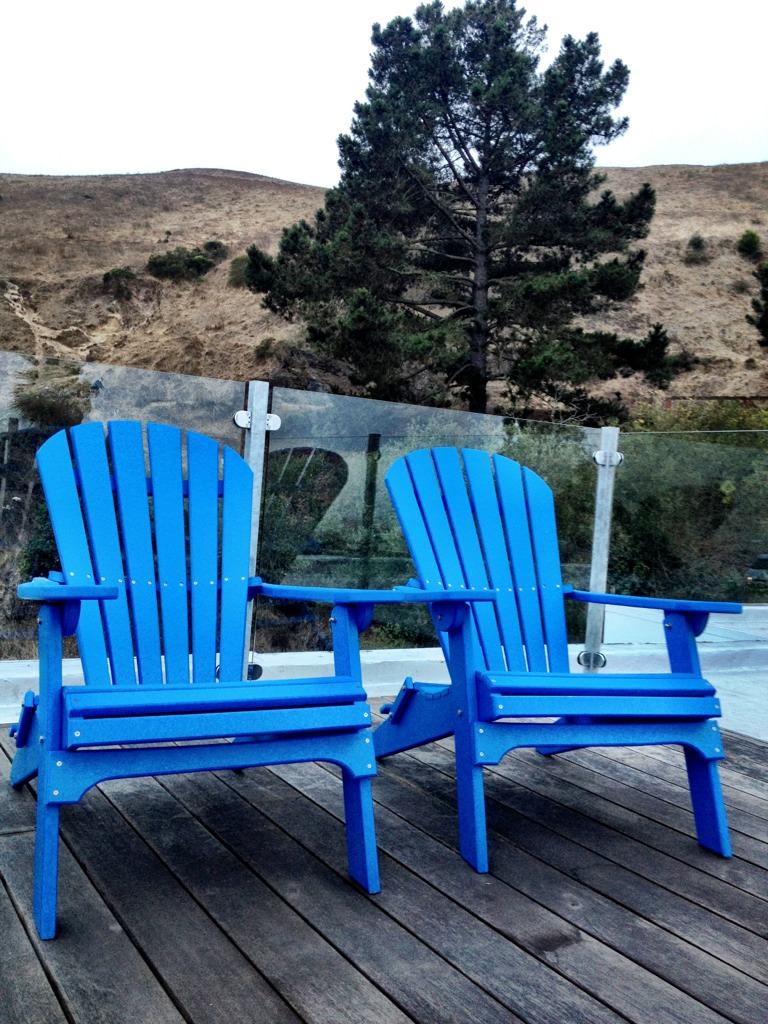
We’ve heard they’d planned to be in Charlotte, North Carolina this week, but Neighbor Chuck spotted the President and First Lady (!!!) taking in the view from atop the glamorous Helipad House in Upper Precitaville. He asks:

The Obamas are visiting Bernal Heights?

UPDATE: During their visit to Bernal Heights, Bernalwood was able to meet the Obamas privately. We’re not at liberty to quote them here, but suffice to say that the Fate of the Republic and Important Matters of National Security were covered at length:

PHOTO: Top, @back40feet. Below, Telstar Logistics

Two Must-Read Articles by Bernal Heights Journalists

Though you’d hardly know it from the paltry number of then who have written for Bernalwood (AHEM! Hint! Hint!), Bernal Heights is home to several celebrity journalists who write for glamorous national publications.

For example, Tim Dickinson is a contributing editor at Rolling Stone, and he covers National Affairs from the magazine’s Bernal Heights bureau. Neighbor Tim just published a thoroughly reported piece that reveals how Mitt Romney used a federal bailout to rescue Bain Capital from financial collapse in the early 1990s:

Government documents on the bailout obtained by Rolling Stone show that the legend crafted by Romney is basically a lie. The federal records, obtained under the Freedom of Information Act, reveal that Romney’s initial rescue attempt at Bain & Company was actually a disaster – leaving the firm so financially strapped that it had “no value as a going concern.” Even worse, the federal bailout ultimately engineered by Romney screwed the FDIC – the bank insurance system backed by taxpayers – out of at least $10 million. And in an added insult, Romney rewarded top executives at Bain with hefty bonuses at the very moment that he was demanding his handout from the feds.

I know, right? What a surprise. Oh, and you’ll never guess who also loved loved loved Neighbor Tim’s article:

Wow. SO SEXY!

Meanwhile, you should also read yesterday’s New York Times piece by Bernal resident Chris Colin. Neighbor Chris tells Bernalwood, “This happened in Bernal, but isn’t about Bernal.” It’s a tale about a Craigslist transaction that went wrong after Chris got stiffed for 50 bucks by a buyer who never paid for the goods he received:

I didn’t care about the money. I cared about the abuse of this rare bit of fellowship. Hadn’t we carved out a morsel of old-fashioned San Francisco grooviness, at a time when the city seems to be pivoting into something less wild? Less wild and more coolly decadent, more $15 pickle plate-ish. I wanted to believe we could still get down to naked trust for a night, take our hands off the PayPal handlebars.

A few more weeks passed. Another month. There’d been one e-mail promising to mail the check, then silence.

Maybe this is catching him at a hard time, I thought. But truth was, Joe seemed to be having a pretty normal time. With his ample tweeting and active Facebooking — well over 1,000 friends! — he allowed for robust stalking. There he was on a sailboat. On a golf course. With some bros. Dancing goofily. Doing his handsome face. Doing some artsy stuff. He looked like someone you’d gone to camp with. Apparently he works for some progressive-sounding start-up, the kind whose Web site speaks of community and so forth.

Check out the rest of Chris’s tale of Digital Age IOU woe here.

Peter Orner Ponders the Gentrification of Precita Park in the New York Times

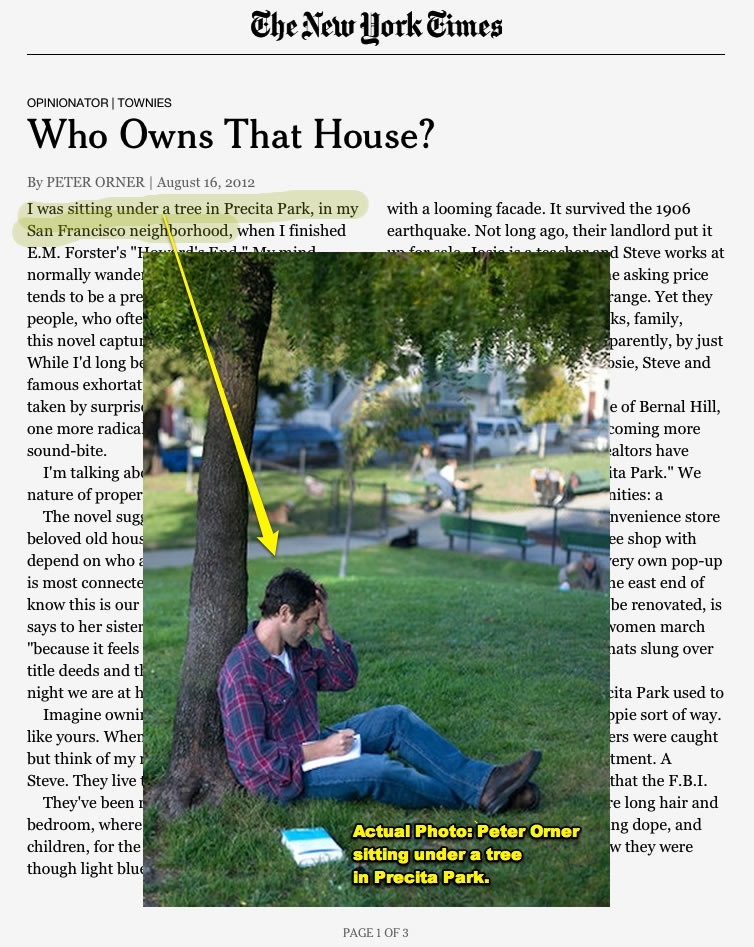
Neighbor Peter Orner is a “bold-faced name” in the literary world and an esteemed Citizen of Bernalwood. From his home in North Bernal, he has been an eyewitness to the increasing glamification of Precita Park — a process that has included a recent home sale that displaced two renters (he calls them Josie and Steve) who have been mainstays of the neighborhood.

Neighbor Peter considers all this in a thoughtful piece published in the Opinionator section of yesterday’s New York Times:

Our neighborhood, at the base of Bernal Hill, has been changing for years, becoming more and more upscale. Lately, the realtors have begun calling it “Desirable Precita Park.” We now have all the necessary amenities: a comically overpriced organic convenience store and wine emporium, a new coffee shop with toddler play area, and yes, our very own pop-up restaurant. The playground at the east end of the park, which doesn’t need to be renovated, is being renovated. Celestially fit women march down our sidewalks with yoga mats slung over their shoulders like muskets.

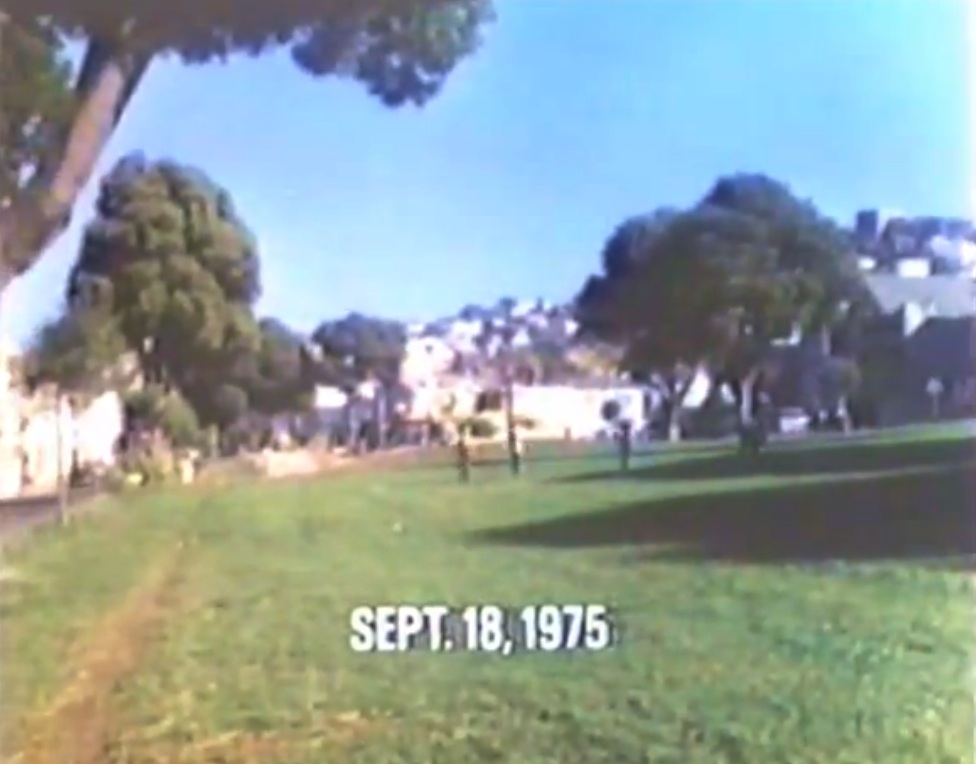
Precita Park

It wasn’t always like this. Precita Park used to be a lot funkier, in a militant hippie sort of way. In 1975, Patty Hearst’s kidnappers were caught a few doors down from my apartment. A longtime resident once told me that the F.B.I. agents staking out the place wore long hair and beads and sat in their car smoking dope, and still everybody on the block knew they were cops.

Precita Park is getting nicer. But Joise and Steve are gone. Peter wonders if the tradeoff is worth it:

In Precita Park, the loss of this one family may not be calculable in dollars. But I fear that the more affluent this area becomes, neighbors — people who look out for each other — will become fewer and farther between. Lately in San Francisco, we seem to be comfortable tackling every progressive cause except for the question of where middle-class people like Josie and Steve, and so many others, are supposed to live.

These are difficult questions, and Peter’s essay generated some thoughtful commentary in the NYTimes.com discussion thread.

For example, Neighbor Robert posted this:

I also live in Bernal Heights. I am an owner. I find that the people who are most involved on my street are the owners, and the people who are least involved are the renters. I realize that there are renters who care about their neighborhood, but I do take issue with Mr. Orner’s characterization of owners. New owners in my neighborhood, including me, formed a neighborhood association and worked with the city on street beautification and traffic calming. We care about our neighborhood.

Neighbor TeeVee writes:

I know how the author feels. It’s not easy to see good neighbors and friends leave the neighborhood. And San Francisco, for all its charms, is a place where you’re constantly reminded of how much money you do NOT have.

But as a resident of Bernal, I really think he needs to get out more and meet more people who own houses in the area. Many of them, like me, aren’t rich. In fact they pretty much sacrificed all disposable income to buy in the neighborhood. I take on as much freelance work as I can scare up in addition to my regular job to pay my mortgage. As a result, I don’t have a lot of time to hang out in Precita Park reading E.M. Forster and stereotyping people. For a writer, he makes a lot of unfair assumptions about owners, lumping them all together when there is vast income disparity in Bernal among homeowners. […]

Having grown up in a dying automotive town in Michigan, I guess I take a different view of Bernal. Having seen what happens when the housing market collapses completely, I know there are much worse things than a few yuppies moving into a neighborhood.

And this from KJ, who now lives in Portland:

I grew up in Bernal Heights. Born at St. Luke’s Hospital — blocks from Precita Park. I swam at Garfield Pool on Army (now Caesar Chavez) for 10cents in the ’60s. My generation was gentrified out of SF in the 1980s…so I find it hard to feel sorry for the displacement of today’s generation of gentrifiers. Very few of my generation can afford to live in our native city.

Finally, Neighbor Catherine adds:

I love the dream that a place could be your home because you feel deeply connected to it, whether you own it or not. We experimented with exactly this – living in a house in Bernal Heights that we did not own, but were meant to own. But it didn’t end up being ours in the end, because it’s not ours. We knew deep down that no serendipitious moment would change this in reality, but it seemed wise to give it a shot and trust the fates; we enjoyed our time there immensely. In the big picture, there are many factors that go into what makes you happy in the place you reside, and there is also a very random nature to the place you land in a competitive market like San Francisco.

Whether an owner or a renter, folks who moved in or bought in to a neighborhood in 1971, or 1989, or 2009, or yesterday all have the same right to contribute to their neighborhood and be embraced by their community. I see people feeling great ownership and entitlement over neighborhoods because of their longevity, but that isn’t more legitimate than your new neighbor next door, and isn’t categorically what’s right or best.

The message in my mind is to focus on what it means to be a neighbor and part of a community, however you landed there, and for however long you stay. Our city will continue to change – that’s the nature of urban life, and that dynamism is part of what we love about it. You can’t have one without the other.

This is an extremely complicated issue that defies simple solutions, and when you scratch the surface even the most absurd Bernal real estate stories often become more nuanced than they might seem at first glance.

So by all means please do read Peter’s NYT piece, and let’s carry on the discussion about the impact of change on Bernal Heights right here.

PHOTOS: Top, by the Adithya Sambamurthy/The Bay Citizen. Precita Park by Telstar Logistics.

The Fight Is On to Secure the Future of St. Luke’s Hospital

Uncertainty about the future of St. Luke’s hospital in the La Lengua Autonomous Zone is holding up approval of the California Pacific Medical Center’s $2.5 billion hospital development plan.

Supervisor David Campos and Mayor Ed Lee want guarantees that St. Luke’s will remain open for another 20 years, but CPMC seeks to retain flexibility in the matter. The SF Examiner reports:

“We have not been very optimistic based on the way in which CPMC and Sutter [Health] have approached this project,” said Supervisor David Campos, whose district includes St. Luke’s, which he and other city officials want to ensure remains open. But Campos said Wednesday supervisors heard enough from hospital officials Tuesday to merit “giving this another chance.”

In March, CPMC and the Mayor’s Office both thought that, after years of planning and negotiations, they finally had a deal, which included significant contributions by the Sutter Health-owned hospital group to community clinics, affordable housing and health care for the poor.

But Campos said concerns remain about the amount of charitable giving, affordable housing, traffic issues and a possible rise in health care costs. The main issue, he noted, is preserving St. Luke’s.

Last month, the Mayor’s Office said it had new information about CPMC finances that would put the hospital group closer to an escape clause in the deal, allowing it to abandon St. Luke’s. Hospital officials insisted they still would not reach the trigger, but Lee is now calling for a guarantee that St. Luke’s will remain open for at least 20 years.

Approval of the project’s developmental agreement, which includes the St. Luke’s trigger, is meanwhile being held up in committee.

“I think that that pause is probably very appropriate right now,” Lee said Wednesday, “to make sure that we’re making the right decision.”

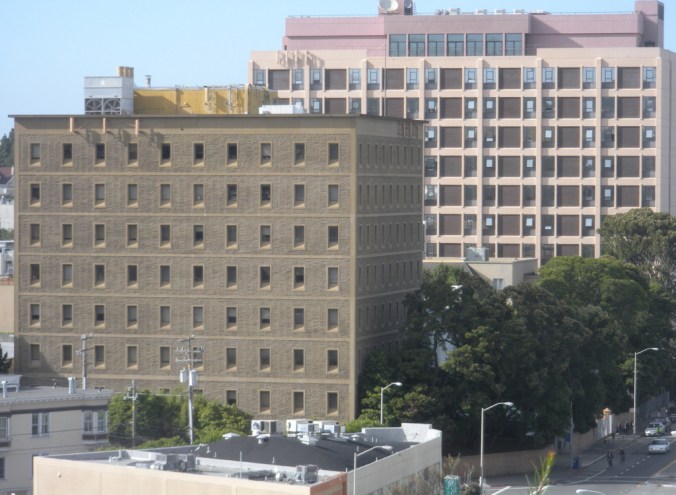
PHOTO: St. Luke’s Hospital, as seen from Coleridge near Esmerelda, by sftrajan