Bernal Heights Real Estate Report: Ridiculous Spring 2014 Edition

BernalHomes.May2014

The latest monthly real estate report from Downing & Company indicates that the Bernal real estate boom show no sign of abating — which is good or bad, depending on your personal situation. Either way, the average sale price in April 2014 hovered at around 1.03 million, with the median at $998K. Downing says:

April was a busy month for home sales in Bernal Heights. Last month 18 sales were completed at an average sale price of $1,028,722.

With the cat out of the bag about Bernal Heights being named the hottest neighborhood in the country and all the hype that came with that designation we thought it would be interesting to take a look at some recent price appreciation on a few homes in this ‘hood. Some of the results we found were impressive.

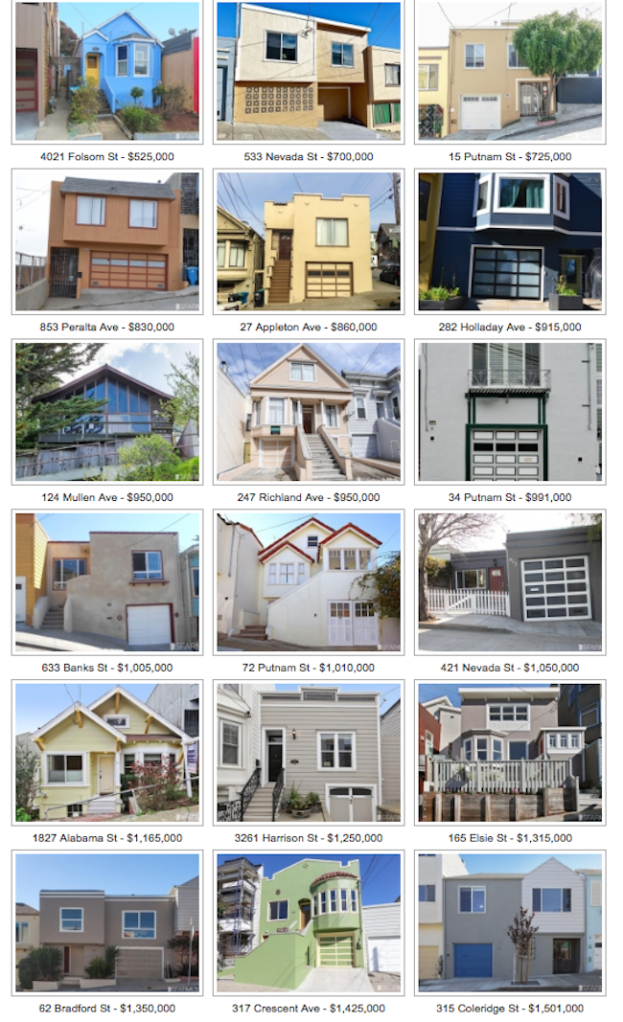
Case in point, the sale of 315 Coleridge Street. Back in January 2012 this home was purchased for $850,000. It just sold for $1,501,000 representing a 78% bump in value. But here’s the real kicker – this home was NOT significantly renovated prior to its recent sale. That is some serious organic price appreciation over a 28 month holding period.

Here’s another one – 3261 Harrison Street. Back in July 2011, this home was purchased for $842,500. It sold last month for $1,250,000, a 48% increase in value. And how about 165 Elsie Street. Its prior sale was in December 2009 at $862,000. This home recently sold for $1,315,000, representing a 53% increase in value. Like the Coleridge property, neither of these homes were significantly updated prior to sale.

Those are some healthy price gains in a relatively short period of time. So what’s driving up prices? The hype factor? Tech job growth? The tech IPO market? The severe imbalance in the supply & demand of homes for sale? International investors? Low mortgage interest rates? A combination of all these things? Take your pick.

Click through for a more detailed breakdown of the sales mix.

IMAGE: Downing & Co.

Your Bernal Heights Crime Report for April 2014: General Trends Good, But Rapes Are Up

sfpdtaurus

Neighbor Sarah, your invaluable volunteer Bernal Heights crime reporter, attended the SFPD Ingleside Community meeting on DATETK, and she shares these notes on the latest Bernal Heights crime patterns.

Executive Summary: Trending positive.

Read on, read carefully, and stay safe:

Here are my notes from the May 20 community meeting at the Ingleside Station. Amber from the BHNC and several other Bernal neighbors attended as well.

Capt. Falvey presided.

CRIME STATS AND TRENDS (See attached Compstat report)

Overall, good in April.

The one startling number is rape – 10 vs 5 YTD. In 2/3 of cases, was a known suspect (date rape or spousal rape). Made 5 arrests this year for rape.

Robberies down 25% YTD. On pace for 16 in May vs 36 last May. Average has been 32/mo over past 2 years.
Cell phone robberies down, but two recent thefts/robberies on bus near Glen Park BART – someone grabbed phone from passenger and jumped off bus at bus stop. Don’t look at your phone when you’re riding MUNI, esp. if you’re sitting near an exit or approaching a stop.

Not a lot in the way of robbery patterns right now.

Aggravated assaults up, driven by domestic violence and family violence.

Burglaries are down 25% YTD. Only one bike stolen in Bernal from garage – recent arrests seem to have nabbed right people.

Auto boostings down too. Auto thefts remain high – got grant from downtown to have license-plate-reading devices on patrol cars. 26 arrests YTD, 7 last month. Stolen cars still mostly used for transportation and turn up at some point. Increase in cars from other districts being recovered in our district. Pre-2001 Hondas and Acuras make up about 50% (which is actually down from levels in past).

Ingleside is 2nd largest population, 6th highest in crime in SF, 3rd safest per 1000 people (Richmond and Taraval have less crime).

Felony crime overall down 15% YTD.
Auto theft is current priority.
Serving a lot more search warrants these days.

TRAFFIC ENFORCEMENT

1000 citations in April, +35% YTD Huge emphasis for SFPD

No traffic trailer right now – one loaned to Sunset/Yorba because of recent collisions and one in the shop (should be back soon)

77-year-old pedestrian struck at 30th/Dolores – report says pedestrian was crossing against light.

Parents, do not cross with kids in middle of the street! Teaches them it’s OK.

ILLEGAL GAMBLING OPERATIONS

Court ruling against sweepstakes gambling; Cybertime and Netstop closed down. One cafe left – City Attorney meeting with cafe’s attorneys.

The other trend here is vacant buildings with windows covered, machines inside. Working with City Attorney to go after property owners.

GRAFFITI ABATEMENT – Officer Martin Ferreira

He has been in this unit for three years. 201 arrests last year: 175 adults, 26 juveniles. Dispels myth that most graffiti vandals are aimless youth. Profile is more thrillseeker, “extreme sport” type.

5 arrests last month in Ingleside – from 2 incidents, one on Mission corridor, one on Alemany corridor. One crew was from LA. Total of four adults, one juvenile arrested.

White garbage containers (to hold bins inside) being tagged in Outer Mission. Remove graffiti right away – best deterrent. Lights and cameras good as well.

If your house is hit, make a police report with cost estimate to repair damage. Threshold for felony is just $400 in damage.
Most juveniles arrested are sent to program where they have to paint over graffiti for 96 hours in total.

Current prolific tagger is “Spark” – not IDed yet.

Send photos of tags to graffiti unit – martin.ferreira@sfgov.org
Most graffiti is NOT gang-related (95% is NOT gang) except in certain corridors in Mission (22nd/Florida)

Who is responsible for graffiti on AT&T boxes? AT&T. Call 311 to notify. DPW will notify AT&T. Eradication is key.

EVENTS

8/5 National Night Out at Police Academy (350 Amber next to Diamond Hts Safeway), 5-8pm. Will be a really good event – specialty units, police demos, free BBQ, giveaways, lots of stuff for kids.

Q&A

Problem house in Central Bernal – old occupants coming back after having been evicted and after property owner settled with City Atty. Question about why no arrests? Property owner needs to sign citizens’ arrest but has not done that. Sale pending and new owner should take over soon.

Glen Canyon Park – people speeding down Elk, running stop signs. Camps about to start. Request enforcement.

InglesideCompstatApril2014

Many many many thanks to Neighbor Sarah for the notes and her dedication to keeping Bernal safe.

PHOTO: Telstar Logistics

Tonight: Glamorous Art Opening Party at Cafe St. Jorge

PRETTY-HEAVYFINALFLYER

Andrea de Francisco, founder of the fabulous and transformative Cafe St. Jorge on Mission near Cortand, invites one and all to an art opening happening at the cafe tonight:

THE SHOW: PRETTY/HEAVY

PRETTY/HEAVY explores themes of weight, texture, pattern, perspective and geometry. With common interests in materials both natural and man-made ranging from crystals to carpet padding, each artist illustrates her own personal juxtaposition of form and content…negative/positive, crystalline/concrete…

PRETTY/HEAVY.

Famed guest 60’s inspired DJ TYLAWAVE will be spinning Motown, Surf Rock, Doo-wop and 60’s Soul all on 45s all night. Find her on the regular spinning at neighboring bar, El Amigo, the last Sunday of every month.

OPENING: FRIDAY, MAY 30TH // 7-9PM
SHOWING: MAY 30 – AUGUST 14
WHERE: CAFE ST. JORGE // 3438 MISSION STREET

THE ARTISTS: Valicia Byrne and Alex Steele

Valicia Byrne is a mixed media artist currently living in San Francisco. She received a BFA in Studio Art from San Francisco State University with emphasis in painting, printmaking and book arts. Byrne uses photomechanical reproduction to manipulate images of both natural and cosmic origin. Her accumulation of miscellaneous matter and application of geometric aesthetics to an array of organic textures create both balanced and chaotic compositions.

Alex Steele is a multidisciplinary artist currently living in San Francisco. She received her BFA from The San Francisco Art Institute. Steele’s work applies traditional collage methods to both paper as well as an array of hand dyed textiles. By exploring themes of construction and deconstruction, Steele creates landscapes featuring natural imagery within rigid man-made templates. Her “collages” border on minimal, but illustrate a different kind of depth.

Kickstarter Campaign Underway for New Red Hill Station Oyster Bar on Cortland

redhillfish

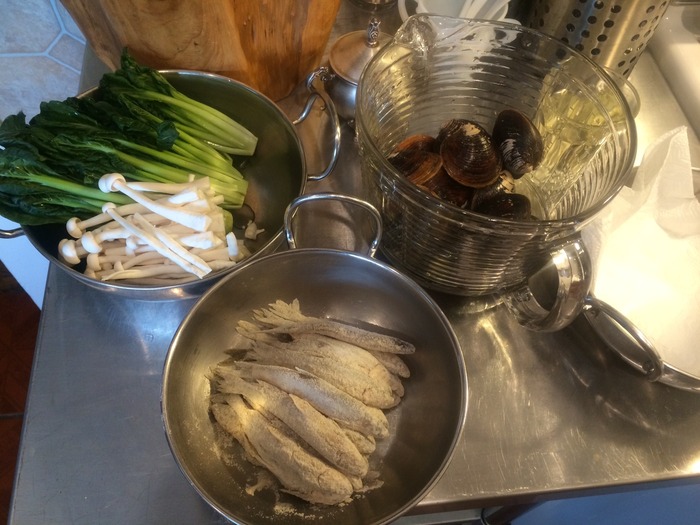
When the new Red Hill Station oyster and seafood bar opens, it will be exciting new addition to the Cortlandia culinary ecosystem. In the meantime, though, co-founders (and Bernal neighbors) Amy and Taylor are doing the contemporary fundraising thing by holding a Kickstarter campaign:

We are Amy Reticker and Taylor Pedersen of Red Hill Station and we’re opening a restaurant in our neighborhood because Bernal Heights needs Oysters. We’ve signed the lease, begun renovations, and have a target opening date in June!

We have a $20k budget gap we need to close. With the help of Kickstarter, and you, I think we can make our funding goal, and our opening day in June.

I can’t wait to cook delicious seafood that would make my Sicilian grandmother proud.

Hurry! Artists Wanted for (New) 2014 Summer Stroll Art Walk

BernalArtWalk_callforartist

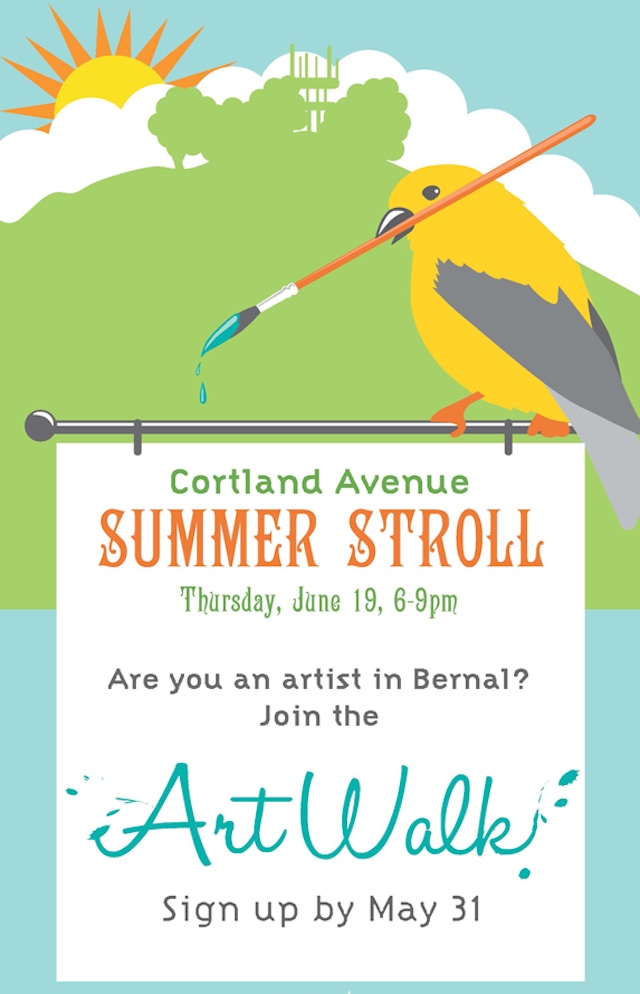
Neighbor Arno shares this call for artists who seek to participate in the new Art Walk that will happen during the glamorous Summer Stroll on Cortland in June. But hurry!  The deadline for submissions it at hand:

The Summer Stroll on Cortland is upon us again. June 19, 6pm-9pm.

Featuring local businesses, artists and talent. This year, things get extra interesting: we have an Art Walk at the event.

In and between the Cortland Ave venues, San Fransisco artists will show their creations, artwork, and performances. Bernal will not disappoint.

Bernal neighbor Alex Markiel is orchestrating the Art Walk.

CALLING ALL BERNAL ARTISTS to participate in the ART WALK
at the Summer Stroll on Cortland on June 19, 6pm-9pm

(San Francisco artists admiring Bernal Heights are welcome as well.)

Please register for the Art Walk by May 31.

It’s free!

We will do our best to match the artists with venues and places of the Summer Stroll.

Secured: Precita Park to be Removed from Calle 24 District

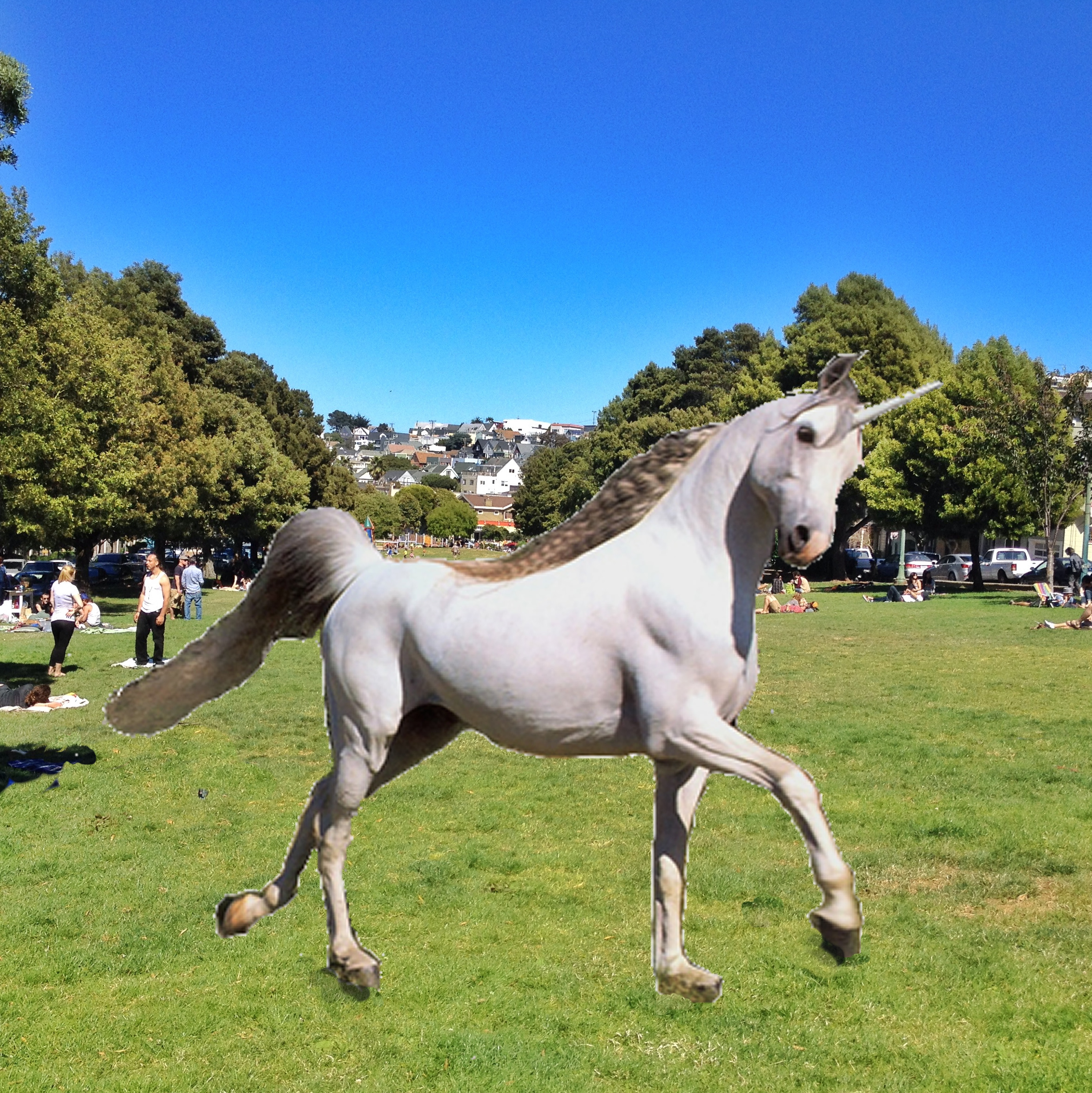
PrecitaUnicorn

The campaign was brief, and it was intense, but we are pleased to report that it was successful. Precitagate has come to a conclusion. With the support of the 24th Street merchants group, D9 Supervisor David Campos has announced plans to remove Precita Park from the Calle 24 district and restore it to the Citizens of Bernal Heights.

As you recall (because it happened just yesterday), Bernal Heights residents were surprised to learn — belatedly, and for the first time — that Precita Park had been included  as part of the new Calle 24 Latino Cultural District created by merchants from 24th Street in the Mission. The resolution creating Calle 24 was sponsored by Supervisor Campos, and in a process that’s still not fully understood, Precita Park was included as part of the Calle 24 district — and thus may have been subject to various special use restrictions that a Calle 24 district designation may one day entail. Only, no one remembered to tell the residents and merchants of Precita Park that Precita Park was part of the Calle 24 district. Oops.

In any event, the inappropriateness of this has now been acknowledged, and Supervisor Campos’s office released a statement late yesterday to announce that Precita Park will be removed from Calle 24:

Recognizing Calle 24 Latino Cultural District is important to preserve the integrity of the neighborhood and promote its unique spirit. It was the intent of the community leaders and organizers working on this project to demonstrate the historical significance of 24th Street and the surrounding places that have impacted the neighborhood. Precita Park and La Raza Park were two of many significant landmarks included in the resolution. However, because of concerns related to future steps regarding the formal recognition of the Calle 24 Latino Cultural District, on Tuesday, I will submit a clarifying resolution that will amend the resolution and remove Precita Park and La Raza Park from the Latino Cultural District.

This is welcome news, and we are thrilled to see this matter resolved unambiguously. Bernalwood will continue to monitor the Calle 24 resolution to ensure that Precita Park is removed as promised.

Some outstanding issues remain, however. Like, how did Precita Park become part of Calle 24 in the first place? And why didn’t anyone tell us about it along the way?

Finding definitive answers to these questions has been challenging. Thankfully, we also heard from Erick Arguello, president of the Calle 24 Merchants and Neighbors Association, who writes:

Calle 24 SF is a community organization that lead the planning efforts for the [Calle 24] resolution with the Latino Historical Society and SF Historical Society. The Latino Cultural District is the resolution that covers the area. Precita Park, Potrero del Sol were added when the historical context statement was created. It brought together areas that had historical significance in the Latino community, its history and contributions for the area. Precita Park is were the first Carnaval events were held over 35 years ago and continues today. Many rallies and protest by the Latino community were held there when Los Siete were incarcerated. 24th and Mission BART Plaza also holds historical significance for the Latino Community, called Plaza Sandino by the community. This occured when many rallies and protest were centered on the plaza during the Central American war in Nicaragua.

Its a symbolic resolution that has no teeth to land use, the park, businesses or the surrounding Precita Valley. Many other areas or sites of San Francisco will be added when the SF Latino Historical context statement is completed. (Which is a separate project)

Its not a historic district, but a cultural district. The name itself may bring confusion. Its basically saying that Precita Park holds historical significance in the history of the Latino community of San Francisco. Calle 24 and the surrounding area holds many many points of history and culture and events.

If we offended anyone it was not the intention and a mistake on our part for not reaching out.

We are moving to remove Precita Park from the resolution.

Bernal Heights is grateful to Mr. Arguello for clarifying this, and for his understanding in removing Precita Park from the Calle 24 district. Soon, we hope to return to the pre-Calle 24 status quo.

24th Street will be part of the Mission.

Precita Park will be part of Bernal Heights.

Bernal Heights remains extremely proud of its Latino history and culture, and the borders that distinguish Precita Park from 24th Street will remain invisible and permeable, in an arrangement that provides rich benefits to both neighborhoods — as has been the case for decades and generations before, and (we hope) many more to come.

PHOTO: Precita Park on May 25, 2014, by Telstar Logistics

Supervisor Campos Annexes Precita Park, Cedes It to Mission District Merchants and Power-Brokers

Precitacrimea4

Bernalwood has been monitoring developments in the Mission District, where our D9 Supervisor David Campos has spearheaded an effort to formally recognize the Latino character of the Mission’s lower 24th Street corridor. Last week, this effort culminated in the unanimous passage by the San Francisco Board of Supervisors of a Campos-sponsored resolution establishing a “Calle 24 Latino Cultural District.”

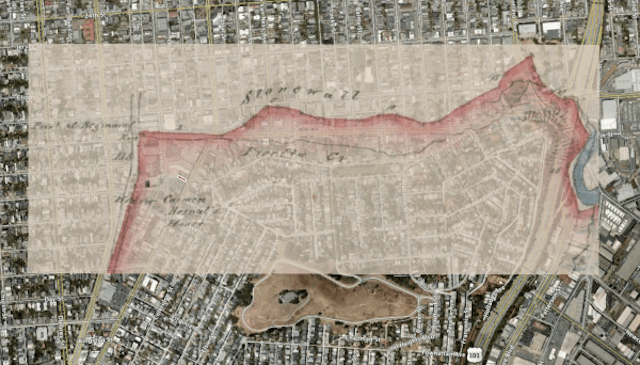
Bernalwood did not regard Calle 24 as a matter of immediate concern to the Citizens of Bernal Heights, because the effort was championed by the 24th Street merchant’s association. Publicly, Calle 24 was always described as a measure focused on the lower 24th Street corridor. Plus, it’s called “Calle 24” — which sure seemed like a good indication that Calle 24 was not about Bernal Heights. Because 24th Street is not part of Bernal Heights. Because for the last 175 years the Mission District has ended just north of Precita Creek/Army/Cesar Chavez. Because the area south of Precita Creek/Army/Cesar Chavez has always been, legally and unambiguously, Bernal territory. Because, in the 1850s, there was even a stone wall in place to emphasize that point:
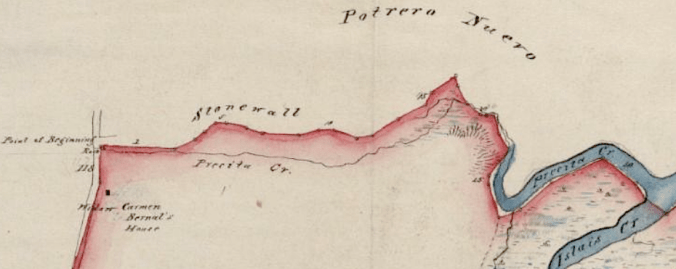
Screen Shot 2014-05-24 at 5.44.40 PM

1857-bernal-tract-overlay

Since basically forever, 24th Street and Precita Park have been adjacent neighborhoods but wholly different urban ecosystems and entities. Which is why Bernalwood viewed Calle 24 as a matter to be decided exclusively by our esteemed neighbors from the Mission District.

Which, unfortunately, is precisely what happened.

Bernalwood has learned that, for reasons not yet known, Precita Park in Bernal Heights was included as part of the Calle 24 district that was legally established in the resolution sponsored by Supervisor David Campos. Bernalwood also discovered that neighbors, merchants, and neighborhood groups in and around Precita Park were not consulted or informed about the inclusion of Precita Park in Calle 24 before the resolution was voted on by the full Board of Supervisors. Nor did Precita Park neighbors know about it after the resolution passed and went into effect. In fact, most Precita Park neighbors are probably learning that Precita Park is part of Calle 24 for the first time, right now, as they read this.

Hi Precita Park neighbors! According to this new legislation, you’re now part of Calle 24. Surprise!!

Here’s the text from the resolution adopted last week by the Board of Supervisors:

WHEREAS, the boundary of the Calle 24 (“Veienticuarto”) Latino Cultural District shall be the area bound by Mission Street to the West, Potrero Street to the East, 22nd Street to the North and Cesar Chavez Street to the South, including the 24th Street commercial corridor from Bartlett to Potrero Avenue.

All well and good so far, right? Those are appropriate boundaries for a special district focused on lower 24th Street. But then comes the weird, Crimea-style redrawing of the map:

Additionally, the Calle 24 (“Veienticuarto”) Latino Cultural District shall include La Raza Park (aldo known as Potrero Del Sol Park), Precita Park, and the Mission Cultural Center because of the community and cultural significance associated with these places.

Emphasis added. Because otherwise you might have missed it. Which may (or may not) have been the goal all along.

And so, with a stroke of the pen, Precita Park was annexed to become part of the Mission’s Calle 24 cultural district.

Is the Calle 24 designation good for Precita Park? Is Calle 24 bad for Precita Park?

We don’t have any idea, because the legislation sponsored by Supervisor Campos hands Precita Park over to a group of 24th Street merchants and Mission District power-brokers, but the Bernal Heights community was not given any opportunity whatsoever to evaluate the proposal beforehand. Now, it’s already a done deal.

Bernalwood has confirmed that Precita Valley Neighbors was not consulted about the Calle 24 designation. This is extremely odd, because Precita Valley Neighbors is a City-recognized nonprofit neighborhood group that has done outstanding work organizing and beautifying Precita Park. They hold monthly meetings at Charlie’s Cafe. They are in regular contact with various City authorities. They are awesome, and totally on top of everything, and if that’s not enough Precita Park street cred, PVN even orchestrated the restoration of the historic, beloved “penultimate satellite spinner” in Precita Playground. (Amen!!!) Yet Precita Valley Neighbors had no knowledge Precita Park was included in Calle 24.

Bernalwood also contacted the owners of three prominent Precita Park businesses: Precita Park Cafe, Harvest Hills Market, and Hillside Supper Club. None had been informed of any effort to include Precita Park in Calle 24, and none had been contacted about it by 24th Street merchants or Calle 24 organizers. All were surprised to learn that Precita Park had been designated as part of the Calle 24 district. (Bernalwood was unable to reach Charlie from Charlie’s Cafe over the weekend.)

We stopped by the Precita Center, just off Precita Park, to see if they had any insight. Bernalwood spoke to the manager on duty at the Precita Center to ask if he knew anything about Calle 24. “That’s the 24th Street thing,” he said. He too did not know that Calle 24 includes Precita Park.

Precita Eyes is headquartered on 24th Street, although the group also maintains a studio on Precita Park. With storefronts in both neighborhoods, perhaps Precita Eyes had requested the Calle 24 designation? Bernalwood visited Precita Eyes on 24th Street last Saturday, to inquire. The gentleman behind the counter at Precita Eyes on 24th Street said, “Why would Precita Park be in Calle 24? That’s in Bernal Heights!” He recommended we speak with Precita Eyes founder Susan Cervantes. Cervantes told Bernalwood that Precita Eyes had not requested to make Precita Park part of Calle 24, although she added that she thought Precita Park “was included at the last minute.”

All this would be kind of amusing in a Putinesque sort of way, except it’s not. The inclusion of Precita Park in the Calle 24 District designation may have very real legal, zoning, and planning implications in the years and decades to come — impacts that may create new use restrictions for Bernal homeowners, residents, and merchants. Supervisor Campos himself emphasized this last month in the San Francisco Chronicle, in an article that framed the creation of the Calle 24 Latino Cultural District as the first step on a path to create a Japantown-style enclave in the Mission:

Eventually, Campos said, ideas generated by the community as well as information from the historic context statement could help inform new city laws such as zoning restrictions and other protections to ensure the area’s murals, businesses and community groups stay put.

“It’s really about preserving something that is very fragile that could be lost,” Campos said. “Calle 24 has become the focal point of Latino identity and culture in the Mission. … This resolution puts it on the record, recognizing this as a cultural corridor, recognizing the cultural heritage and history with the understanding there has to be a much longer community process where (people) can talk about what that means, what we want to preserve, emphasize and protect.”

Here’s how the objectives of Calle 24 are explained in the resolution approved by the Board of Supervisors:

[The purpose of the Calle 24 designation is] to stabilize the displacement of Latino businesses and residents, preserve Calle 24 as the center of Latino culture and commerce, enhance the unique nature of Calle 24 as a special place for San Francisco’s residents and tourists, and ensure that the City of San Francisco and interested stakeholders have an opportunity to work collaboratively on a community planning process, which may result in the Designation of a Special Use District or other amendment to Planning Code.

These are important goals. It just seems really really really inappropriate that if Calle 24 is all about engaging “interested stakeholders” in a “community planning process,” how come no one ever bothered to engage North Bernal the Communities of Precitaville and Santana Rancho to find out if Precita Park should be included in Calle 24 at all?

Precita Park is neither geographically nor culturally synonymous with the Mission or lower 24th Street. Never has been. Ever. In fact, Precita Park is so integral to Bernal Heights and so distinct from 24th Street that it was originally called Bernal Park. Here’s a map from 1905 (Bonus Fun Fact: The zig-zagging Serpentine Ave. traces the route of the Bernal family’s original stone wall):
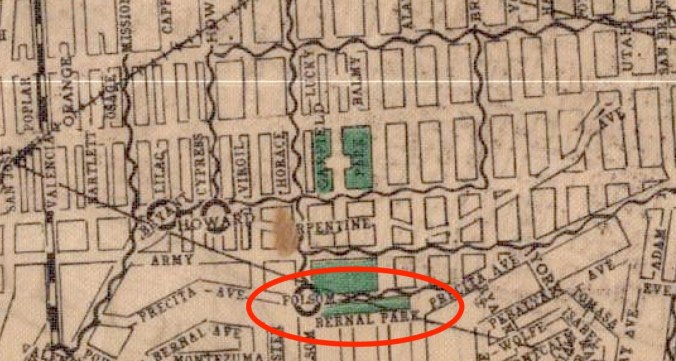
BernalPark2

Bernal Park was established in 1894 and named in honor of the Bernal  family. The park’s name wasn’t formally changed to Precita Park until 1973.

This also points to a fact that is rather obvious to everyone except the people who drafted the Calle 24 resolution: Bernal Heights has its own proud, but distinct history of Latino culture and influence. Our history begins with Jose Cornelio Bernal. Our legacy includes Carlos Santana, who lived on Mullen Street and, as one neighbor reminds Bernalwood, “began his career playing for all of us and our families every Sunday [in Precita Park] during the summers, before he was discovered at Woodstock.” Latino culture is a cherished part of life in Bernal Heights, and its influence is enthusiastically celebrated to the present day, in ways public and private.

Yet there none of that in the Calle 24 resolution. In fact, there’s not one mention of Bernal Heights in the entire document. Not a peep. It’s all Mission District, Mission District, Mission District…. from the start of the Calle 24 resolution to the end. Supervisor Campos sponsored legislation that gives Precita Park to Calle 24, but he never bothered to inform the community that lives and works in Precita Park before he overturned more than 150 years of tradition and precedent and sold-out a chunk of Bernal Heights to the merchants of 24th Street.

The appropriate remedy for this failure is straightforward: Bring together representatives of the Precita Park neighborhood, its residents, and its merchants. For the first time, give Bernal Heights the opportunity to evaluate the present and future ramifications of Calle 24 designation. Allow these representatives to publicly decide whether or not Precita Park should be included in the Calle 24 district and subject to whatever legal implications that might entail, at present or in the future.

Until such participation and public consent from the Bernal Heights community exists, Bernalwood puts Supervisor David Campos and Mayor Ed Lee on notice: The inclusion of Precita Park in Calle 24 is fundamentally illegitimate. It an act of underhanded appropriation, a fraudulent misrepresentation, an involuntary annexation, and an intolerable intrusion upon the self-determination of the Bernal Heights community, which is independent of any district or planning entity constituted, controlled, and dominated by lower 24th Street.

UPDATE 29 May: Precita Park will be removed from the Called 24 District
If Two Homes Are Built on This Bernal Heights Property, Will It Explode in a Giant Scorching Fireball?

bernaldevsite2

There’s a design review committee meeting happening tomorrow night, Wednesday, May 28 at 7 pm at the Precita Center.

The topic on the agenda will be that proposal to build two single-family homes at 3516 and 3526 Folsom on the southeast slope of Bernal Hill, on the undeveloped lot just below Bernal Heights Boulevard at Folsom and Chapman. There are questions to consider. Like, how is the new right-of-way going to work, since there’s no road there now, and the slope is so hella steep? And what about drainage, and the garden that’s now on the site, and the existing character of the neighborhood? Also, if homes are built here, will the site explode in a gigantic, scorching, San Bruno-style fireball?

The mortal peril associated with the giant scorching fireball scenario introduces a dramatic new element to the usual Bernal Heights design review fare. The giant scorching fireball scenario has been popularized by some neighbors around the proposed development site, and they have detailed their concerns in a flyer:

blastradiusposter

Let’s zoom and enhance for better legibility:

blastradiusposter.detail

Blast radius! Oh my.

But is this true? Is this pipeline the same type that blew up in San Bruno? How likely is it that a giant scorching fireball scenario will ultimately engulf everything inside the red circle?

Remain calm, Citizens of Bernalwood. Let’s walk through this piece by piece.

The gas pipeline that runs through Bernal Heights is called Line 109, and it is definitely serious business. The 2010 San Bruno explosion is fresh in Bay Area memory, but that was Line 132 — a different pipeline altogether. That said, Line 109 also exploded once, in a giant scorching fireball, right here in Bernal Heights, back in 1963.

So there’s that.

pgepipelinebernal.2014

Bernalwood reported on the present-day status of Line 109 back in 2011. At the time, we said:

The good news is, our section of Line 109 is relatively new [installed in the early 1980s], and thus hopefully does not have any of the shoddy, 1950s-era welds that were blamed in the San Bruno explosion. Likwise, it seems that an active inspection regimen is in place to validate the line’s integrity.

And so, we concluded:

Given the magnitude of PG&E’s recent mismanagement of its pipeline infrastructure, and the tremendous potential for harm, unwavering diligence will be required by both Bernal Heights residents and our local authorities to ensure the pipeline will remain safe for decades to come.

So, diligence.

That brings us to the present day. Bernalwood has been contacted by a group of neighbors around the proposed development who have been raising alarm about the giant scorching fireball scenario and rallying to oppose construction on the site. We also sent a series of technical questions to PG&E, to get additional information about the status of the pipeline at this location.

We will hear from both sides.

Writing on behalf of the neighbors who oppose the project, Neighbor Maiyah tells Bernalwood:

The site is at Folsom and Chapman, right next to the community garden. There’s a huge gas transmission line right next to the two plots… just like the one in San Bruno. It’s the same line that exploded in 1963 near Alemany and injured 9 firefighters (one also died of a heart attack) and blew up a house. I’m now a part of a small group of concerned Bernal residents who are trying to bring to light the facts of this situation and to inform others of the potential dangers.

I saw the developer (Fabien Lannoye) at the East Slope Design Review Board Meeting in April and he seemed to be not very concerned about the pipeline, not knowing the exact depth of it. He sort of shrugged when he said PG&E had no record of it. Bernal residents had asked him for a comprehensive site plan, the exact location of the pipe, the impact on the nearby community garden, and many more questions and his answer was that he didn’t ever receive the letter in the mail. It made me feel uneasy to say the least.

Just thinking about that huge transmission line with heavy construction equipment digging and moving earth over and around it on one of the steepest grades in San Francisco (35%), makes me cringe.

One of our members recently emailed Robert Bea, Professor Emeritus at the Center for Catastrophic Risk Management at UC Berkeley, who investigated the San Bruno disaster. She asked him if she should be concerned about the pipe line here in Bernal. He replied yes, with the facts that have been gathered so far: (1) the pipeline is old (1980’s) installed in an area with highly variable topography, (2) there are no records on the construction, operation and maintenance of the pipeline, (3) there are no definitive guidelines to determine if the pipeline is ‘safe’ and ‘reliable’, (4) there is apparent confusion about who is responsible (government, industrial – commercial) for the pipeline safety, reliability, and integrity.

This list is identical to the list of concerns that summarized causation of the San Bruno Line 132 gas pipeline disaster.

I live about a block from the proposed construction site, so I’m not too worried, but those of us who live right next to the pipeline are thinking twice about their safety right now.

That’s the argument against building two homes on the lots at 3516 and 3526 Folsom.

To better understand the technical issues, Bernalwood reached out to PG&E with a detailed series of questions related to Line 109 in Bernal Heights and potential construction hazards at the proposed development site. PG&E was very responsive, and we received answers to our questions late last week.

Bernalwood’s questions, and PG&E’s responses, are provided here in their entirety:

1. When was the section of pipeline under the the proposed home site installed? When was it last upgraded?

The line was installed in 1981. PG&E has a comprehensive inspection and monitoring program to ensure the safe operation of this line.

2. How often is this section of 109 inspected? What does the inspection entail? When did the last inspection take place? What were the results of that inspection?

This section of L-109 was successfully strength tested (via a hydrostatic pressure test) at the time of installation. PG&E records show no history of leaks for L-109 in this area.

PG&E has a comprehensive inspection and monitoring program to ensure the safety of its natural gas transmission pipeline system.  PG&E regularly conducts patrols, leak surveys, and cathodic protection (corrosion protection) system inspections for its natural gas pipelines.  Any issues identified as a threat to public safety are addressed immediately.  PG&E also performs integrity assessments of certain gas transmission pipelines in urban and suburban areas.

Patrols:  PG&E patrols its gas transmission pipelines at least quarterly to look for indications of missing pipeline markers, construction activity and other factors that may threaten the pipeline.  L-109 through the [Bernal Heights] neighborhood was last aerially patrolled in May 2014 and no issues were found.

Leak Surveys:  PG&E conducts leak surveys at least annually of its natural gas transmission pipelines.  Leak surveys are generally conducted by a leak surveyor walking above the pipeline with leak detection instruments.  L-109 in San Francisco was last leak surveyed in April 2014 and no leaks were found.

Cathodic Protection System Inspections:  PG&E utilizes an active cathodic protection (CP) system on its gas transmission and steel distribution pipelines to protect them against corrosion.  PG&E inspects its CP systems every two months to ensure they are operating correctly.  The CP systems on L-109 in this area were last inspected in May 2014 and were found to be operating correctly.

Integrity Assessments:  There are three federally-approved methods to complete a transmission pipeline integrity management baseline assessment:  In-Line Inspections (ILI), External Corrosion Direct Assessment (ECDA) and Pressure Testing.  An In-Line Inspection involves a tool (commonly known as a “pig”) being inserted into the pipeline to identify any areas of concern such as potential metal loss (corrosion) or geometric abnormalities (dents) in the pipeline.  An ECDA involves an indirect, above-ground electrical survey to detect coating defects and the level of cathodic protection.  Excavations are performed to do a direct examination of the pipe in areas of concern as required by federal regulations.  Pressure testing is a strength test normally conducted using water, which is also referred to as a hydrostatic test.

PG&E performed an ECDA on L-109 in this area in 2009 and no issues were found.  PG&E plans to perform another ECDA on L-109 in this area in 2015.  This section of L-109 also had an ICDA (Internal Corrosion Direct Assessment) performed in 2012, and no issues were found.

Automated Shut-off Valves: There are two types of automated shut-off valves recognized within the natural gas industry: Remote Controlled Valves (RCV’s), which can be operated remotely from PG&E’s Gas Control Center, and Automatic Shutoff Valves (ASV’s) that will close automatically as a result of rapidly falling pipeline pressures and/or increased flows at the valve location. There is an RCV on L-109 in Daly City that can be used to isolate the section of L-109 that runs through this neighborhood.

3. Is this section of pipeline 109  “the same type that blew up in San Bruno?”

No. Line 109 operates at a much lower pressure and is smaller in diameter, and is of a much more recent vintage.

4. What safety procedures does PG&E put in place when home or street contruction occurs on the site of a major gas pipeline like 109?

Anytime a contractor or resident makes an excavation on franchise or private property, they must call 811 (State Law for Underground Service Alerts [USA]) in advance so we can identify and properly locate our UG facilities.  When our Damage Prevention group gets the USA request and identifies a critical facility like a gas transmission line in the scope of work, they notify the caller that they must contact PG&E for a standby employee.  PG&E must observe a safe excavation around our lines if any digging is within 10’ of it.  We must be present when they dig around this line.  Our standby inspector will instruct and guide the excavating party to avoid damage.  Excavators who violate this Law are subject to fines.

5. Does the steep grade of the Folsom site have any impact on Pipeline 109? Given the grade at the proposed site, are any special provisions or procedures required to ensure the safety of the pipeline during construction?

The grade of the street have no impacts on the operation of the line.  If the cover is not removed or disturbed within 10’ of the line, there are no special precautions needed.

6. Are there any specific technical or safety challenges posed by the proposed home site, and if so, how does PG&E plan to address them?

As long as the structures are built within the property lines similar to the existing [homes on Folsom Street], they will not pose any issues for us patrolling and maintaining that line.  The proposed home sites are not on top of line 109, and are no closer to the line than existing homes in the neighborhood.

Additional Background: In the area outlined in the map [Bernalwood sent PG&E, shown above], PG&E’s natural gas transmission pipeline L-109 runs down Folsom Street and turns east to follow Bernal Heights Blvd.  Line 109 in this area is a 26-inch diameter steel pipeline installed in 1981 and has a maximum allowable operating pressure (MAOP) of 150 pounds per square inch gage (psig), which is 19.8% of the pipe’s specified minimum yield strength (SMYS).  This provides a considerable margin of safety, since it would take a pressure over 750 psig to cause the steel in the pipe to begin to deform.

Whew. Someone should turn that into a TED talk.

Bernalwood’s conclusion from the above is as follows: The handbill that has been posted around Bernal Heights by concerned neighbors contains several errors. Line 109 in Bernal Heights is not the same type of pipeline as Line 132, which exploded in San Bruno. The inspection history provided by PG&E undermines the assertion that “there are no records on the construction, operation and maintenance of the pipeline.” Line 109 has been the subject of a recent and ongoing inspection regimen, and if the developer follows the required safety protocols, the hazards associated with construction on the proposed development site should be routine and manageable.

Here too, rigorous diligence will be required to ensure the project is executed and managed properly. If such diligence is applied, the Citizens of Bernalwood may soon enjoy the company of a few new neighbors on the upper reaches of Folsom Street, without having to endure the hardship and mortal peril associated with a giant scorching fireball emanating from the new home site.

Reasonable minds might reasonably view this matter differently. Either way, see you at the design review meeting, 7pm on Wednesday, May 28 at Precita Center.

Let Us Now Enjoy Some Recent Photography of Bernal Heights

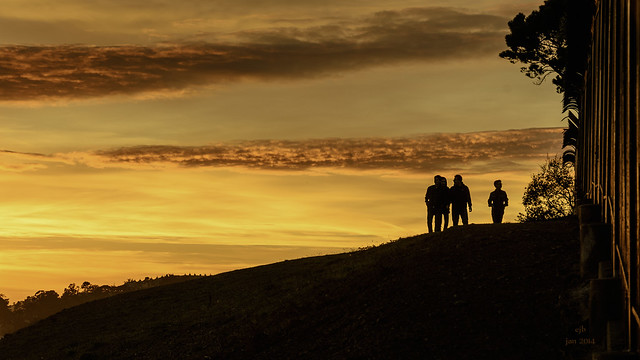
The watchers

Let’s have another photo show! We begin with a big round of applause please for Ed Brownson, who snapped this classic California flaming sunset from atop Bernal Hill. Someone needs to reproduce this image in airbrush on the side of a 1970s custom van. Or an iron-on t-shirt graphic.

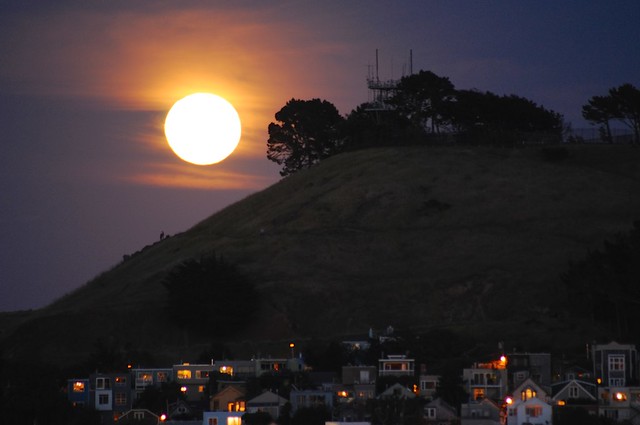
Sean Timberlake captured this jaw-dropper during last week’s full moon. Pour yourself a bowl of wow:

DSC_0413

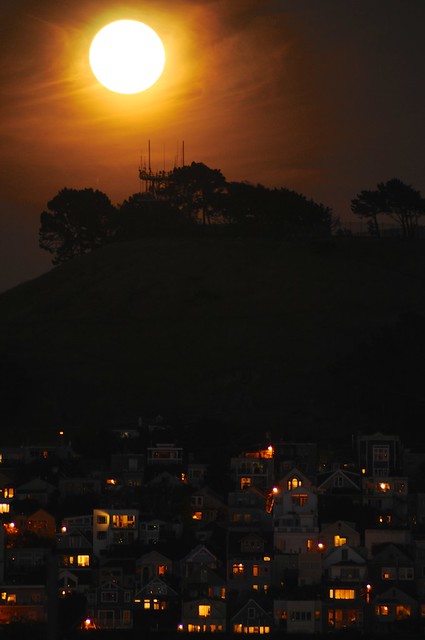
Want another one from Sean? Of course you do. Encore! Encore!

DSC_0438

Here’s the glorious sunrise of May 14, brought to you by Gaelen:

2014-05-04 Sunrise Bernal Hill Run

Gaelen! Encore! Encore!

2014-05-04 Sunrise Bernal Hill Run

And finally, Neighbor Boris demonstrates some very strong photo kung-fu, and Sutro Tower appreciation:

sutro_grass

Why the Water Is Yucky in North Bernal Today, and What Should You Do About It

dirtywater

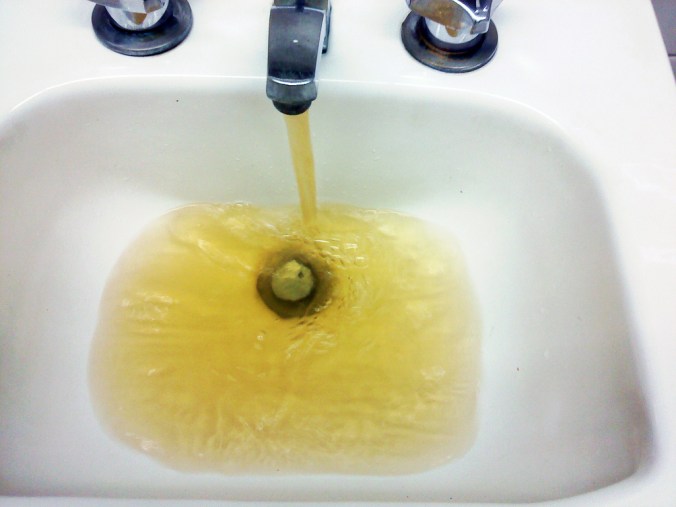
With thanks to the Bernalwood readers who reached out to us, we reached out to our friends at the San Francisco Water Department to find out what’s up with the icky brown water flowing from some household taps in Bernal Heights today.

SFWater kindly responded, and launched a special alert about this incident — and what you should do about it:

A water hydrant was hit by a car on Mullen Avenue at Montcalm Street at approximately 4:30 AM, May 23, 2014, resulting in temporary, discolored water in the Bernal Heights neighborhood and surrounding area. The local fire station turned off the water but the change in pressure in the pipes caused some temporary discoloration of the water.

Why is my water is dirty or discolored?
Dirty or discolored (rusty, yellow, brown) is typically caused by sediments that have become stirred up inside of a water main or pipe. Any increase in water velocity through a pipe or main can cause increased friction against pipe walls that can stir up sediments. Common causes are main breaks, shutdown of a facility, loss of pressure or the opening of a fire hydrant in the immediate area.

What to do?
First, avoid using your hot water so that you don’t draw discolored water into your water heater or boiler. Next, check to see if the water supplying your home or business is clear or dirty/discolored. To do this, open a tap (cold water) on the ground floor as close to the water meter (located in the street) as possible. Typically, this would be a hose bib at the front of the house or a downstairs utility sink. Run the water for 3-5 minutes to see if it runs clear. If not, turn off the tap and repeat in about 20-30 minutes. When the water runs clear at the ground floor tap, flush out your plumbing by opening faucets, and flushing toilets inside your home or business. If your hot water does not run clear, it is possible that the dirty/discolored water has entered your hot water heater or boiler. For safety reasons, it is recommended that you call PG&E or a plumber to flush the water heater or boiler.

Thanks for the useful info, and well played @SFWater!

PHOTO: Dirty water pictured is not in Bernal Heights, and not this year. Shown for illustration purposes only. 2012 photo by Ryan Wohleber via Flickr

Save the Date: 2014 Bernal Hillwide Garage Sale, Aug. 9

bernalgaragesale-2014

It’s Spring Cleaning season. As you clean and sort your trove of worldly crap treasures, keep in mind that you will soon have the opportunity to dispose of these things, and put some money in your pocket, during the 2014 Bernal Heights Hillwide Garage Sale.

A Bernal Heights tradition, this year’s Hillwide Garage Sale happens on August 9, 2014, and Neighbor Michael Minson brings the heads-up:

Hillwide 2014 is scheduled for Saturday, 9-August from 9a-2p. Save the date!

Donations will be collected to get on the map, and all proceeds go to the Bernal Heights Neighborhood Center. Last year we raised over $1,500, with 96 households registered! This year we hope to double that. Check Hillwide.com for updates (registration will open in early summer).

At the moment, we’re also looking for volunteers to join the planning committee. If any Bernal neighbors are interested in getting involved and helping us make 2014 a record-breaking year for the city’s largest single day garage sale, send me a note at Michael@MichaelMinson.com. We need people to help with PR and social media.

hillsidewebbanner2014


Deadline Approaching for 2014 Bernal Heights Outdoor Cinema Submissions

bhoc.precita

Attention, glamtastic Bernal Heights filmmakers and cinephiles!

The 2014 Bernal Heights Outdoor Cinema season is coming up, and NOW is the time to submit your films for inclusion in the series:

Bernal Heights Outdoor Cinema seeks short films or videos in which local residents participated in any aspect of production or distribution for presentation at the 11th annual summer series of free screenings in our local parks, playgrounds and open spaces.

Your submission confirms that you own the rights or have permission from the rights owner to share this work.

Submission deadline: June 1, 2014

Screening dates: September 4 – 6, 2014

To submit a film for consideration, use this entry form. For additional details, email info@bhoutdoorcine.

PHOTO: Top, BHOC at Precita Park, 2012 by Telstar Logistics

Meet the Sneaky Bernal Kid Who Earned a Cameo in the Famous “Bullitt” Car Chase Scene

bullitthen1e

bullittkids2

Our glamorous neighborhood’s most famous Hollywood moment took place in 1968, when Bernal Heights served as the gritty starting point for the classic Steve McQueen car chase sequence in the movie Bullitt.

Writing for the SF Weekly,  Joe Eskenazi tells a sweet “Where are they now?” story about a Bernal kid who scored some cameo screen time during the first moments of the famous Bullitt car chase (at about the 0:24 mark in the video below):

Joe writes:

It all starts with that turn off of Cesar Chavez and a slow cruise up York. And — blink and you’ll miss it — a pair of kids runs across the street where York meets Peralta.

Last week, your humble narrator’s cellphone rang. “This is Angel Sanchez Jr.” said the voice at the other end.

He was one of those kids. [ … ]

A movie like Bullitt offers the chance to look through the window and see an entire city we will never see again.

Sanchez, the boy who ran across the street in front of the movie villains’ Dodge Charger, will be 54 next week. His cameo in city lore was not scripted. Loren Janes, the stuntman who, in reality, drove like Steve McQueen, recently recalled how tightly choreographed the seemingly chaotic scenes were. The repetitious Volkswagen was, in fact, driven by a stuntman (or stuntmen). So was every car on the street, even the cable cars on Filbert. Film crews kept an eye out for vehicles backing out of garages and intervened to prevent pedestrians from becoming hood ornaments. But no one lifted a finger to stop those Bernal Heights kids from running across the street every time the director shouted “action.”

“He’d yell ‘Cut! Cut!’ But, finally, to hell with it. He left it in there,” recalls Sanchez. “We must have run across the street three, four times. We didn’t know any better.”

Sanchez didn’t even realize he was in a movie until many years later. And, by that time, both he — and the neighborhood — had changed.

There’s lots more goodness where this came from, so take a moment to enjoy all of Joe’s article — and the (somewhat melancholy) picture it paints of  life in Bernal Heights during the closing years of the postwar era.