Once upon a time, during the Age of the Ancient Druids, the peoples of southwestern Bernal Heights and northeastern Glen Park were united as one. During that time, our Bernal lands extended continuously to the west, and the Lost Tribe of College Hill was not yet lost. Bernal soil filled the void that divides us today.
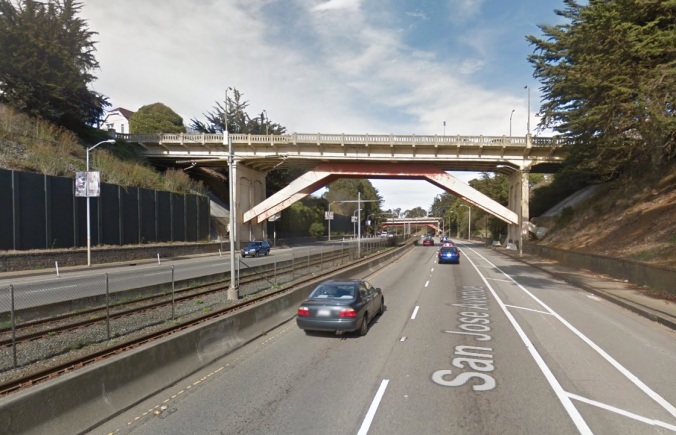
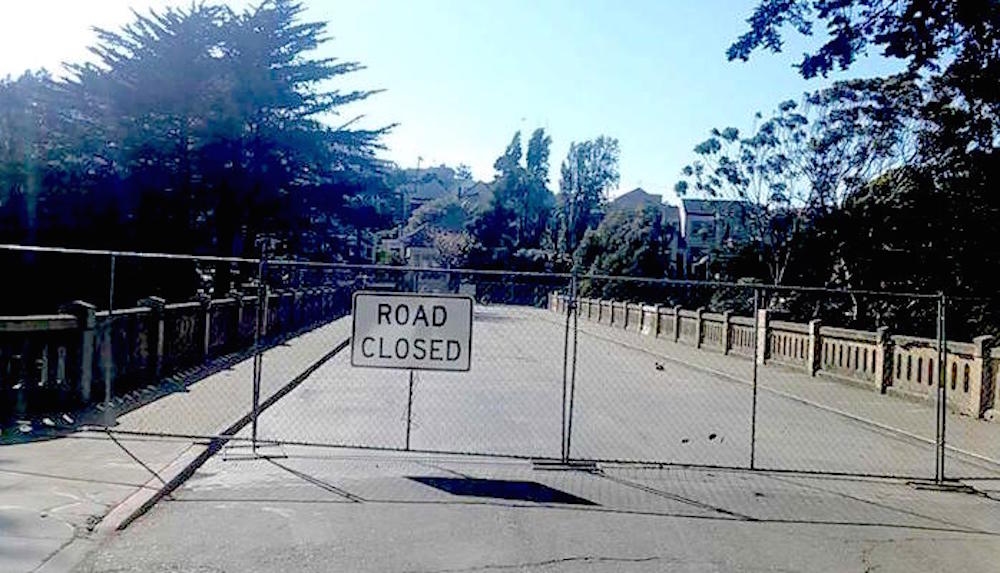
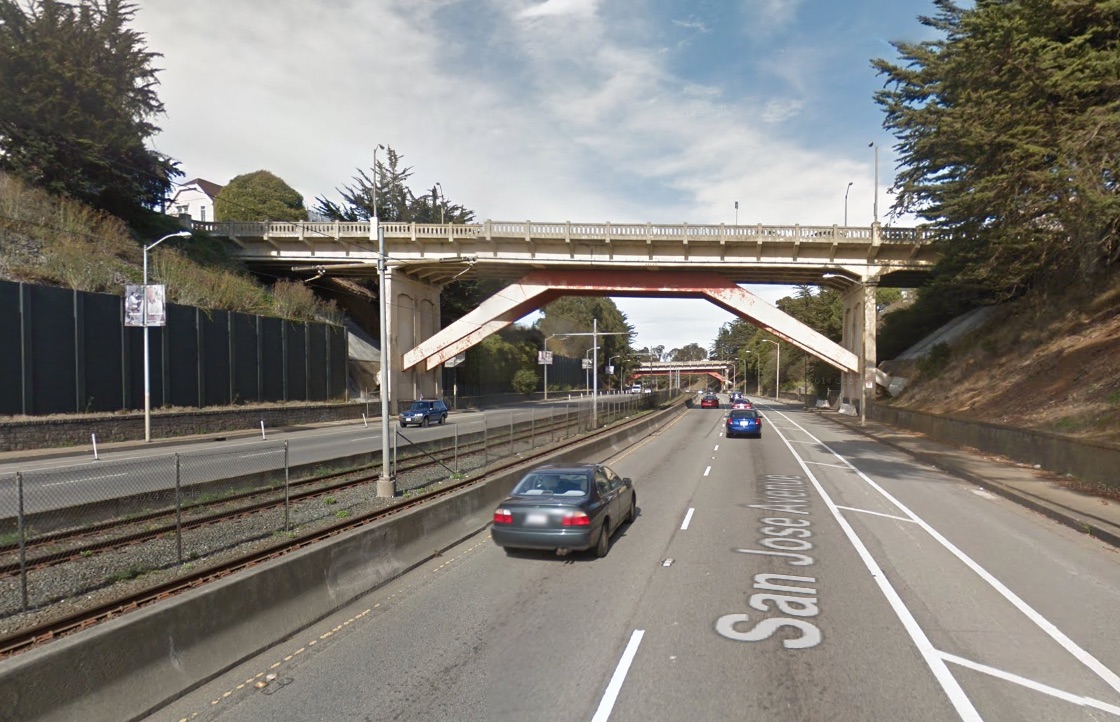
The void that divides Bernal from Glen Park today is called the Bernal Cut, and it now carries a streetcar line and auto traffic that speeds along San Jose Avenue to and from I-280. It is very unlovely:
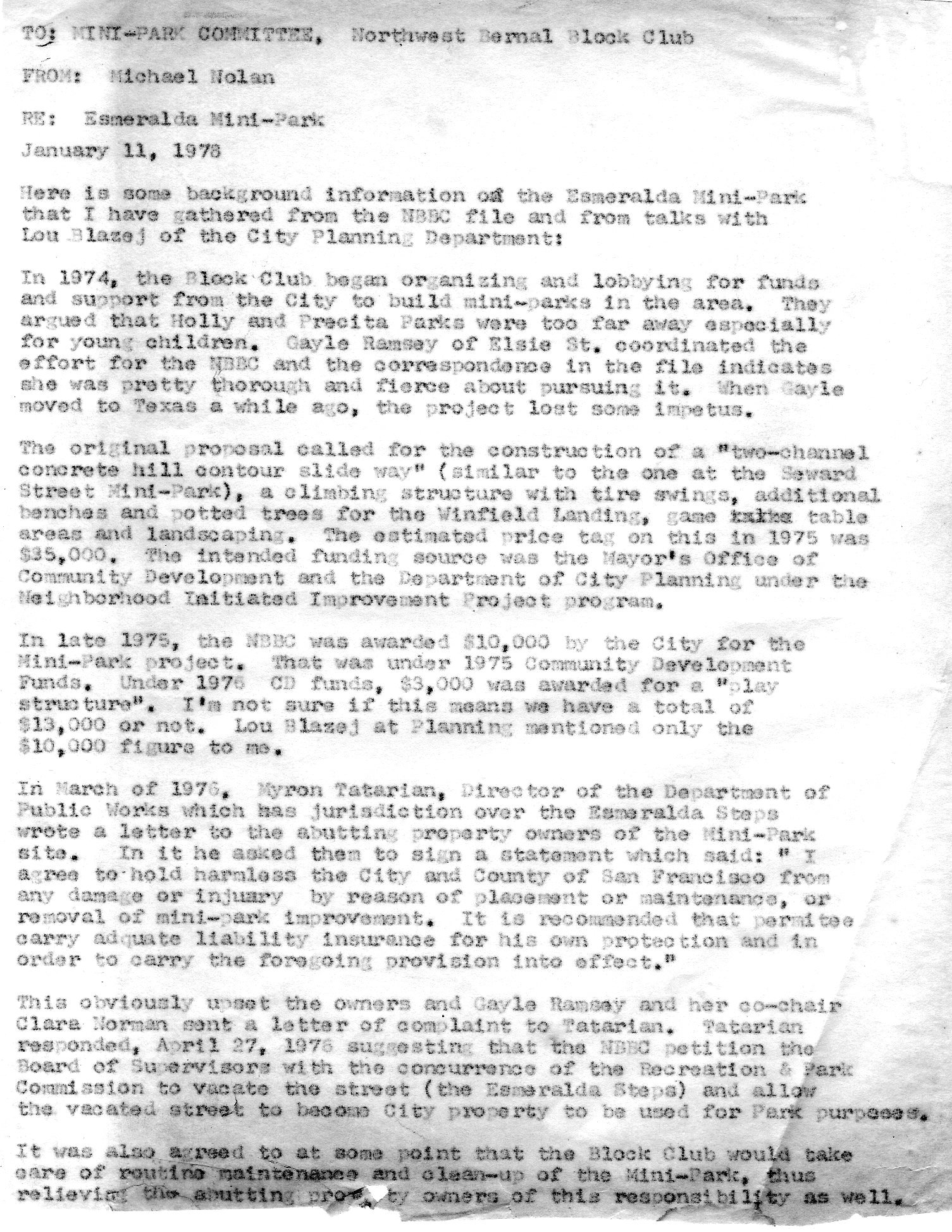
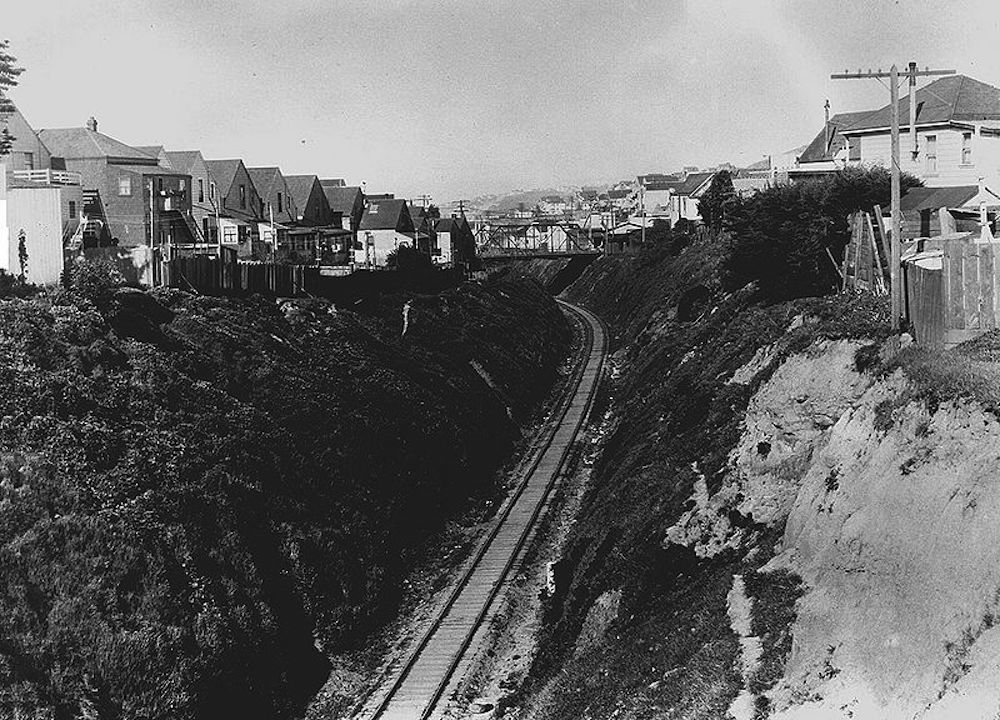
Originally, the Bernal Cut was a Southern Pacific railroad line carved out of a low shoulder of Bernal Hill’s west slope during a series of late ninteeenth century excavations. Here’s a view of the Bernal Cut during the railroad days, looking north toward modern-day La Lengua from the Richland-Miguel overpass in April 1922:

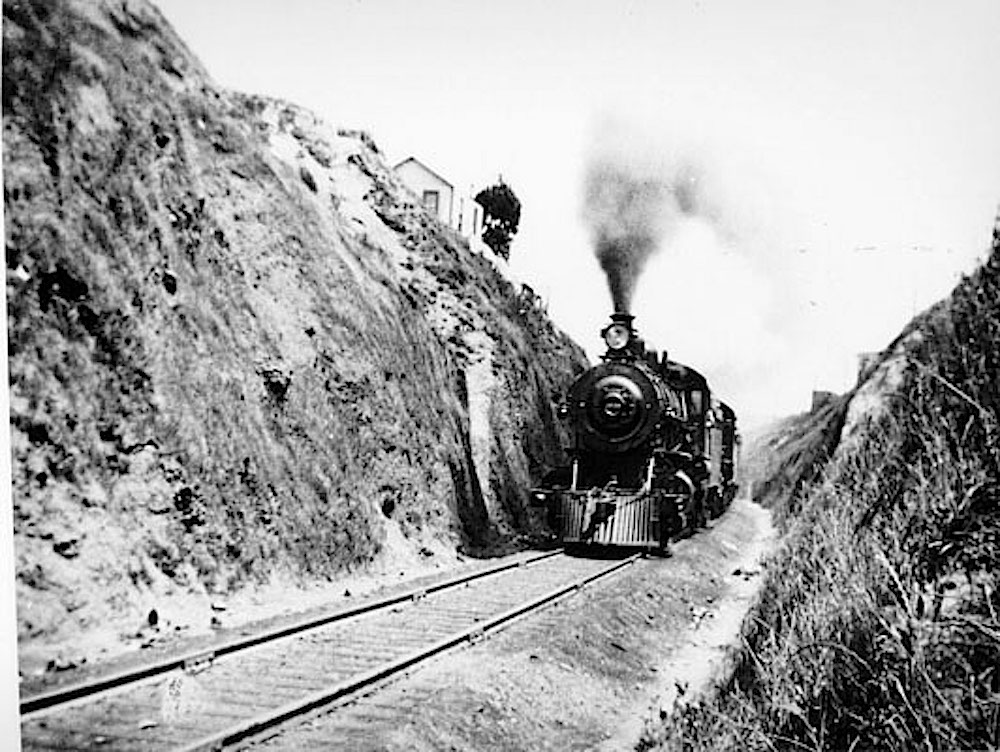
Throw in some smokey steam locomotives, and you can see why The Cut became particularly daunting to cross. This is a train chugging through the Bernal Cut in 1905:

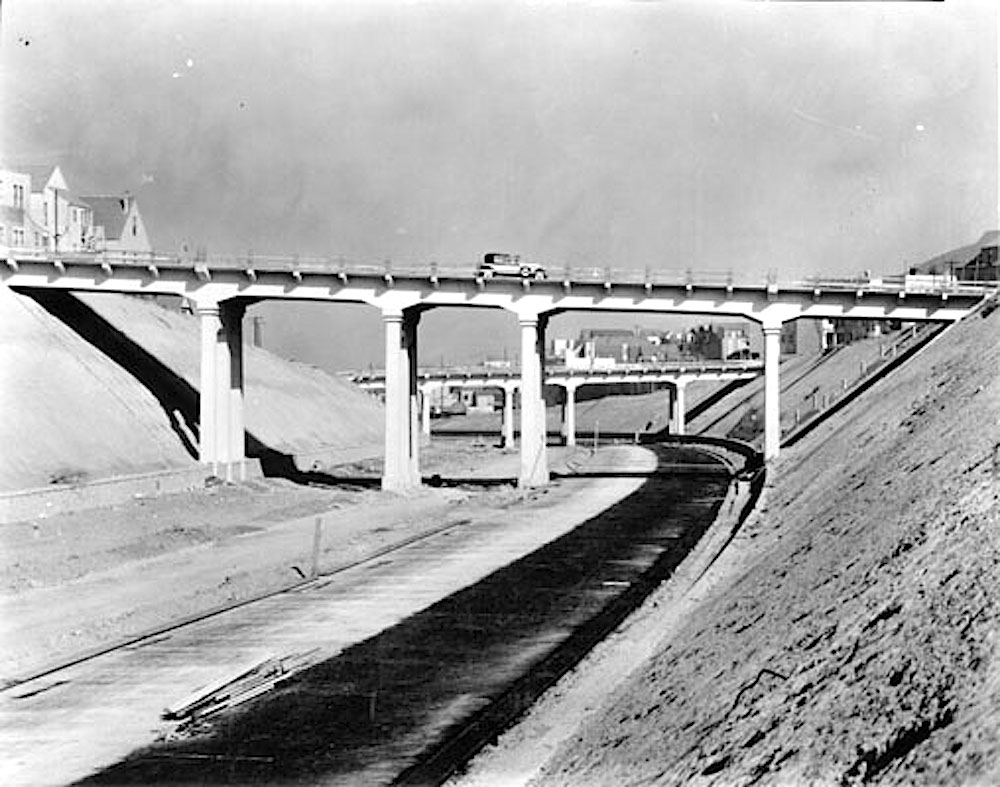
Then came the age of the automobile, and in the late 1920s, the cut was widened and expanded to create an arterial road into San Francisco’s urban core. Here’s another north-facing view, this time from 1929, when the construction of the roadway was almost complete:

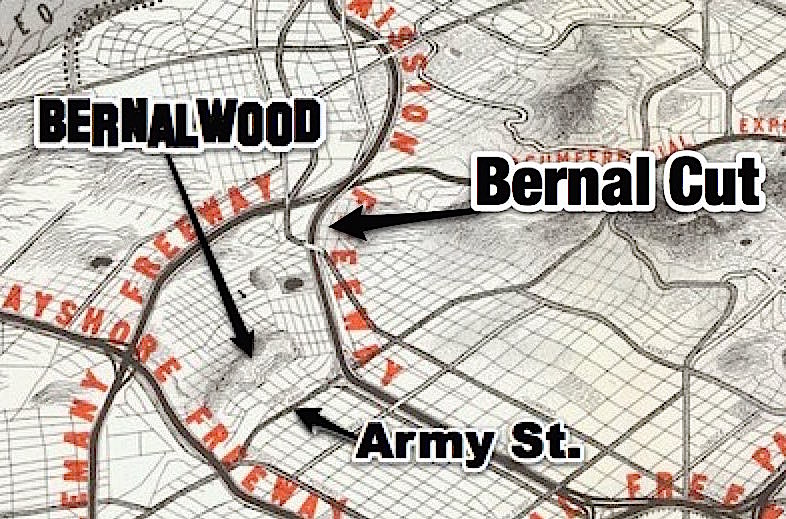
The vision at the time was that the Bernal Cut would become the first stage of a new Mission Freeway that would carry high-speed traffic into downtown San Francisco. Here’s a crop from a 1948 planning map that shows how all that would have worked, in rather horrifying detail:

Basically, in much the same way that Army/Cesar Chavez used to suck because it was designed to feed a freeway that never actually got built, so too the Bernal Cut now sucks because it too designed to serve a future that never really materialized. The Bernal Cut has been dominated by vehicular traffic for more than 100 years. That may have been a necessary and worthwhile thing, yet it also divided the neighborhoods on either side, and for the neighbors who live there, it’s a big bummer.
Fortunately, there are a few armchair urban planners and civil engineers who live on the Glen Park side of the Bernal Cut — an area which they (quite revealingly, and charmingly) call “Bernal Glen.” In recent years, our kin in Bernal Glen have hatched a few brilliant plans to re-unite the mainland people of Bernal Heights with our descedents from Bernal Glen. One such plan is described here by Bernal Glen neighbor Erika Ehmsen:
In 2013, a College Hill/Bernal Glen neighbors asked renowned landscape and urban design firm SWA Group to visit San Jose Ave. SWA designers and planners walked with neighbors along San Jose Ave., the Bernal Cut Path, the Arlington Path, and our bridges and pedestrian overpass to experience the grim current state of San Jose Ave.—from its freeway-like speeds to its trash-strewn and encampment-prone slopes and sidewalks.
SWA designers asked us to suspend our current reality in order to reimagine and reinvigorate our blighted speedway. We showed SWA the Glen Park Community Plan and asked them to envision an extension of that plan that could incorporate the slopes above San Jose Ave. while reflecting our College Hill Neighborhood Association’s greening and safety goals. And then SWA got to work sketching the plans in that above Google Doc presentation—all pro bono.
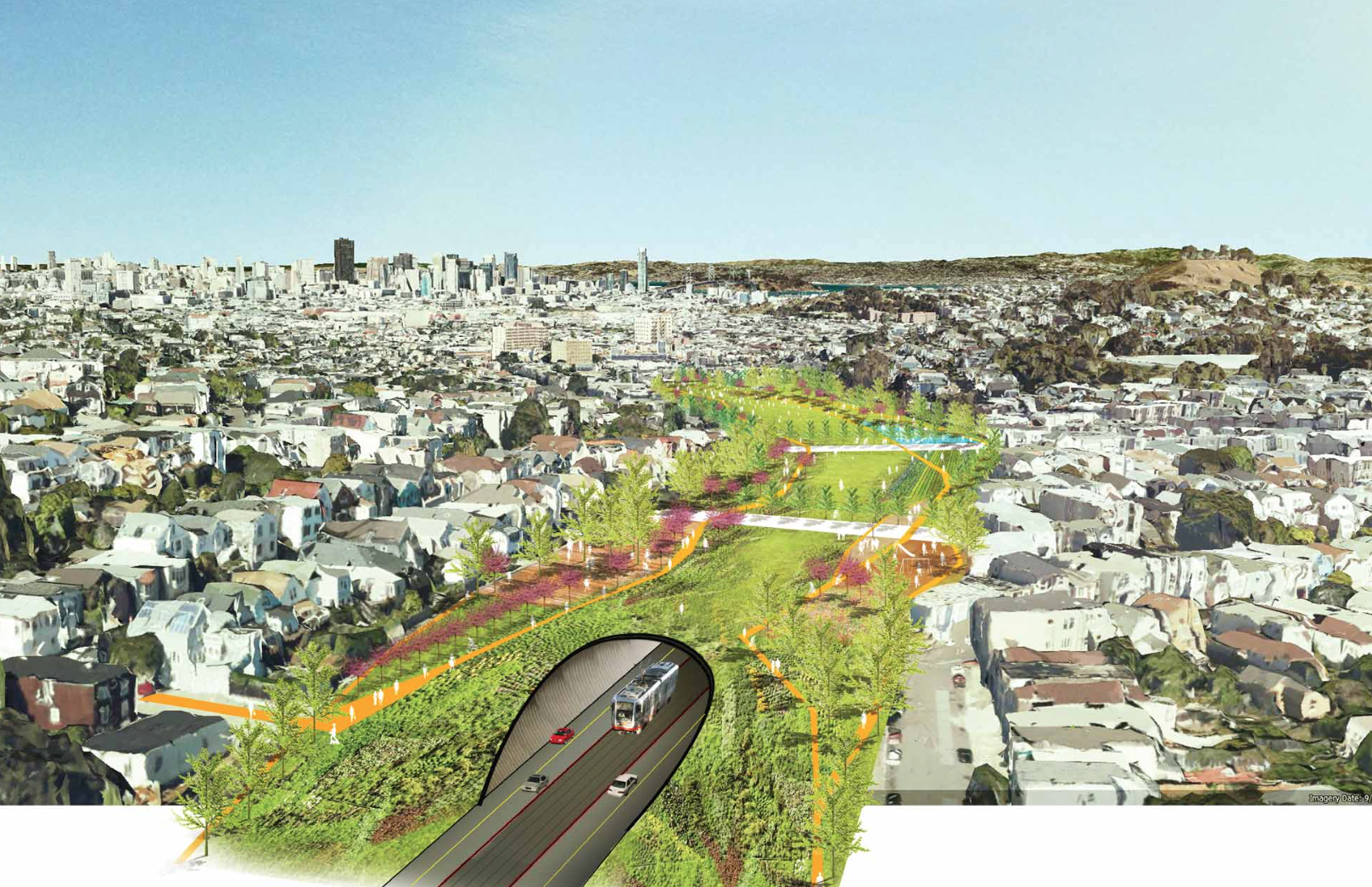
Here is that SWA presentation; it is rather trippy and mind-expanding. One proposed scenario would involve re-filling the Bernal Cut with soil after creating a tunnel for the tracks and roadway underneath. It’s just a simple “cut and cover” tunnel design, basically — but the cut part comes pre-excavated 150 years ago.
This idea would seamlessly re-unite Bernal with Bernal Glen by eliminating the trench between them, while also creating 13 acres of new land that could be used for a mixture of new housing and parks. And though the proposal itself doesn’t suggest this, in theory at least, the sale of land to build that much-needed new housing could actually go a long way toward paying for the whole thing.
Here’s what it might look like, as visualized by SWA:
 Mind blown?
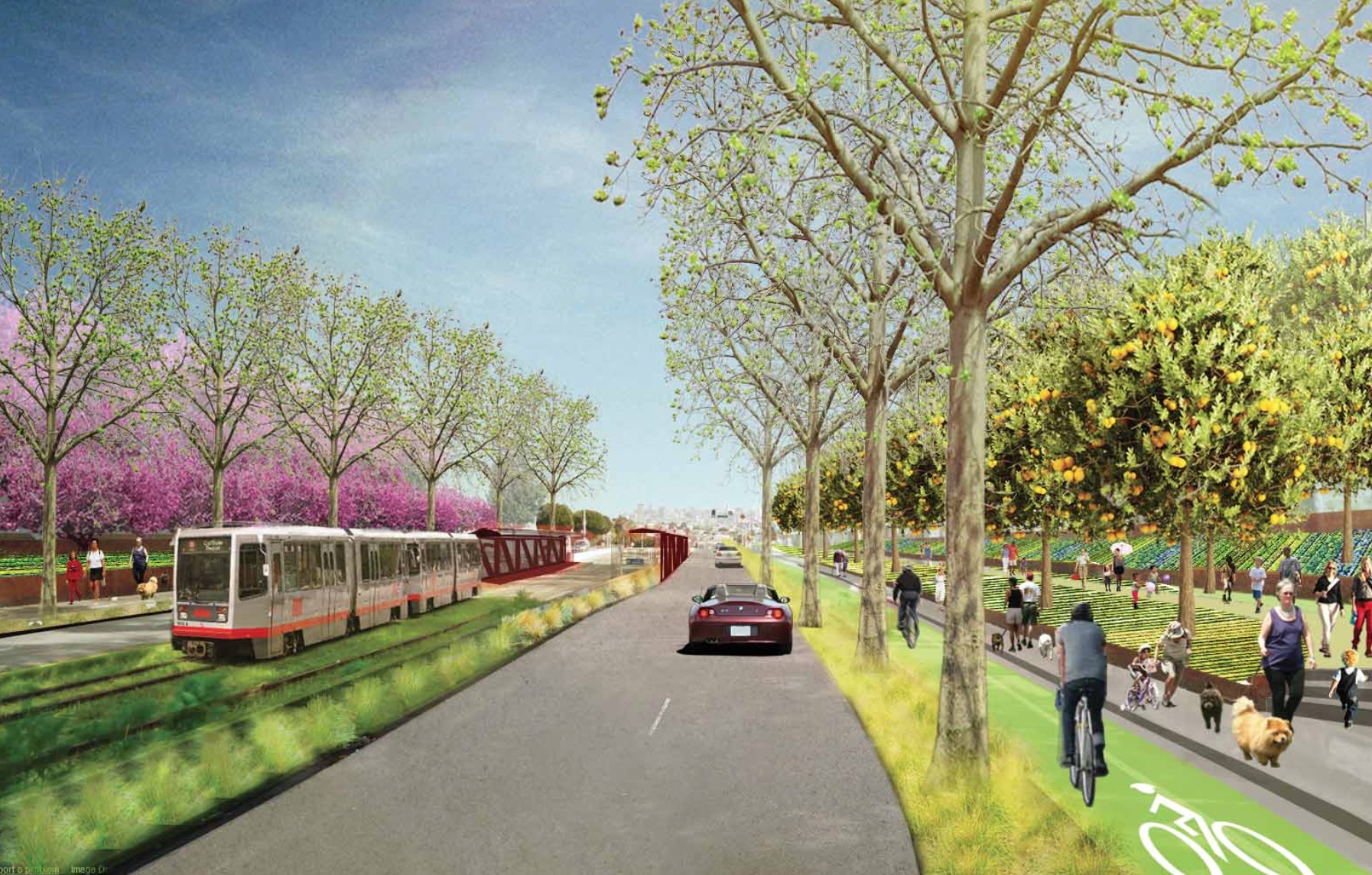
If a tunnel seems too sci-fi, another scenario envisioned in the exercise would narrow the roadbeds and terrace the walls to create land for urban agriculture. This is what tomorrow’s “Bernal Cut Farms” might look like:
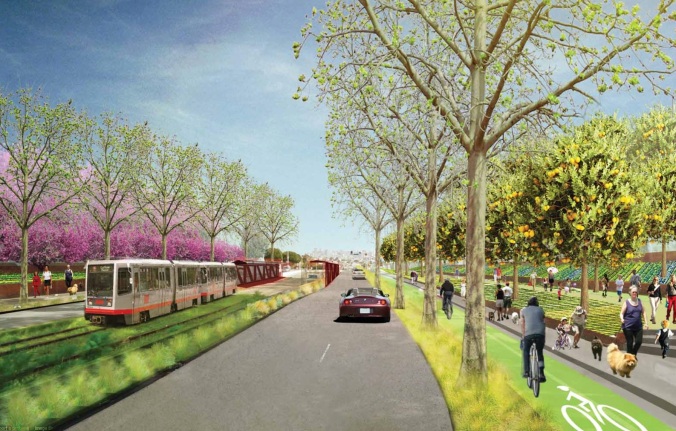
Innnnnnnnnteresting, no? We might quibble about some of the details, but the big breakthrough here is that it gets you thinking about the Bernal Cut in all sorts of crazy new ways. There’s a lot of land in there! And it’s really under-utilized! So many possibilities, even while retaining The Cut’s core transportation functionality. Yes! Yes! Yes!
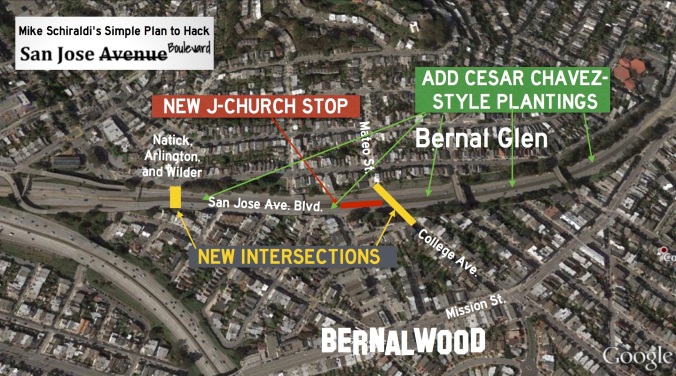
Meanwhile, and more recently, Bernal Glen neighbor Mike Schiraldi decided to pick up on this basic idea and pare it back to the bare essentials to develop his own plan for how to heal the Bernal Cut. Mike says:
Well, the Glen Park Community Plan spends a couple paragraphs dreamily talking about undoing San Jose Avenue, but doesn’t get into any details or explain the benefits. So while I’m not the first to talk about ripping it out (duh), I tried to get down to brass tacks, to see how it could actually get done. And I wanted to illustrate how transformative it would be, since it can be hard to see that from the Glen Park Community Plan.
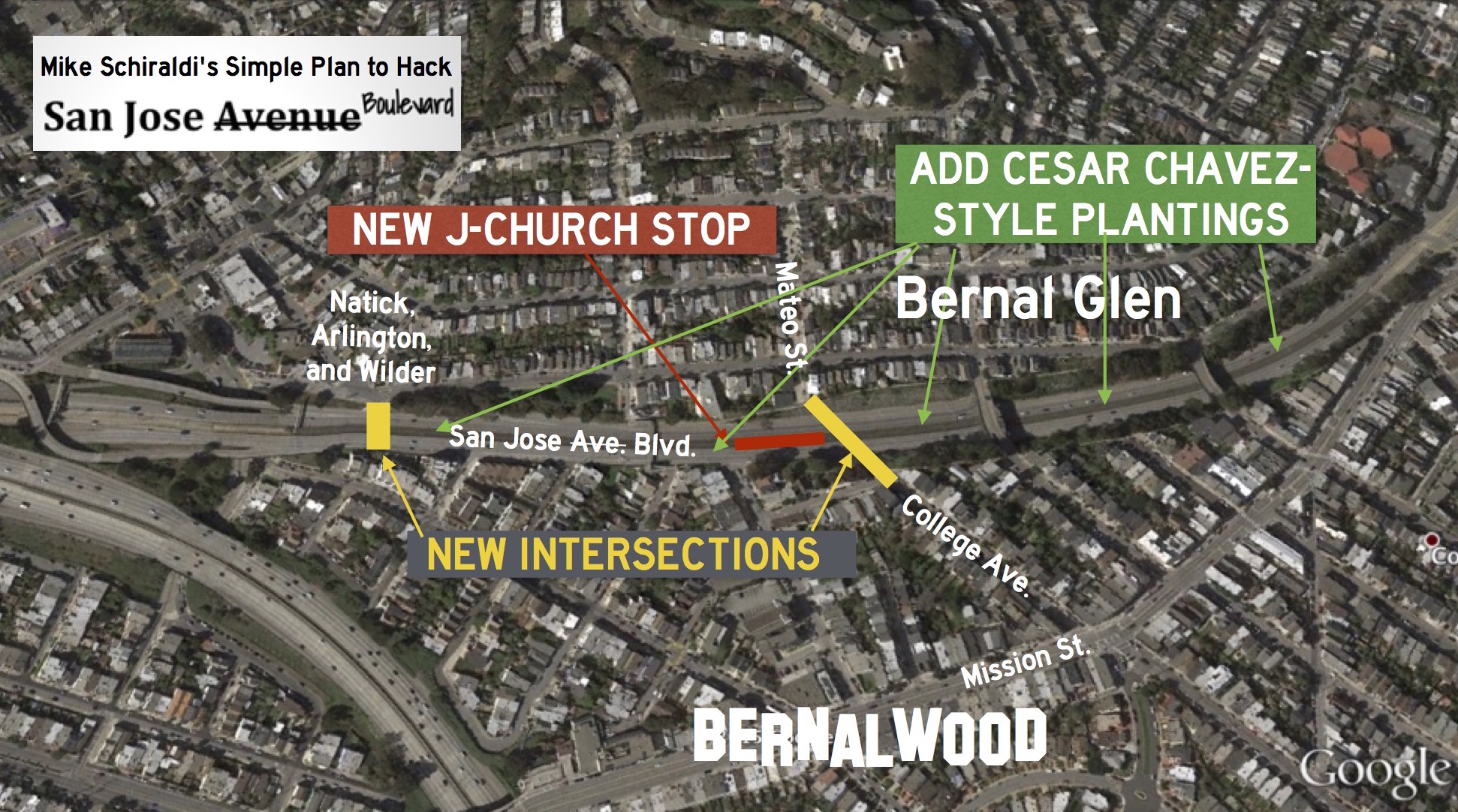
Inspired by the improvements that recently transformed the once-awful Cesar Chavez/Army into today’s much more glamorous boulevard, Mike’s let’s-do-this idea is to do the same basic thing to the speedway portion of San Jose. To slow traffic and make it easier to move between the two microhoods, he proposes re-connecting a few of the surrounding streets via new intersections with San Jose.
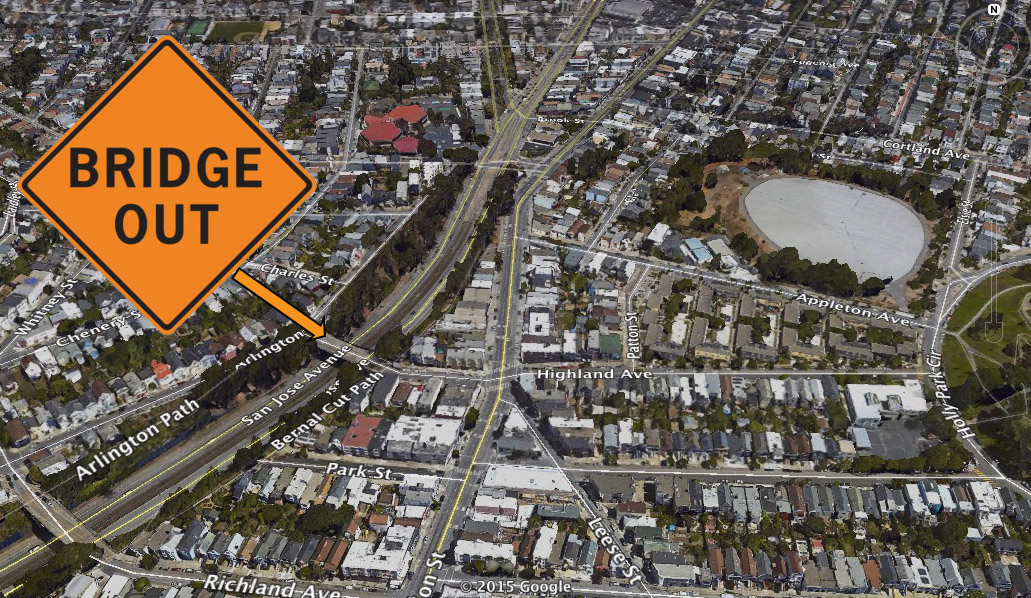
Specifically, his plan would create a new traffic light/intersection at Natick, Arlington, and Wilder Streets in Glen Park and one linking College Ave. in Bernal with Mateo Street in Glen Bernal. He calls this scenario “San Jose Boulevard”:
Both of the two new connections could be full intersections, with traffic lights, allowing traffic to flow in any direction between San Jose, Natick, Arlington, and Wilder, or between San Jose, College, and Mateo. There could be crosswalks too, so pedestrians and cyclists can get across without having to use an overpass, which is awkward, often dirty, and can be scary at night.
Oh, and to further activate the areas and create even more pedestrian activity, Mike also proposes adding a new J-Church stop along his new San Jose Boulevard, since the streetcar already runs there anyway:
Large sections of Glen Park which are currently underserved by transit would suddenly become extremely transit-accessible, both because of the new J-Church stop, and the new crossing opportunites.
You can read all about it in Mike’s brainstorming presentation, where he makes the case in a lot more detail. It’s clever. It’s not complicated. It may even re-activate the Bernal Cut as a shared space that joins the Dominion of Bernalwood with our kin from Bernal Glen. Let’s do (something kind of like) this!



 Bernalwood