New Details, Less Controversy for Latest Northeast Bernal Infill Housing Proposal

futurehousing2

infillsiteplan.annotated

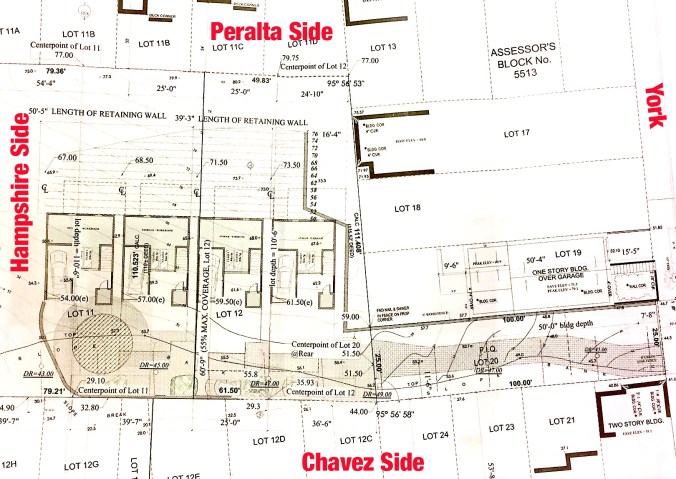
Proposed site plan, from December 2015 Design Review Board meeting
quinlanblock

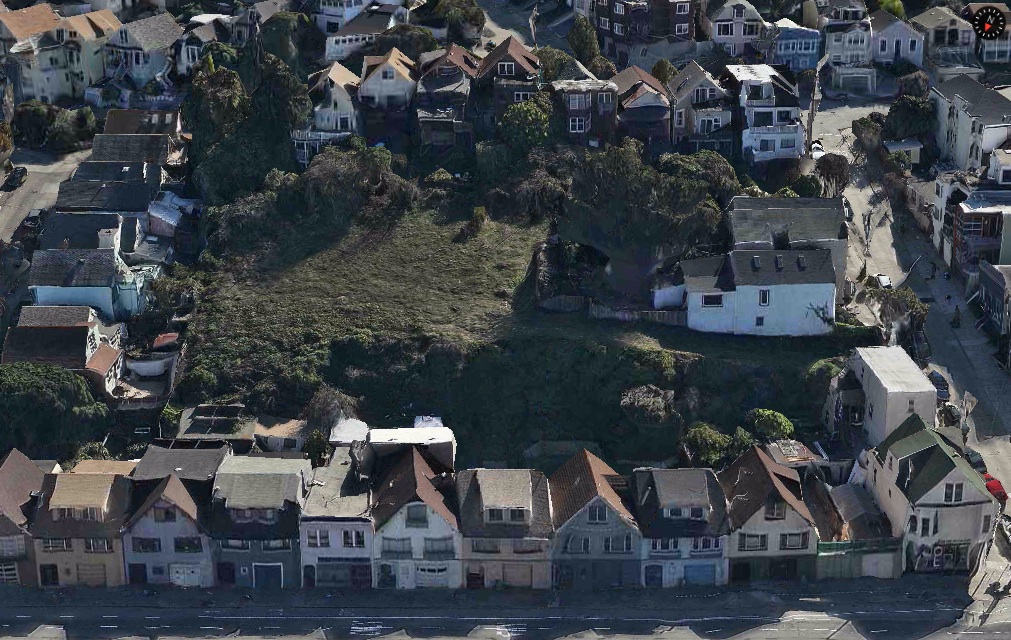
As you may recall, there was another Design Review Board meeting last week to look over the revised plans for the very longstanding, very controversial plan to build infill housing on the secret interior lot bordered by Hampshire, Peralta, York and Cesar Chavez.

In case you missed it, Neighbor Margo shared these terrific summary notes from the Design Review meeting:

About a dozen neighbors attended the East Slope Design Review Board meeting Wednesday evening to see the most recent architectural plans for the six-unit infill development behind our home. Local contractor Patrick Quinlan wants to build three-bedroom homes and a cliff-side elevated driveway on two undeveloped interior lots. Access would be from his lot at 1513 York Street.

The project has been in and out of the development pipeline for 15 years or more.

The latest iteration from San Francisco-based architect Stephen Antonaros drastically cuts the number of parking places. Mr. Antonaros said the city Planning Department directed the builder to reduce the number of dedicated parking places in the four three-bedroom homes from three spots to one per unit. That goes against what the neighbors had advocated for many years, but the directive is apparently in keeping with the city’s transit-first policy.

The plan envisions four three-bedroom homes on the R-2 interior lots, and two one-bedroom townhouses above a driveway/garage-door structure on the York Street access lot. The total of 14 bedrooms is unchanged from the previous plan, which we saw 18 months ago in May 2014.

But one of the concerns that neighbors voiced for many years was that the parking spaces in the development should reflect real life. The last set of plans met that concern; most neighbors thought the 18 spots for the six units would avert a flood of drivers seeking a place to park in neighboring streets, where parking is already extremely challenging, particularly at night. So, for those of us who were hoping that this project would not worsen parking in the area, the new plan, with just six parking places, is a setback.

The other major change is that the four interior buildings had been oriented in the previous layout in a sort of slanted configuration, facing northeast, following the contour of the hill, leaving some space between the buildings, and some space at each side of the lot. The city directed the architect to reduce the mass of the development, so he took that as a directive to push the houses closer together and over to one side, as well as to configure them parallel to the neighboring streets. The development now would be more like a cluster of four buildings hard up against the York Street side of the property.

The owner of the adjacent property on York Street pointed out that he had previously noted that the building on the access lot would abut two existing windows on the north side of his house. He had asked the architect to modify his plans, perhaps with a light-well. Mr. Antanaros responded that when you install a window on your property line, you take a risk that someone will construct a building there. In any case, that modification was not made.

Two neighbors asked that the builder consider leaving the space open, perhaps as an organic garden. Mr. Quinlan said the finances of the situation make that option unrealistic.

The East Slope Design Review Board volunteers, led by Wendy Cowles, went point by point through their previous concerns, expressed in a letter to the Planning Department following the last neighborhood meeting in May 2014. Mr. Antonaros tried to show how his new plans answered them. A few spirited exchanges ensued.

The Board’s concerns included traffic density within the project itself, which, of course, would be lessened by reducing the number of parking places. Another traffic concern was the “pinch point,” the area near the gate to the project, where cars can safely wait while turning into and out of York Street, which is quite steep and narrow on this block.

A retaining wall and elevated driveway directly above the back yards of the adjoining properties on Cesar Chavez were a concern both aesthetically and for safety. The builder plans to excavate, with earth-moving equipment, to reduce the scale of parts of the wall, but the proposed driveway remains right on the property line, and was not moved back.

One part of the project, the two one-bedroom townhouses on York Street, was over the neighborhood’s 30-foot height limit, and it was lowered.

The architect and builder expressed frustration at the pace that city planners are moving this project. In the 18 months since the last meeting, Mr. Antonaros said, he has had but three email exchanges with the planner, Mr. Doug Vu, and the directives he’s gotten have not added clarity for him, he said.

The review board will write another letter to the Planning Department and expects to see plans again at a later date.

Despite the contractor’s and architect’s frustrations, and several neighbors’ skepticism about the whole project, Ms. Cowles succeeded in keeping the atmosphere relatively civil and efficient. The meeting wrapped in a bit over two hours.

Many thanks to Neighbor Margo for sharing her most excellent notes.
Wednesday: Another Design Review Board Meeting for Long-Delayed Infill Housing in Northeast Bernal Heights

futurehousing2

quinlanblock

It’s been some time since we’ve heard anything about the plan to build several new homes on the “secret lot” bordered by Hampshire, Peralta, York and Cesar Chavez in northeast Bernal Heights. An East Slope Design Review Board meeting about the project was last held in May 2014,  and that session was so contentious and so depressing that it prompted one Bernal neighbor to write a powerful analysis about the dark, NIMBY heart of San Francisco’s housing crisis.

Neighbor Margo lives in a home adjacent to the proposed development site, and she brings news us about another East Slope Design Review Board meeting to discuss this project, scheduled for this Wednesday, Dec. 9 at 7 pm in the Precita Valley Community Center (534 Precita Ave).

Neighbor Margo tells Bernalwood:

There’s another hearing coming up  about the infill development project in the interior lot bordered by Hampshire, Peralta, York and Cesar Chavez.

As far as I know, the project was stalled for about a year and a half (no idea why), and now the city has asked the owner and architect to go back to the East Slope Design Review Board with revised plans. Below is a note I sent to our neighbors.

Dear neighbors:

You probably got in your mailbox, as we did, a flyer inviting us to the Precita Neighborhood Center next Wednesday, Dec.9, at 7 pm to see revised plans for building in the interior lot behind our homes on Hampshire Street.

I called Terry Milne of the East Slope Design Review Board to find out what the revisions are, and he says the board doesn’t know much. The owner and architect were asked by the city to return to the neighborhood review board with revised plans. He doesn’t know if the revisions are big or small.

We plan to go to the meeting, and hope that others who are interested will go as well.

Here is some history and background, for newer neighbors:

Patrick Quinlan, a local contractor, has owned these two interior lots and an access lot on York Street for many years — he had plans to build on the interior lots before we moved here 28 years ago, in 1988.

According to its web site: “The East Slope Design Review Board was established in 1986 by order of the San Francisco Supervisors. For building projects within the East Slope Design Review Area, a letter of recommendation from the Design Review Board is required before the San Francisco Planning Department will accept any permit application.”

The design review board’s volunteer members solicit neighborhood comments, hold hearings on a project-by-project basis, and forward their recommendations.

About 15 years ago, the board heard arguments for and against Quinlan’s plan for 10 units (5 duplexes) on the two moderately steep interior lots now covered with fennel and ivy. As the plan advanced through the Planning Department pipeline, concerned neighbors retained land-use attorney Sue Hestor and testified in opposition at a hearing before an appeals board of the city Planning Commission. The commissioners rejected the development.

Then about 10 years ago, Quinlan proposed a modified plan for 8 units. The design review board heard comments by neighbors. There was opposition, but not as fervent as against the earlier 10-unit plan. As far as we know, those plans were in the pipeline when the economy collapsed in 2008. As you know, the vacant lots are still vacant.

The next plan, reviewed by the board in 2014, was for a gated community of 6 units: 4 three-story single-family houses on the two R-2 interior lots and 2 small townhouses on a structure erected atop the entrance tunnel and gate on the access lot on York Street. Quinlan installed story-poles to indicate the heights of proposed buildings on the interior lots, but after a year and a half, some of them are now askew.

Along the cliff-like slope on the north edge (toward Cesar Chavez) of the interior lots, the plans called for a large retaining wall topped by a private street/driveway that would end in a cablecar-style turntable to turn cars around.

At the board hearing on the 2014 plans, some neighbors supported the development, saying the plan dealt with many of the neighbors’ previous concerns, including the project’s density, sufficient parking, space for garbage cans, and fire safety. Others voiced concerns, including the stability of the steep hillside above the properties on Cesar Chavez Street, the density of auto traffic in an interior lot, potential changes in rain runoff during and after construction. One other open question is the apparent need for a homeowners’ association to maintain the common structures and areas: the retaining walls, the private street and parking spaces, trash storage area, automatic gate, and the car turntable.

The review board is now set to see “revised plans.” We’ll see what’s new on Wednesday.

Why Mayor Lee’s Pre-Election Tour of Holly Courts Still Matters

leeholly1

leeholly3

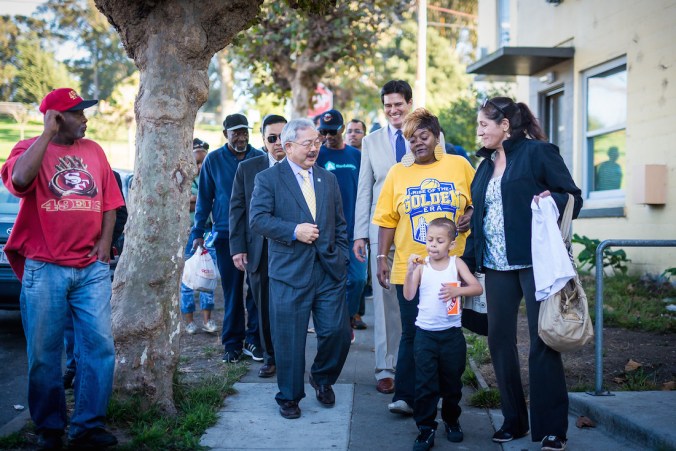
A few days before the recent election, Mayor Lee toured Holly Courts, the public housing located just west of Holly Park. (Historical Fun Facts: Holly Courts was San Francisco’s very first public housing project, and it was designed by Arthur Brown Jr., the same architect who created City Hall and Coit Tower.)

At the time, the mayor came to Holly Courts to build support for Prop A, the $310 million affordable housing bond that ultimately passed by a comfortable margin. Yet now that Prop A was approved, Joshua Arce, a Mission-based civil rights attorney who works with the Holly Courts Resident Board, tells Bernalwood why the mayor’s pre-election visit matters even more:

Days before last week’s election, Mayor Ed Lee made a surprise visit to Bernal’s Holly Courts public housing community to help build support for an increased investment in affordable housing across all San Francisco neighborhoods.

Lee came to tour one of the City’s oldest, but most resilient, public housing sites alongside Holly Courts Resident Board President Deborah Gibson and me. (I serve as pro bono counsel for the Holly Courts Board.)

Gibson and Holly Courts residents Gail Love and Herman Travis used the opportunity to show the Mayor several housing units and outdoor gathering areas in need of repair, and to discuss concerns that other residents have shared with them. In return the Mayor expressed his desire to work more closely with residents of Holly Courts and other public housing communities as the City applies federal funding to make much needed repairs at properties formerly managed by the Housing Authority.

Mayor Lee grew up in public housing in Seattle and decided to make the stop as part of a final push to build support for the Prop. A Housing Bond led by public housing resident-volunteers from the A. Philip Randolph Institute.

Mayor Lee thanked President Gibson at the end of the hour-long tour and asked the residents to stay in communication as his office works through the lists of Holly Courts concerns that were raised. With the bond approved by an overwhelming number of San Franciscans, the Mayor’s Office now has additional resources to help make good on these commitments, and the residents themselves are highly engaged in the process of holding the City accountable.

PHOTOS: Courtesy of Larry Wong

Renderings Unveiled for Proposed 96 Units of Senior Citizen Housing on Shotwell

1296shotwellrendering

1296Shotwelsiteplan2

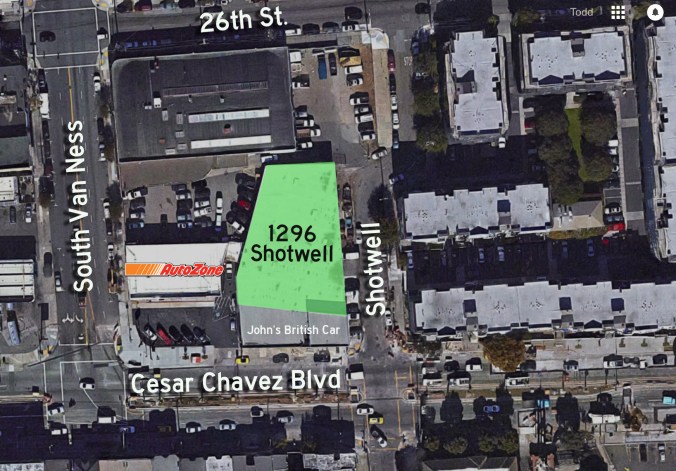
YIMBYs rejoice! Renderings have finally been unveiled for a $40 million project to construct a nine-story building at 1296 Shotwell Street, just off Cesar Chavez, to provide 96 units of housing for lower-income senior citizens. Funding for the project will mostly come from a variety of public sources, including federal grants and San Francisco housing funds. Mission Local broke the story:

The Mission Economic Development Agency, an established neighborhood non-profit but a newcomer to the affordable housing game, is partnering once again with the experienced Chinatown Community Development Corporation to construct the senior housing complex. It will allocate 20 percent of its units to formerly homeless seniors and the remainder will go to seniors with annual incomes between $21,400 and $35,700.

This is great news, and we really need more housing, so your Bernalwood editor remains a big fan of this project even though it will definitely block some of my glamorous downtown view. Let’s build it! But let’s also look at some of the details:

Right now, 1296 Shotwell is basically a shed that’s home to a few automotive repair shops. The history of this project is intimately tied to the Vida market-rate development at 2558 Mission Street that also created the soon-to-open Alamo Drafthouse Cinema inside the restored New Mission theater. Vida is a 114-unit, market-rate project in which the developer opted to meet their inclusionary housing requirements by purchasing 1296 Shotwell Street as a land dedication site for use by San Francisco to create affordable housing. This means the City basically received the land at 1296 Shotwell for free. And presumably, since 1296 Shotwell will be senior housing, each of the units in the new building will be relatively small, although the height of the building gives it significant density. That probably explains why, even with donated land and many small units, 1296 Shotwell pencils out at the relatively low price of $417,000 per unit. Prop A, the affordable housing bond passed in the election this month, will help pay for 1296 Shotwell.

Also by way of context, the Mission neighborhood nonprofit partner for 1296 Shotwell is Mission Economic Development Agency. MEDA has been in operation since the 1970s, mostly as a community assistance organization providing educational and small-business support services to Latino families in the Mission. More recently, MEDA has branched out into housing development. MEDA was a major backer of the recent Proposition I push to establish a moratorium on market-rate housing in the Mission, and Gabriel Medina, MEDA’s policy director, managed the Yes On I campaign from MEDA’s headquarters at 2301 Mission Street. Prop I was rejected by voters in the election earlier this month.

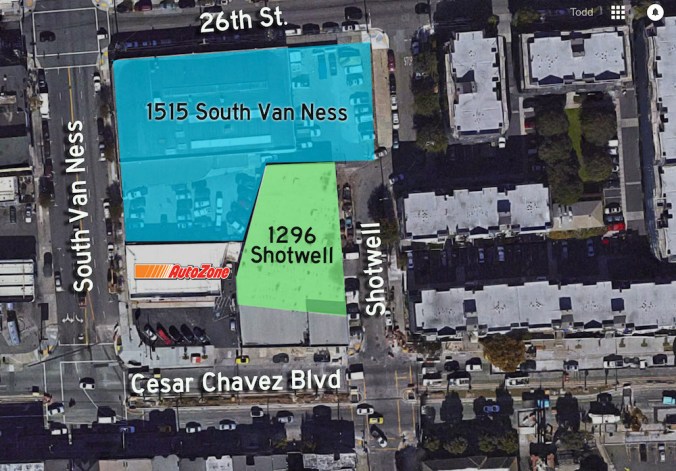
Also, by way of further clarification, Bernalwood’s understanding is that 1296 Shotwell is separate from 1515 South Van Ness, the previously-discussed Lennar development that seeks to create 160 units of market-rate housing on the site of the former McMillan Electric warehouse (which was itself originally the site of the Lesher-Muirhead Oldsmobile dealership).  This diagram shows how the two proposed development sites fit together:

SVN-Shotwelsiteplan

As far as we know, none of the proposed developments will impact the (rather charming) Johns’s British Motor Car repair shop that fronts Cesar Chavez, nor the AutoZone store with its very fashionable view of Bernal Hill.

That’s a lot of change coming soon to one Bernal-adjascent block, but it it’s good to see positive efforts to put a dent in our housing shortage. At last.

Designs for Bonview Homes Revealed at Tense Review Meeting

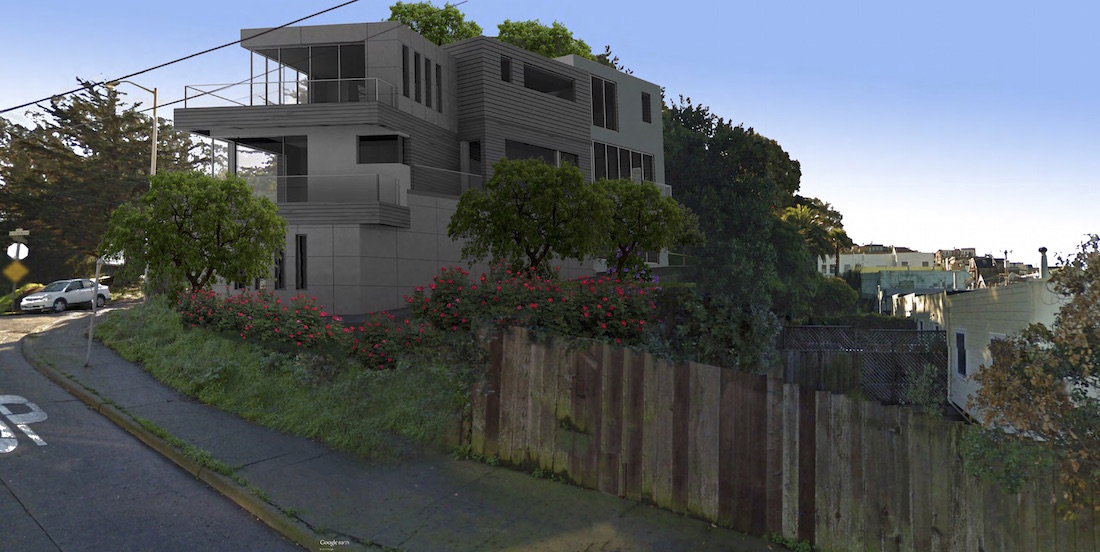
6 Bonview Renderings2

6 Bonview Renderings3

6 Bonview Renderings4

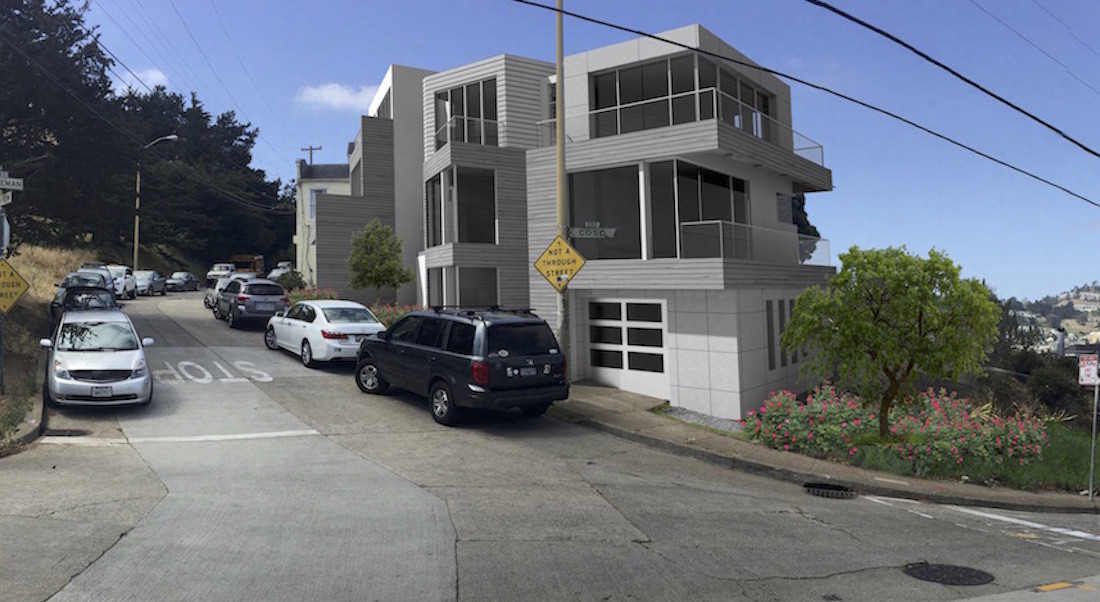
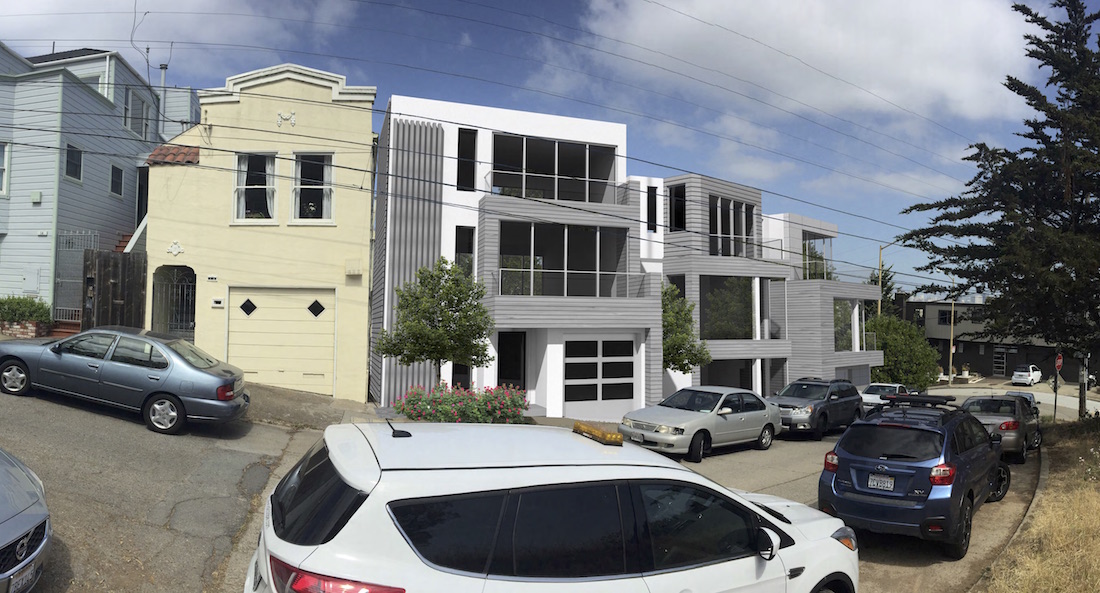
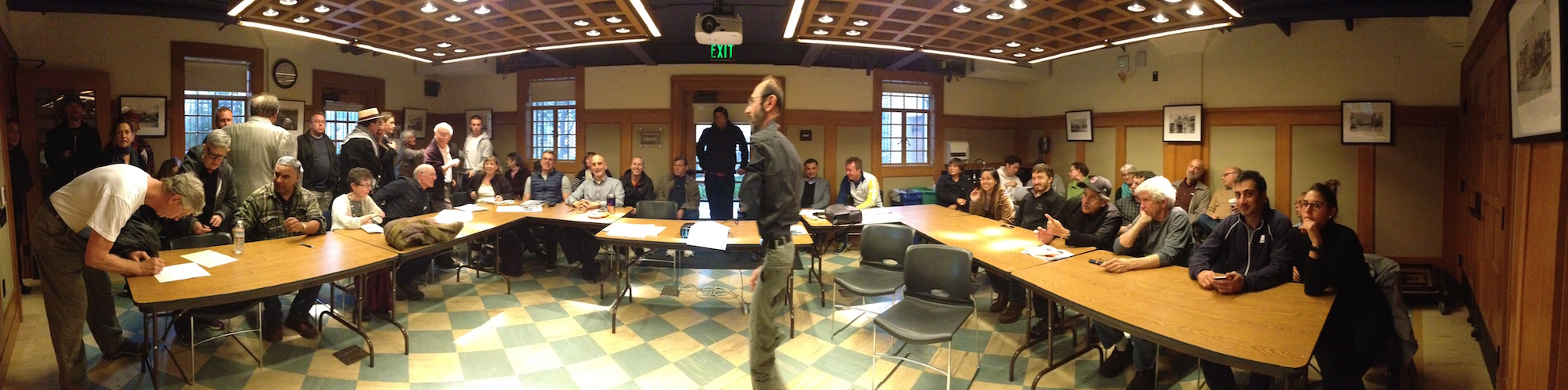
Your Bernalwood editor attended last night’s meeting of the Northwest Bernal Heights Design Review Board at the Bernal Library to see the big reveal of the proposal to build two new homes at the top of Coso at Bonview.

You can read the background on the project here.  There was a capacity crowd of 45 at last night’s session, making it by far the biggest northwest Bernal design review meeting in a very long time.

reviewpano

As you can see up above, the architects shared some renderings of what the completed project might look like.

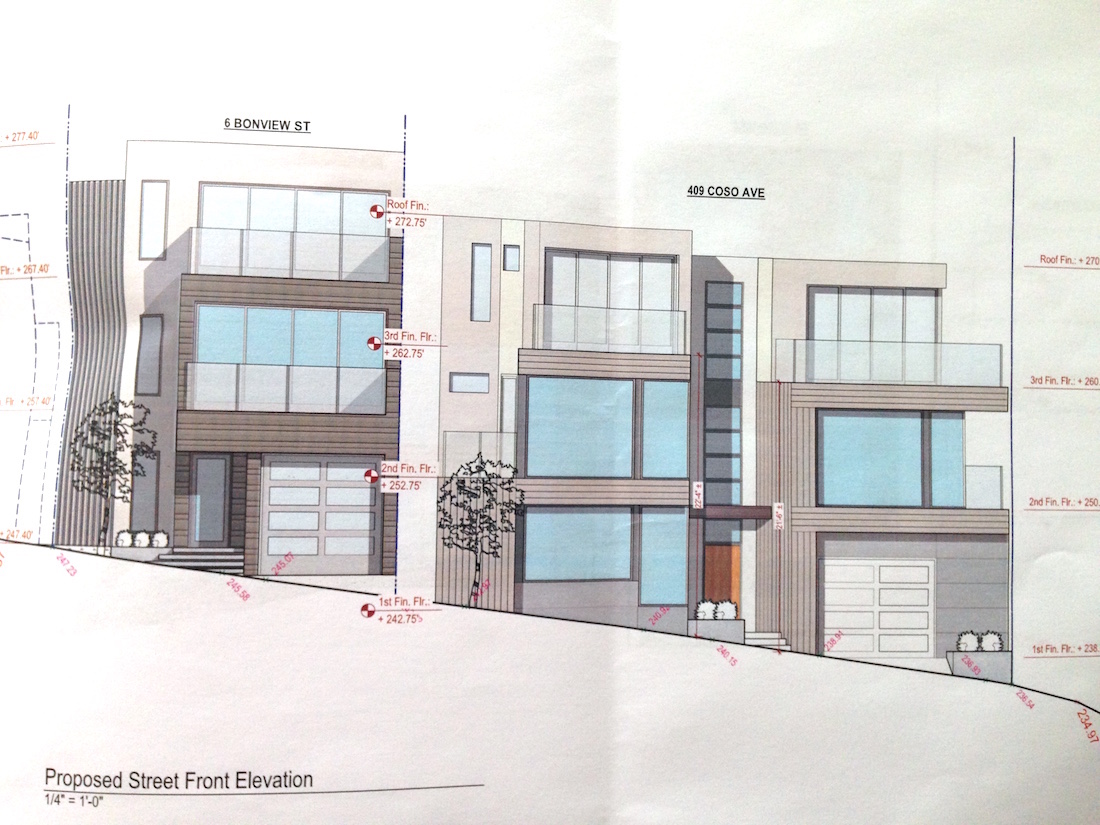
Here’s the front elevation:

6bonview.plan

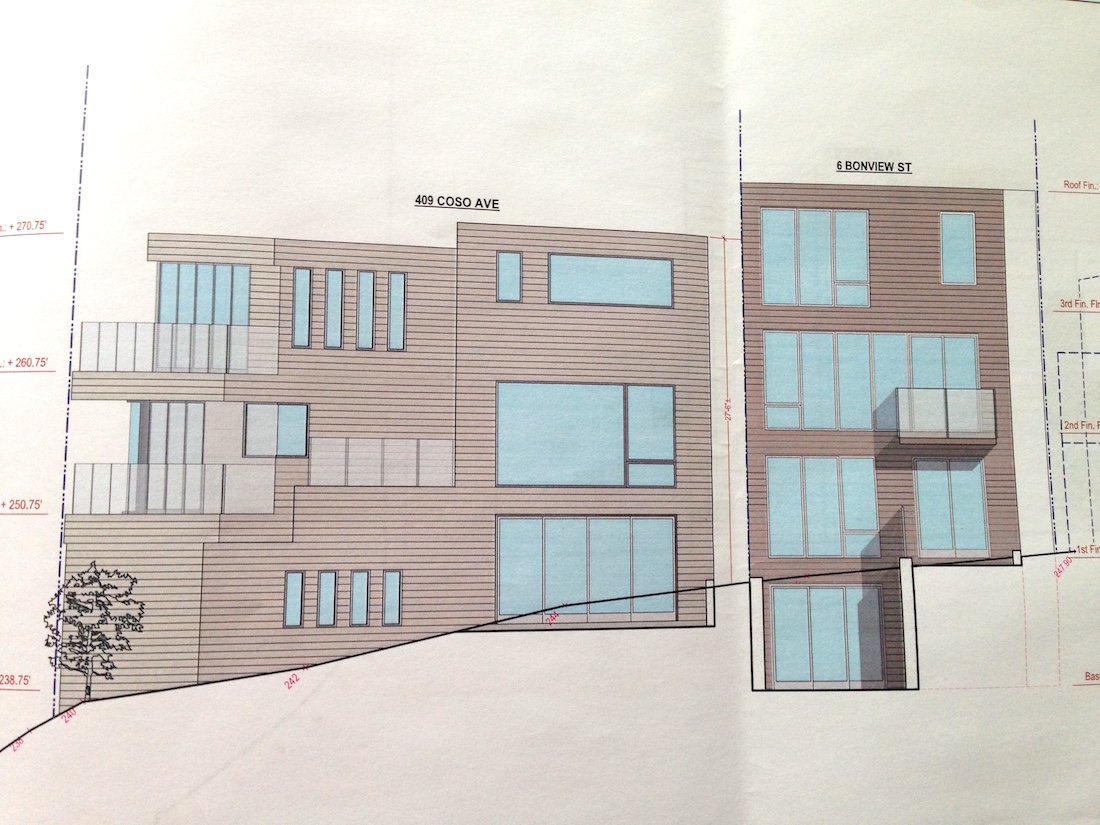
The rear elevation:

409Coso.plan

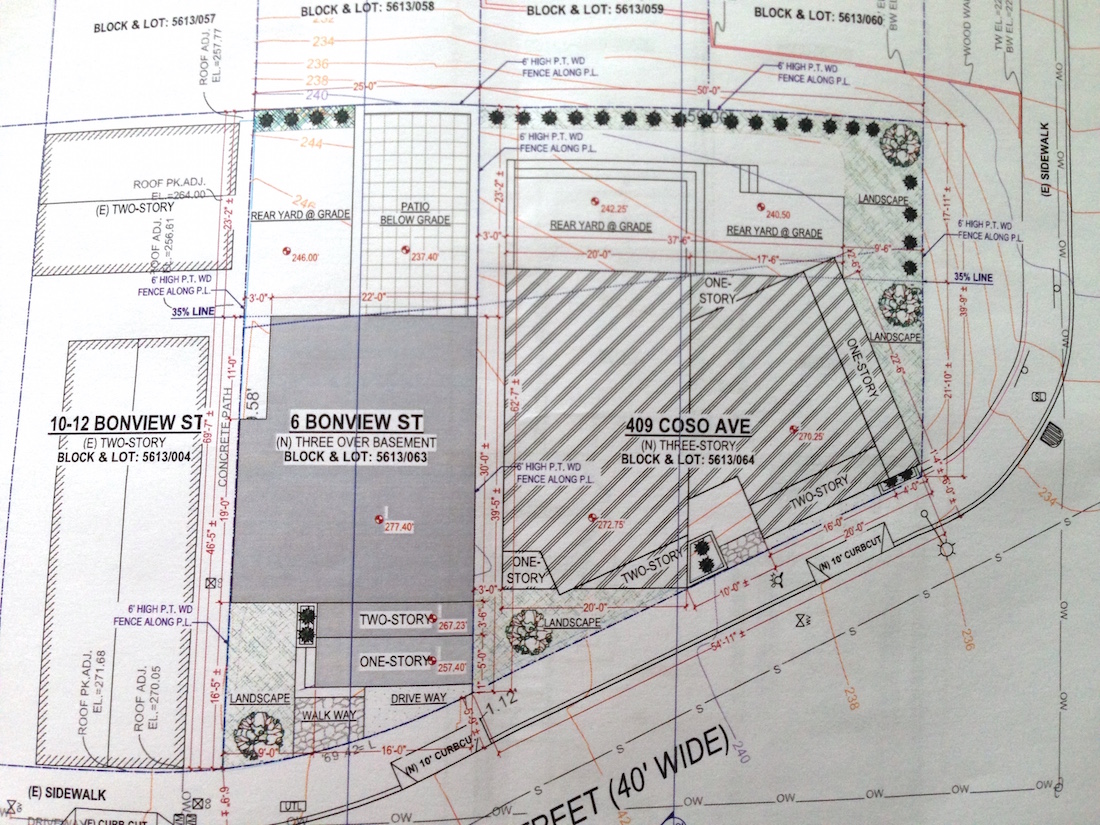
And the site plan:

6bonview.siteplan

As for the meeting itself, in general it was tense but civil. A small number of Bernal neighbors seemed dead-set against the project for reasons that seemed to combine aesthetic disgust with an enthusiasm for class conflict. But overall, most neighbors had perfectly reasonable questions about how the proposal might impact their own circumstances in one way or another.

The architects were not particularly polished, and their presentation tools were clunky, but they had a very good grasp of the details and were (mostly) able to provide clear answers to probing questions. Their responses probably didn’t satisfy everyone in the room, but they did convey the sense that they had tried to create a design that was sensitive to existing neighbors and the neighborhood.

One issue seemed a little dodgy: As proposed, the height of 6 Bonview raised some eyebrows, because it was calculated via some quirky ways the designers chose to measure the undulating elevation of the site. Time will tell how this issue plays out, but otherwise, the design appeared to meet Bernal’s existing codes.

And most exciting of all, there will be more meetings just like this one to continue the review process.   So don’t worry if you missed last night’s session — you’ll soon have another chance to watch your design review board in action as our Bonview adventure continues…

Tonight: Design Review for Two Proposed Homes at the Tippy-Top of Coso

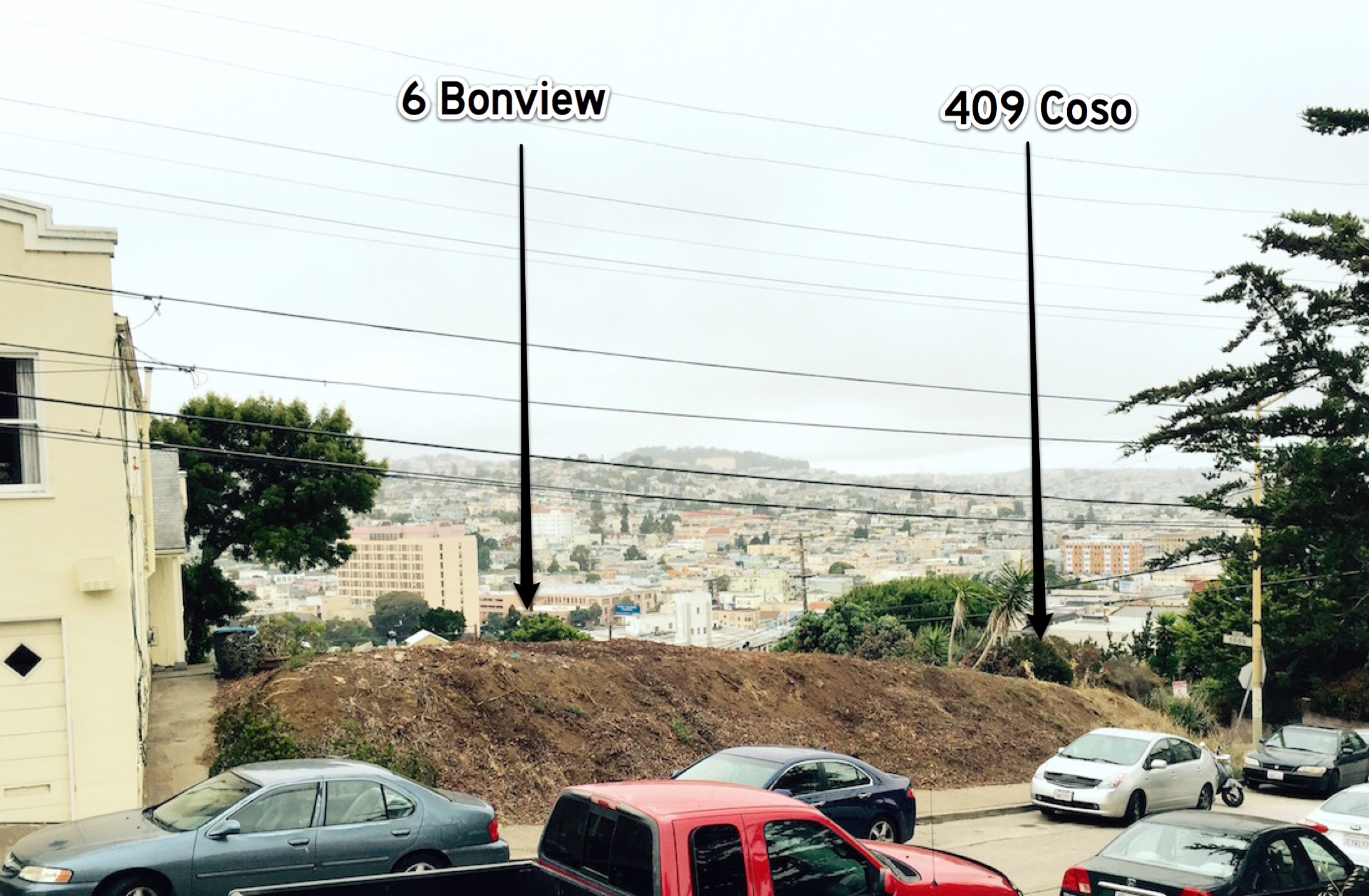
cosolotview2

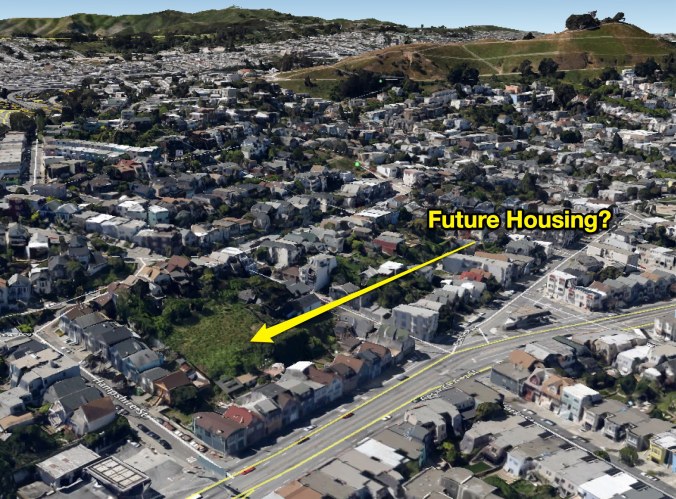
There will be a lively meeting of the Northwest Bernal Heights Design Review Board tonight at the Bernal Library, as members of the board consider a proposal to build two single-family homes on two undeveloped lots at the northwest corner of Coso and Bonview.

The parcels in question have sat empty since basically forever, but with housing in short supply, private developers have now put forward a plan to build there. However, given the site’s high-profile location, and the fact that it has functioned as a de facto extension of Bernal Heights Park for a long time, the forces of no are rallying to oppose the plan.

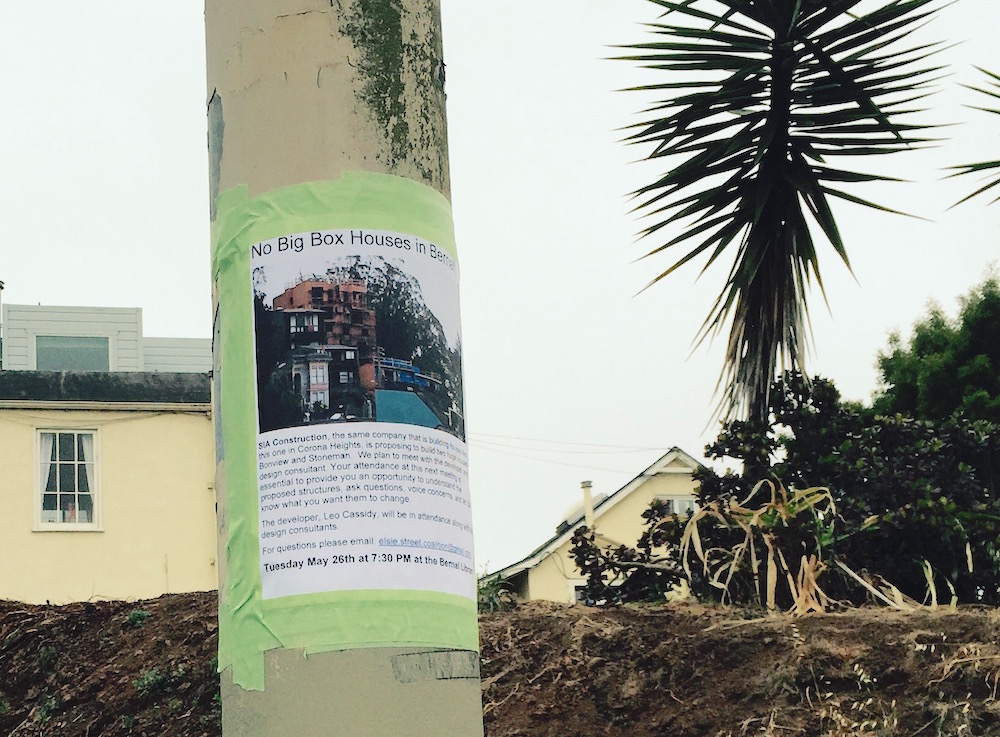
Posters around the proposed housing site proclaim “No Big Box Houses in Bernal,” while showing an image of an unrelated project in Corona Heights that is being built by the same construction company. (On the bright side, at least this poster does not include a simulated blast-radius.) When Bernalwood visited the site over the weekend, one neighbor described the proposed homes as “McMansions.”

cosolotsign

Such designations are subjective and intentionally pejorative, however, so here are a few concrete facts about the proposed development that Bernalwood has been able to uncover: The proposal calls for the construction of two adjacent single-family homes, on privately-owned land at 6 Bonview and 409 Coso. The former will be 2225 sq-ft; the latter will be 2558 square-feet. Each will provide off-street parking. Design-wise, both generally and generically reflect the “Dwell-inspired” style that is so common for new urban homes these days, which is to say the facades are a mix of rectangular forms, stucco, horizontal wood slats, metal, and glass. Most crucially, however, both homes appear to conform to the strict planning, design, and height guidelines of the Bernal Height Special Use District.

Of course, when it comes to new construction in San Francisco neighborhoods, facts and feelings seldom align. That reality will likely be on full display this evening, so if you’d like to partake of the spectacle, the design review board will meet tonight, May 26, at 7:30 pm in the Bernal Library on Cortland. Bernalwood will also share drawings of the proposed development when they are available.

UPDATE, 27 May: The designs for the two new houses have now been revealed.

PHOTOS: Telstar Logistics