
So the deadline is fast approaching in the matter of Anonymous NIMBY vs. Historic Coke Mural Beloved by The Neighbors of Bernalwood.
As you may recall, after a whinging NIMBY complained to the City about the presence of the vintage Coca-Cola mural at the corner of Tompkins and Banks, the City gave the property owner a February 24 deadline to present evidence that the artwork at 601 Tompkns pre-dates San Francisco’s 1965 sign ordinances.
In our quest to acquire said evidence, we got some big help from the sleuths at Burrito Justice, who proved conclusively that the property at 601 Tompkins was a corner store called Tiptons Grocery until roughly the late 1960s. But today — three days before our City-imposed deadline — we are happy to report that Bernalwood obtained conclusive proof that the sign is, in fact, way old.
Over the weekend, Bernalwood established contact with the homeowner, Mr. Richard Modolo. Mr. Modolo was away on vacation last week, but now he’s tanned, rested, and ready for a bureaucratic tussle. Even better, he’s got the historic goods. Let’s establish the facts:
FACT: Mr. Modolo has lived in Bernal Heights since 1954. He attended Paul Revere School, right across the street from the disputed Coca-Cola artwork, and he has vivid memories of Tipton’s Grocery store from when it was still in operation. Actually, “Mrs. Tips” (as the kids caller her) made his lunch every day. As we chatted in the very space that Tipton’s Grocery once occupied, Mr. Modolo gestured toward the spot where Mrs. Tips used to stand behind the counter, and told this story:
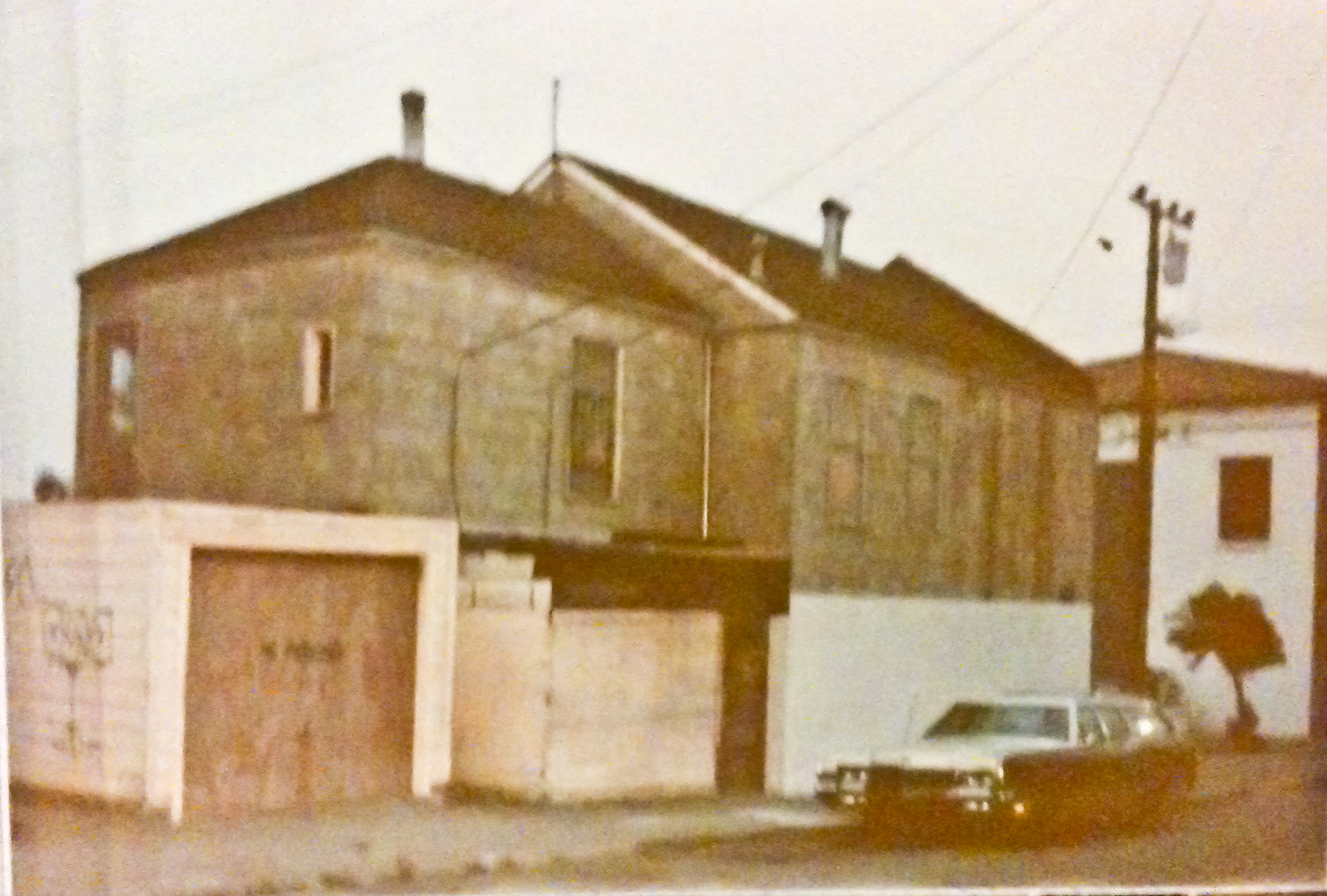
FACT: The vintage Coca-Cola artwork is, properly speaking, a “ghost sign.” Mr. Modolo explained that the mural re-appeared in 1991, when he removed the asbestos siding that had long covered the building. A thick layer of tar paper preserved the handpainted artwork through the decades, so it looked almost-new when it finally saw the light of day again.
Here’s how the building looked when the asbestos siding was still in place:
And (… drumroll…) here’s how the Coke artwork looked in 1991, immediately after the siding was removed:
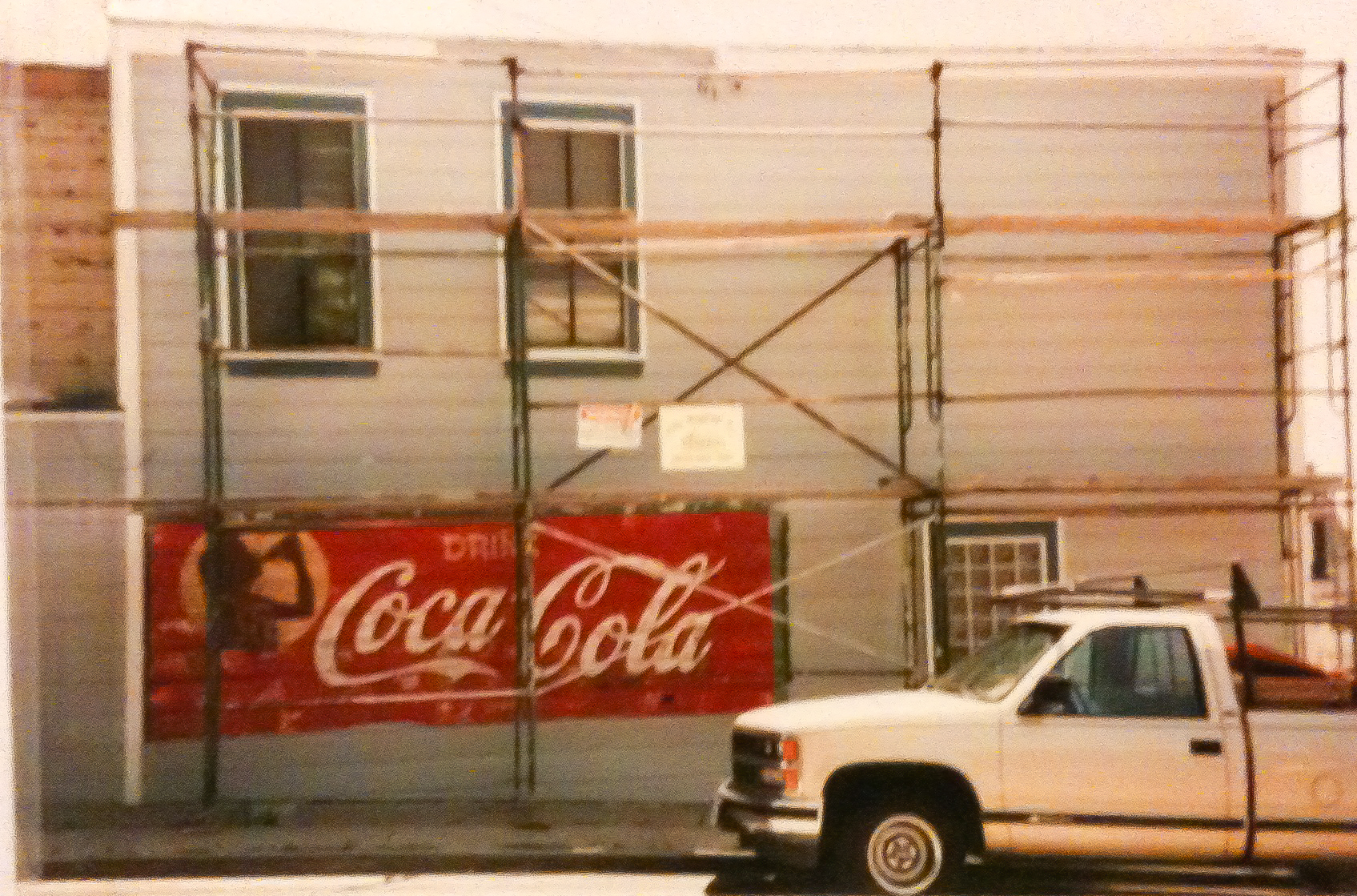 At the time, Mr. Modolo added, he simply planned to paint over the ghost sign. But neighbors intervened, begging him to keep it in place. And so he has, repainting it three times during the last 20 years.
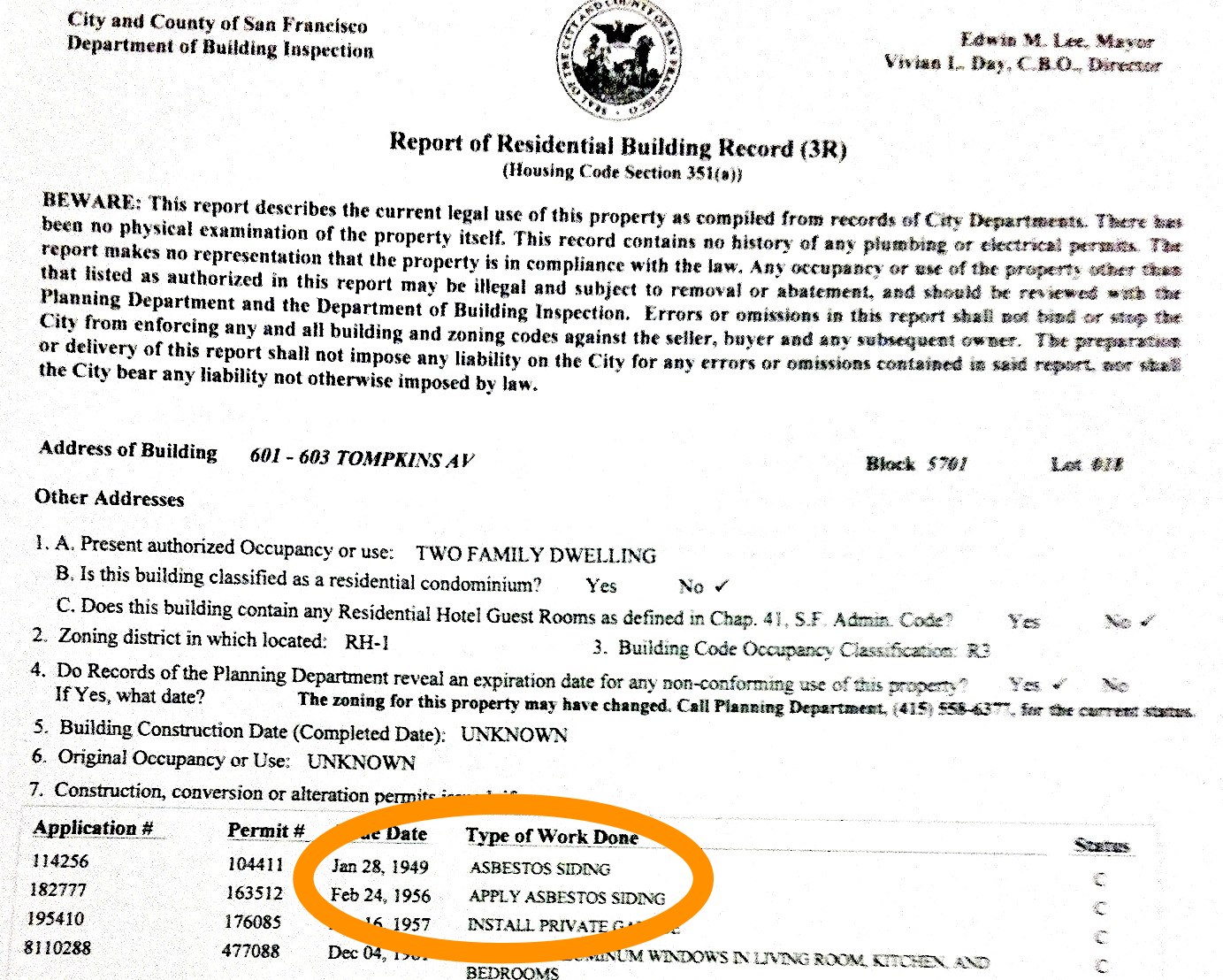
FACT: The ghost sign pre-dates the City’s 1965 regulations by at least a decade, and almost certainly more. How do we know this? Simple: The asbestos siding at 601 Tompkins was installed in 1949 and 1956, which means the sign was in place before it was covered over. And how do we know those dates? That’s simple too: Mr. Modolo has the permit history from the City’s Department of Building Inspection:
FACT: The design of the mural suggests it dates from the mid-1940s. Burrito Justice has stayed on the case, and he’s been Tweeting with an archivist from the Coca-Cola company, who says “The “silhouette girl” logo was used as early as 1939.”
UPDATE: While following up on the Coca-Cola history angle, Burrito Justice received this great reply from the company’s archivist:
The girl in the image is referred to in “Coke Lore” as Silhouette Girl. She was used from 1939 until around 1950 when she fell out of use. She is significant in dating items as she was one of the few characters that was used during the time we transitioned our “Trademark Registered” statement from the tale of the C in “Coca” to being placed under the words “Coca-Cola.” This transition occurred between 1941 and 1942.
The first thing I noticed with the sign was the mark was under the words so it had to be later than 1942.
So, game, set, match, right?
Not quite. Bernalwood has been in touch with Mr. Dan Sider from the Planning Department’s General Advertising Sign Program. This situation regarding our Coca-Cola is “entirely novel” and without precedent, he says. “Our staff has processed nearly 1,800 general advertising signs in the City,” Mr. Sider says. “Not once have neighbors wanted to preserve a sign, much less have they taken the initiative to repaint and restore a sign on their own accord.” Hey, what can we say, other than Welcome to Bernalwood.
Much now hinges on how the City decides to classify the artwork. Is it a “general advertising sign” or a “business sign?” Neither approach is ideal, as each comes with significant legal downsides. So perhaps Bernalwood can suggest an easy solution? Maybe it’s not a sign at all! And maybe it stopped being advertising sometime during the Truman Administration. Perhaps it’s really a “historic commercial mural!”Or something like that.
FACT: Homeowner Richard Modolo wants to keep the vintage Coca-Cola mural in place, as is, and if the dozens of comments Bernalwood has received are any indication, a nontrivial number of his neighbors do as well. Mr. Modolo says, “For better or worse, this building was once a grocery store, and this is part of the history of this neighborhood.” That’s now a confirmed fact too.
UPDATE: In today’s newspaper, the San Francisco Examiner reports on Bernal’s Coca-Cola mural controversy. Can Fox News be far behind?
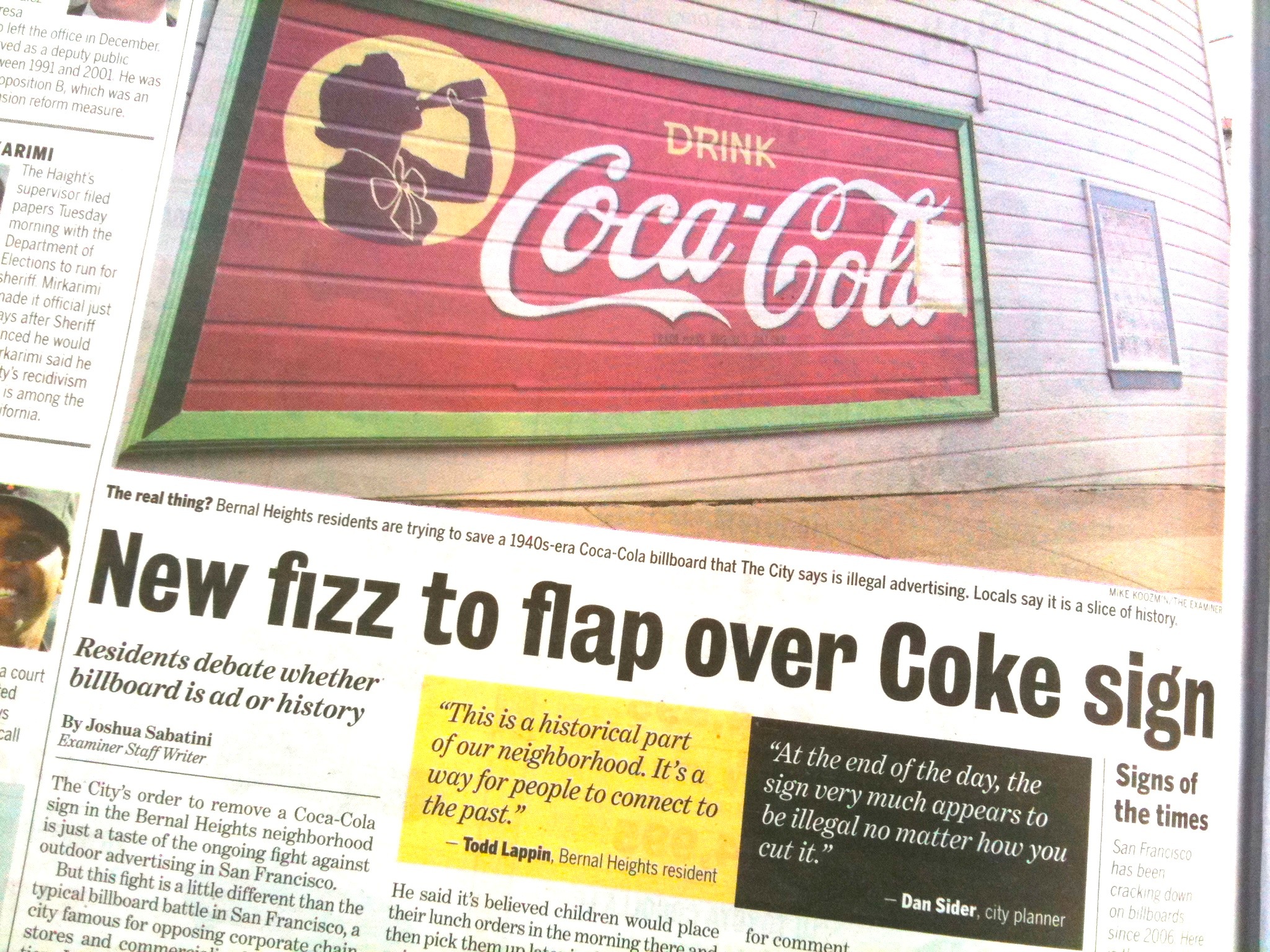
Photos: Top, Todd Lappin. Historic photos courtesy of Richard Modolo






 Bernalwood