Saturday: Celebrate at the Bernal Heights Library’s Gala 75th Anniversary Party

Bernallibrary1940-2

Bernal Heights Library Dedication, October 20, 1940

Bernal Heights Library Dedication, October 20, 1940

Its not hyperbole to say that the Bernal Heights Branch Library is a pillar of our community, and we are incredibly lucky to have it. The building is lovely, the role it plays is invaluable, and the library staff work hard to make it all happen.

Our library turns 75 this weekend, and Bernal branch manager Valerie Reichert wants you to come to the birthday party:

We are having our 75th Anniversary on Saturday!

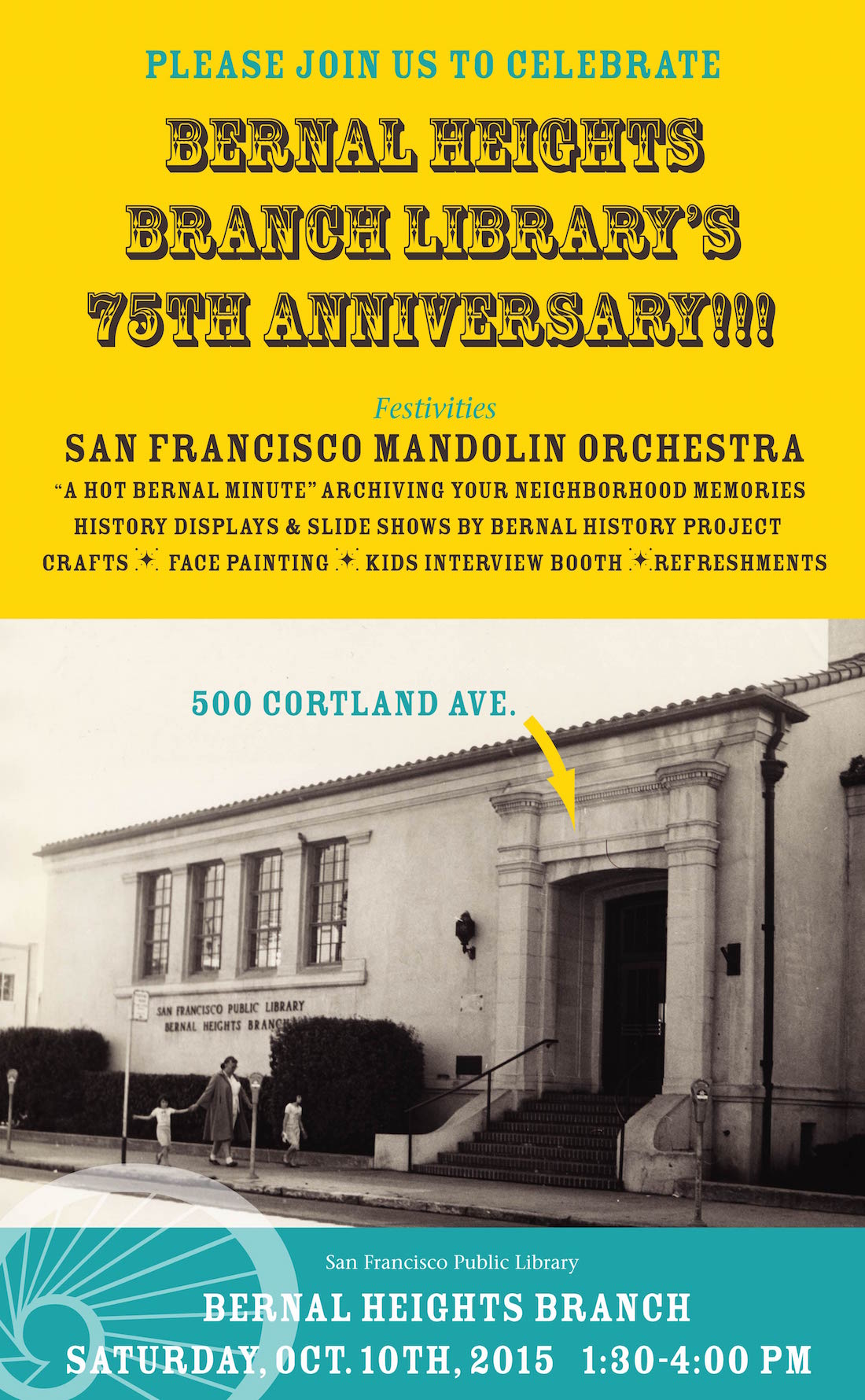
Celebrate the 75th Anniversary of Bernal Heights Branch!
Saturday, October 10th 1:30- 4:00 pm

The Bernal Heights Branch is 75 years old. Come share stories and help celebrate our beautiful WPA branch built in 1940. Activities include : San Francisco Mandolin Orchestra, crafts making in the Children’s Room, refreshments and history slide shows. Volunteers and staff will invite you to record your “Hot Bernal Minute” which will be captured on iPads.

Fun! But let’s back up. Where did our glamorous library come from?

Here’s the basic history:

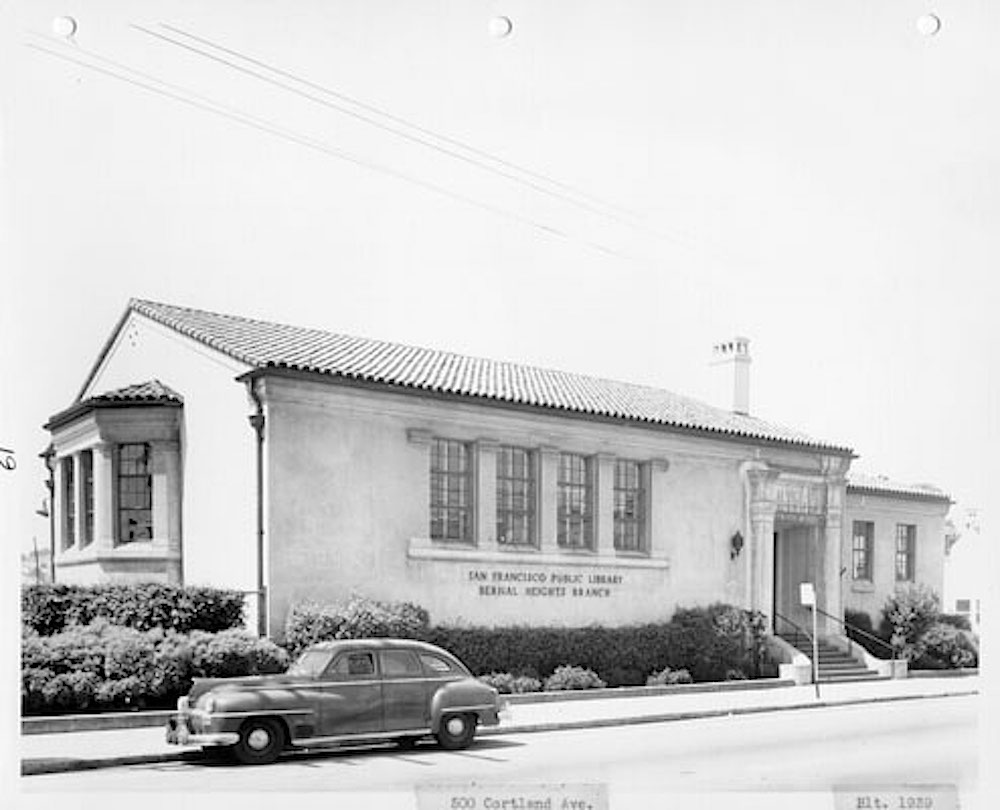
The Bernal Branch as a “library deposit station” was established in 1920 at 303 Cortland Avenue. As the neighborhood and library grew, it was moved, in 1936, to 324 Cortland. When that proved inadequate the neighbors lobbied for a new building.

The one floor branch library at 500 Cortland, was the 21st in the system and built on the site of the original Bernal School at a cost of $94,600. It was designed by Frederick H. Meyer, one of the most prolific and versatile architects in San Francisco at the turn of the 20th century, funded by the Work Projects Administration and dedicated on October 21, 1940.

After 68 years of use, the branch closed for renovation, as part of the Branch Library Improvement Project, in February 2008. The renovation, with a budget of $5.7 million, was designed by staff of the City’s Bureau of Architecture under the supervision of Andrew Maloney. His design is an intelligent and elegant response to Meyer’s building which originally devoted only the upper level to library purposes, and incorporates such modernizations as ADA accessibility, and seismic and technological upgrades.

Thank you, FDR! See you on Saturday.

SFPLbanners-FINAL-2.ai

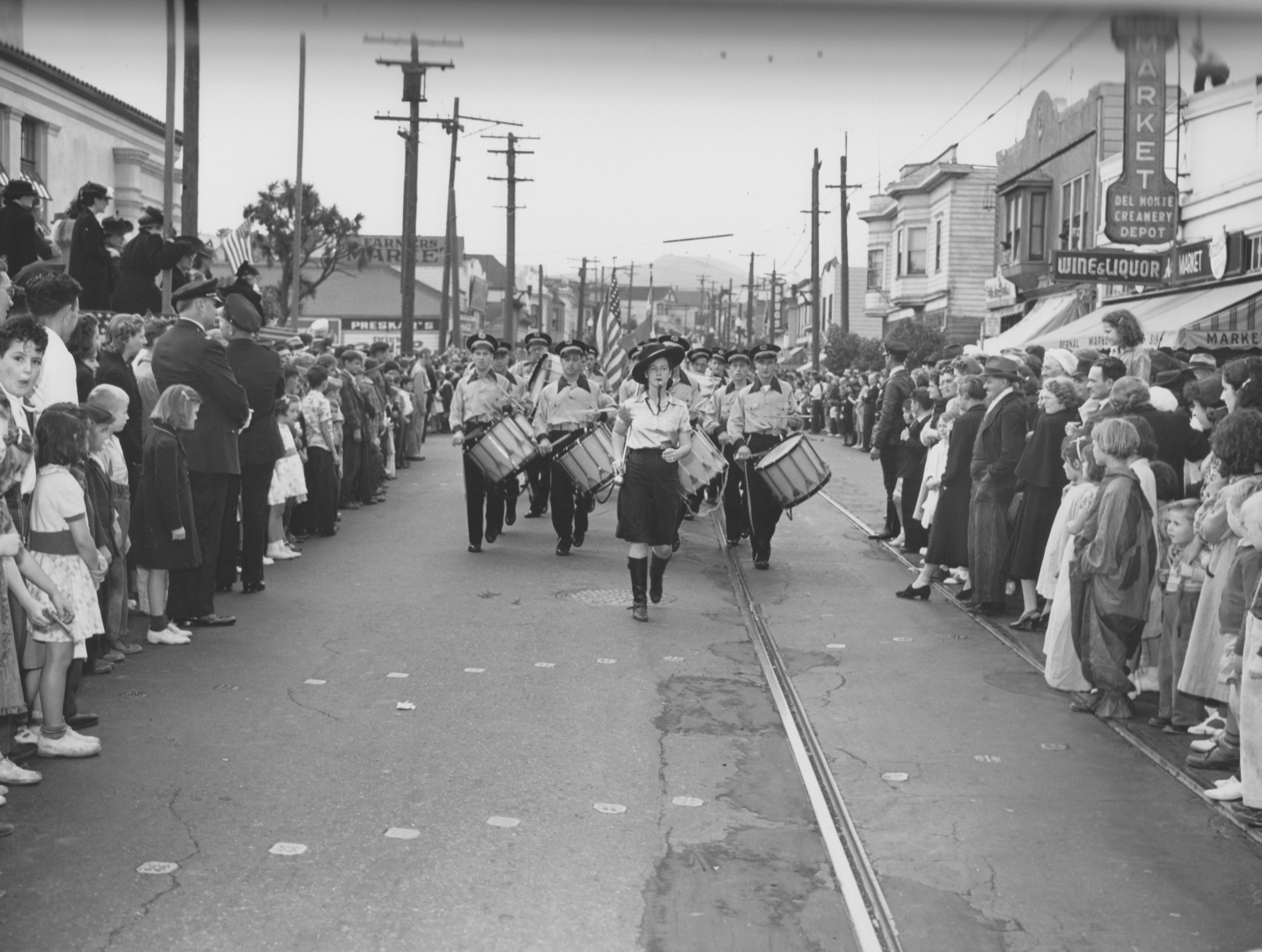
PHOTOS: Top, Bernal library, circa 1940, via SFPL Online Historical Photo Archive. Below, parade on Cortland for the Bernal Heights Library, October 20, 1940. Via Living New Deal

Meet the Community from the Mosque and Islamic Center on Crescent

mosque1

mosqueexterior

The Mosque and Islamic Center of San Francisco Waqf on Crescent and Andover has long been a fixture in South Bernal, but we seldom hear much about it.  In fact, it’s the oldest mosque in the Bay Area, as well as the second-oldest mosque in all of Northern California. Plus, four stars on Yelp! Who knew?

David Young, Bernalwood’s newest correspondent, recently reached out to Zishan Safdar, a Bernal native and lifelong attendee of the mosque, to learn more about this unassuming neighborhood institution:

Bernalwood: How long the mosque has been around?

Zishan: The Islamic Center of San Francisco (ICSF) was founded in 1959. It was founded when many brothers of the community decided that they, as Muslims, needed a place to pray and establish a foundation for the future generations. It’s the first mosque in the City of San Francisco, the first mosque in the Bay Area, and the second mosque in the entire Northern California. (The first is in Sacramento.)

The Islamic Center is a waqf. What does that mean?

Taken from Google, Waqf is defined as, “an endowment made by a Muslim to a religious, educational, or charitable cause.” Waqf in the Arabic language means to stop, contain, or preserve. So when this word is attached to the mosque or any religious institution, it also means that specific building can never be donated as a gift, inherited, or sold.

What about the community of Muslims who make up the mosque? Where are they from?

The community members who attend the mosque are from various backgrounds — including myself. I was born and raised in Bernal Heights on Cortland and Nebraska!

We have other members from India, Pakistan, Palestine, Yemen, and even Saudi Arabia. A majority of the members are San Francisco residents, including a good handful from Bernal Heights; a lot of commuters also drop by throughout the day to offer their prayers. There are a lot of converts who attend the mosque as well, including a few African-American converts and a Latino convert.

Besides daily prayers, what sort of events are held at the mosque?

Other than daily prayers, the mosque also hosts weddings, classes for both adults and children, Taraweeh prayers (prayers offered only during the month of Ramadan, the month Muslims fast in), the two Eid prayers, Eid Al-Fitr and Eid Al-Adha, and also funeral services.

The mosque is also a hangout spot, especially for commuters who choose to come in and relax while waiting for the traffic to die-down, or who simply want to hang out between the prayers to enjoy some tea. There are also many youth programs, including monthly trips, dinners, and sporting events.

How would you describe the mosque’s place in the local Islamic community?

ICSF plays a major role in the Muslim community. Not only is it a place of worship, it’s also a community center for its attendees. Along with religious classes, which are offered to adults and children, we also have people from different professions who act as guidance counselors for anyone seeking advice. The mosque is a means for people to stay in touch as well; knowing you’ll have a shoulder to lean on when you’re in need is one of the most beautiful things we have to offer.

We focus a lot on the youth, too, and do our best to guide them to get the best of educations, be the best person they can be, and help them out if they’re facing any problems, whether it be family trouble, drugs, etc. We recently added a basketball court in the back of the mosque, too. There have also been tutoring sessions for students who need help with homework and we, as the elders in the community, try our best to guide the upcoming generation, both in terms of secular studies and religious studies.

What about the mosque’s role in Bernal?

The mosque plays a major role in the Bernal community as well. One of things I love most about San Francisco is how diverse it is, and, aside from all the awesome cultural food you’ll find in the city, you have people from many religious backgrounds here.

There are many churches in the Bernal Heights community and, as part of cultural diversification, it’s crucial to have a mosque to show the rest of the world how welcoming we are, regardless of one’s background.

ICSF  —or any mosque for that matter — isn’t only limited to the people who follow the Islamic faith. Mosques are open to everyone, regardless of their background or religion, and at ICSF we always welcome everyone with open hearts.

I’d like to stress: We’d love to have more people from the Bernal community drop by the mosque to learn more; we’re always open to visitors! We’d love to have a “community night” at ICSF if the Bernal Height community is interested. I think it would be an amazing event where everyone could get to know each other and just have a good time.

PHOTOS: Top, Zishan Safdar. All photos by David Young for Bernalwood

High Bridge Arms in Bernal Heights, San Francisco’s Last Gun Shop, Set to Close

gunshop

This story has been generating lots of buzz around town and on conservative media organs across the nation: High Bridge Arms at 3185 Mission Street in Bernal Heights, San Francisco’s last remaining gun shop, plans to close by the end of October.

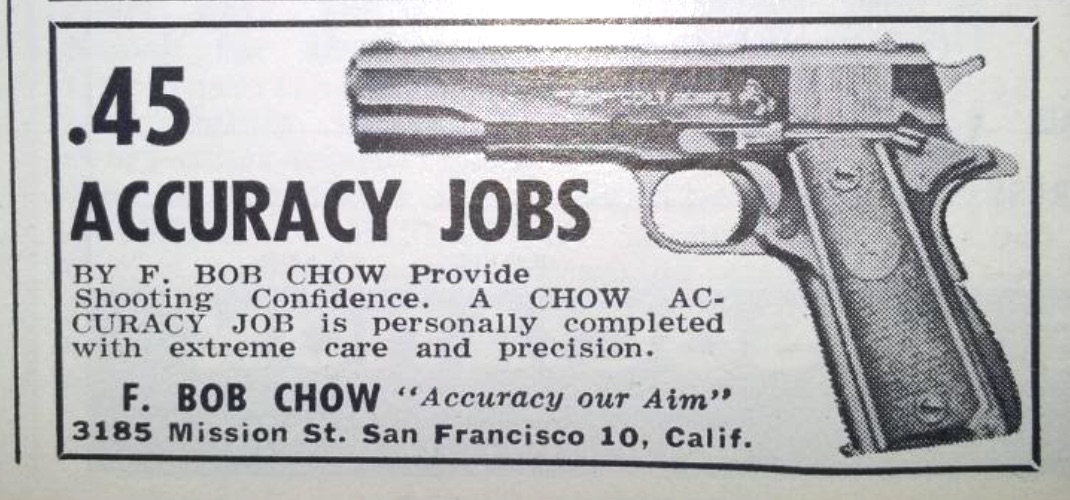
High Bridge has been a fixture in Bernal since the 1950s, when it was opened by Bob Chow, a Chinese-American who had represented the US shooting team in the 1948  London Olympics. Chow died in 2003, but the store carried on under owner Andy Takahashi and manager Steven Alcairo until a Sept. 11 Facebook post announced that closure was imminent:

Dear friends and family, it’s with tremendous sadness and regret that I have to announce we are closing our shop. For many reasons I cannot get into at this moment, it appears our final days will be through to the end of October of 2015. We will clearance out what ever inventory we have in the shop and offer sale prices for anything you would like us to order. This is not a joke. For any of you Vultures, (you know who you are) please don’t bother us. For if you do, I give you my solemn promise that we will make it a very unpleasant experience for you. For all our true friends and followers, I would like to sincerely thank you for all your support, likes, positive feedback and best of all, your friendship. Hopefully, we’ll see you soon. It has been a long and difficult ride, but a great pleasure to be you’re last San Francisco Gun shop. Our warm regards, High Bridge Arms.

If this sounds like ripe fodder for Fox News, well, rest assured, they’re on it.

Ever since it was opened in the 1950s by a celebrated Olympic shooter, High Bridge Arms has been a defiant fixture in San Francisco’s Mission District, (sic) but a coming wave of new firearms restrictions has prompted the last gun shop in the liberal City by the Bay to pack it in.

The proposed new city regulations, which could only be aimed at High Bridge Arms, would have required the shop to take and preserve video of all transactions and turn customers’ personal data over to police on a weekly basis. General Manager Steven Alcairo said the shop’s owners finally threw in the towel after years of what they consider being unfairly targeted with burdensome rules and regulations. Past regulations have required the shop to bar ads and displays from its windows and install cameras and barriers around its exterior. The shop has 17 cameras as it is, and turns video over to police on request, he said.

“This time, it’s the idea of filming our customers taking delivery of items after they already completed waiting periods,” Alcairo said. “We feel this is a tactic designed to discourage customers from coming to us.

To be sure, a great many Bernalese will be glad to hear High Bridge Arms is closing. That’s understandable; the gun shop has long been an incongruous part of our local landscape, and gun violence is a disease that plagues our city and our nation.

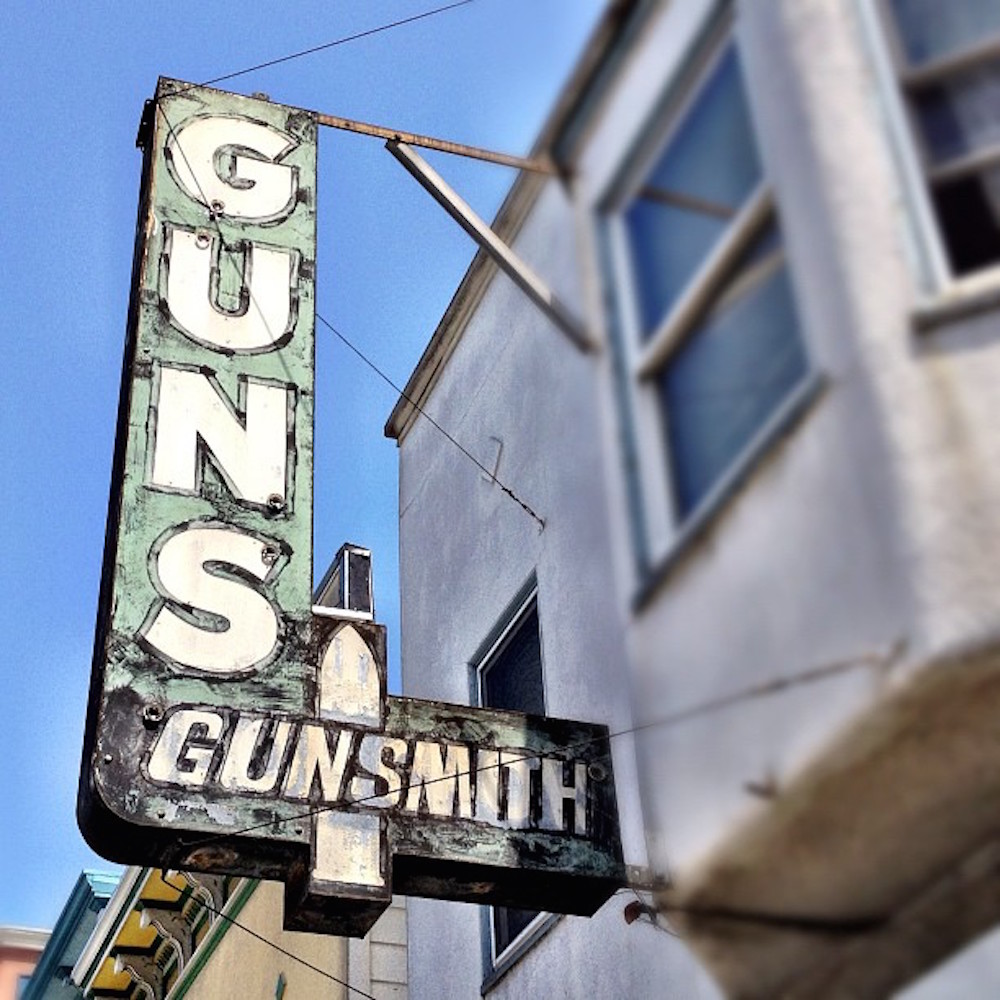
That said, the store was popular among law enforcement officers, and I don’t recall hearing any stories that involved bad guys using guns that came from High Bridge. Awkward though it was, that incredible, faded GUNS sign out front provided a link to a lost time in San Francisco, and here in Bernal Heights. Here’s Bob Chow’s biography from the Chinese Historical Society of Southern California:

Bob Chow […] was born in 1911, in the U.S. to Chinese immigrant parents and passed away in 2003. He was a pioneer ham radio operator in his youth. He joined the Navy Reserve in the early 1930s. He became a noncommissioned officer, a rarity then for an Asian American.

Bob established 37 world pistol records, and in 1948 qualified for a place on the U.S. Olympic Team and competed in London. He was the first Chinese American to compete in pistol shooting in an Olympic game. Bob was the only U.S. rapid-fire shooter to score 60 hits in the match and placed 13th overall. After returning from the Olympics Bob coached young American shooters and raised the standard of American gunnery to competitive internationally.

bobchowaccuracyDuring his stint as a movie extra he taught John Wayne, Roy Rogers and others how to increase their accuracy in pistol firing. Bob was an all around sportsman and loved motorcycles. Bob played saxophone and banjo with American jazz groups during the Prohibition days following World War II. Eventually he and his wife Bobbie settled in San Francisco where he owned and operated a gun shop.

High Bridge was a juxtaposed holdover from the midcentury, working-class Bernal Heights that was here before almost all of us — before the Summer of Love, before Santana in the park, before the SLA, the Esmeralda Slides, BHNC, the Good Life, the coffee shops, the Subarus, the Priuses, and plenty of other events and symbols that reflect the sensibility Bernal Heights is known for today. High Bridge was an icon of diversity of a different sort, and even if you never liked it, or only barely tolerated it, it always provided a tangible reminder of different ways of looking at the world, and our own neighborhood.

PHOTO: High Bridge Arms sign, by Telstar Logistics

Greatest Hits from (Neighbor) Max Kirkeberg’s Historical Photo Collection

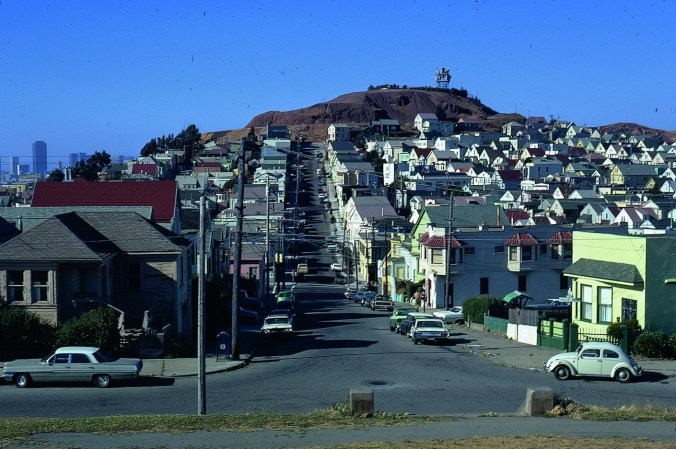
hollypark1973

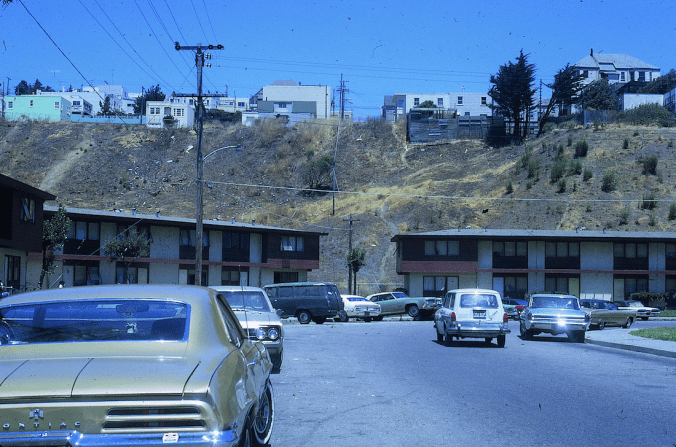
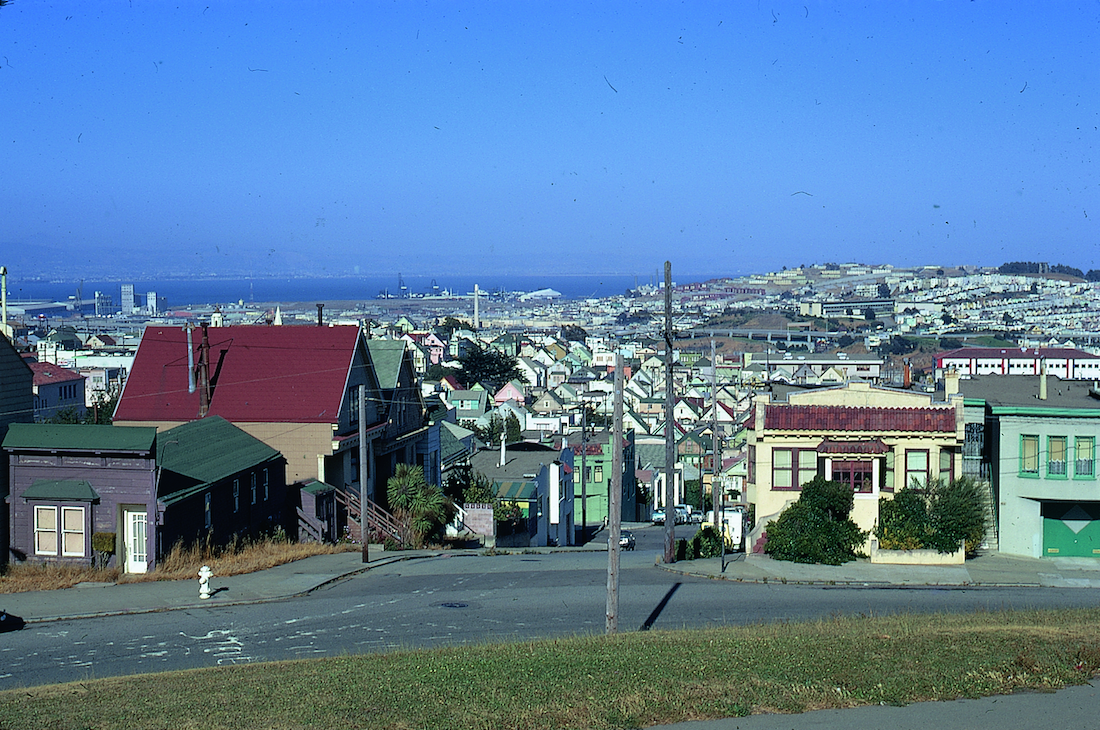
View from Holly Park, 1973

A few weeks ago, Neighbor Vicky Walker from the Bernal Heights History Project shared a URL with your Bernalwood editor, pointing me toward a wonderful collection of historical photos of Bernal Heights, mostly from the 1970s to the 1990s.

Several hours of blissful photo-procrastination and time travel ensued, after which I persuaded Neighbor Vicky to tell us more about the collection and its creator. So here is Neighbor Vicky Walker’s guided tour of the fabulous Max Kirkeberg Historical Photograph Collection:

Geography Professor Emeritus Max Kirkeberg of SFSU should also be known as Neighbor Professor Max, because he has lived on Peralta for decades. He’s now officially retired, but he taught urban geography and led countless field trips and walking tours around San Francisco for SFSU and the Osher Lifelong Learning Institute, taking what he estimates as 60,000 photographs of various city neighborhoods since the early 1970s.

The Bernal History Project knew about Max because he shared many of his photographs with us over the years.  But our more recent discovery that thousands of his pictures are available online for free was magical. So far, 2,770 of Max’s photos are available in the Max Kirkeberg collections as part of the DIVA archives at SFSU. There’s a whole section devoted to Bernal Heights South — and lots of the photos are in color, including a batch of earthquake cottages.

I called up Max to find out what other treasures he has. He says the online project began 9 years ago. He has 75 boxes of slides — around 60,000 photographs, he estimates — and SFSU wanted to use his pictures for DIVA, a pilot online archive project for other professors who might want to digitize their research collections.

Erin Olson of the DIVA digitization team says the project’s goal is to digitize analog collections like Max’s slides and, if necessary, help organize and catalog them, and make them available for the public to see. “Ultimately, with Max’s information, we hope that a full digitization of his collection will serve as a unique and important documentation of San Francisco’s vast geographical, architectural, and cultural history, as well as its development and progress,” she says.

Max has gone through 9 or 10 boxes so far and says he is finding photos he hasn’t seen in 20 years. He estimates that the 503 photos that are logged under South Bernal are maybe a quarter or a third of the Bernal Heights slides, which is one of his largest collections.

Other neighborhoods include the Castro and Ashbury Heights, with more to follow as the project progresses. The DIVA team are currently working on Eureka Valley, the Inner Mission, and the remainder of Bernal Heights, and will follow with other Mission-based sub-collections

Here are a few of my favorites:

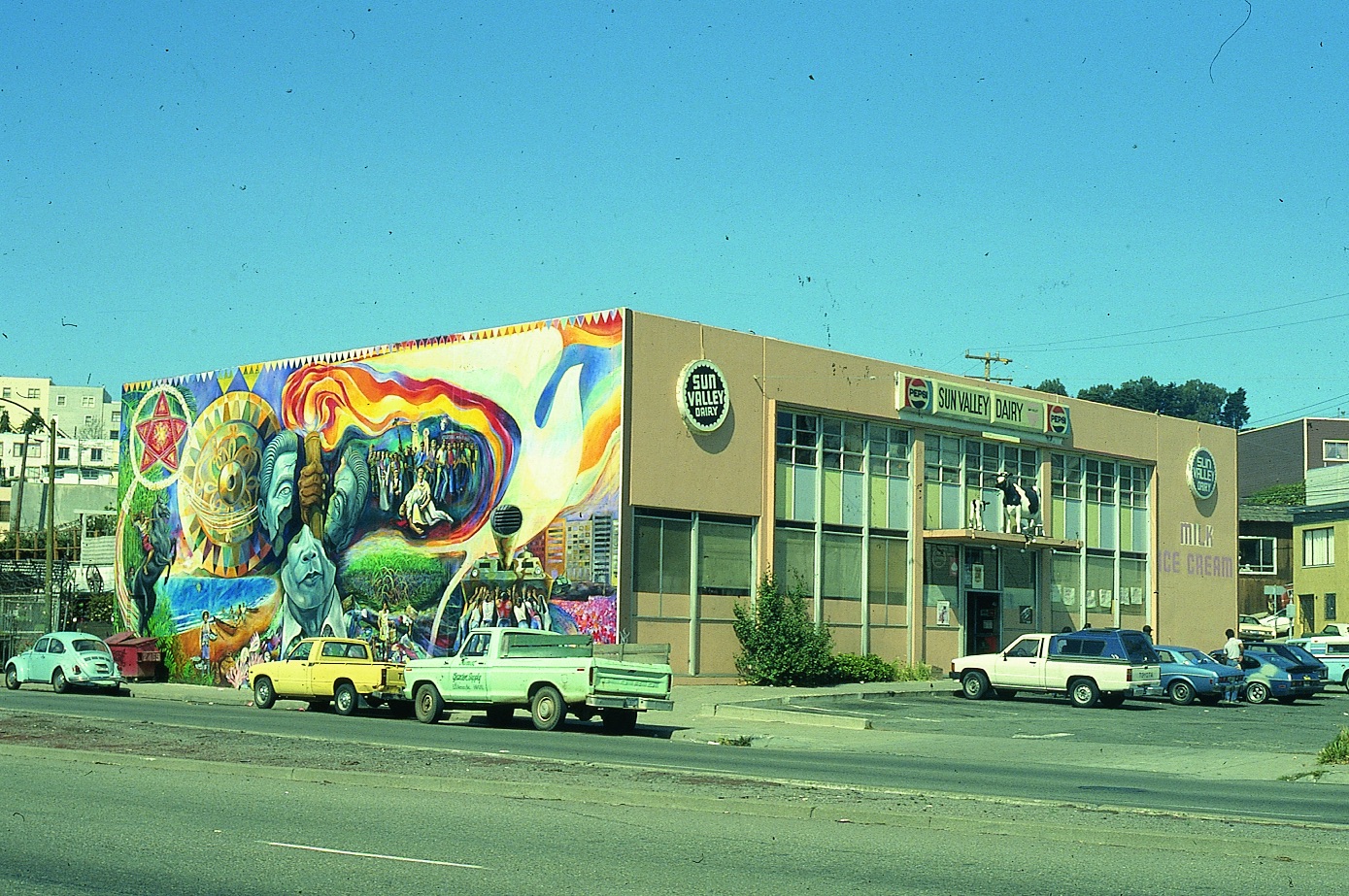
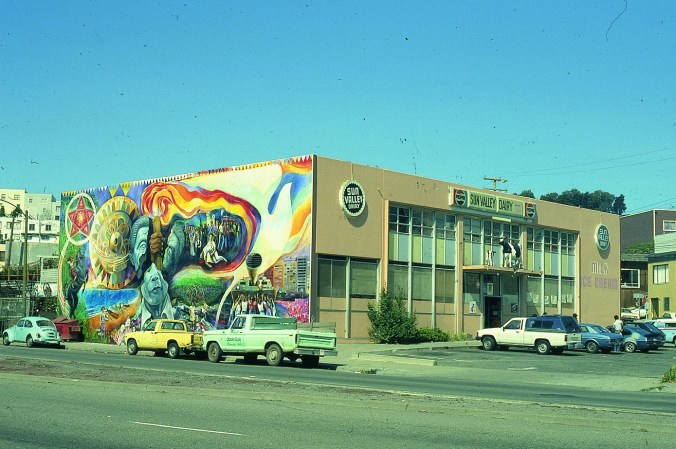
1. “Lakas Sambayanan” (“People Power”), 1987
Sunvalleymural1

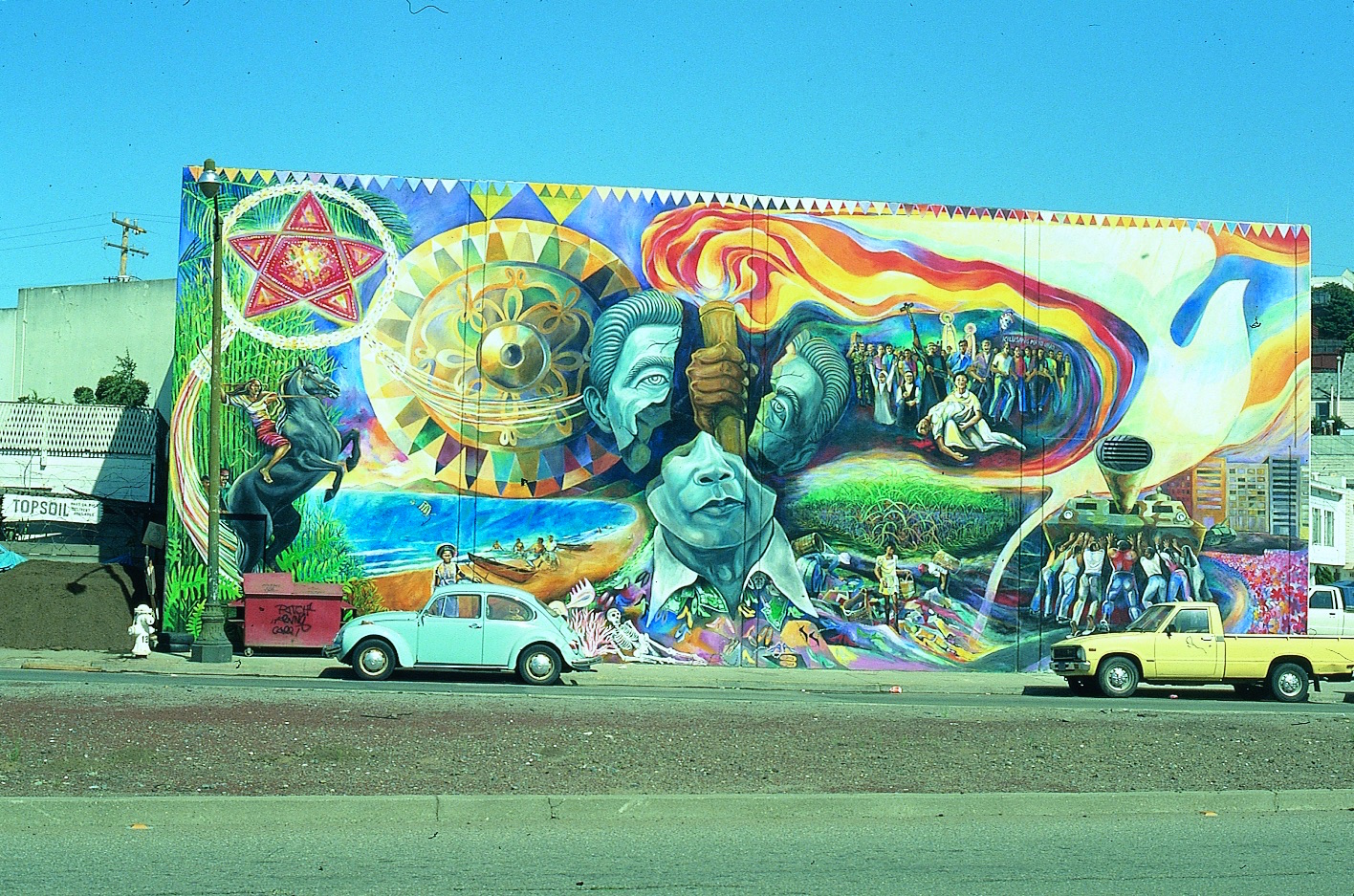
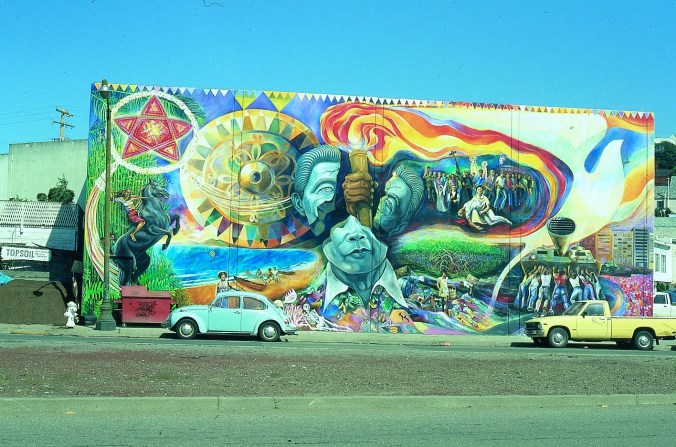
This was an anti-Ferdinand Marcos mural on the former Sun Valley Dairy building at 300 Alemany (at Crescent). Painted by Johanna Poethig (who recently did the “Story Cloud” mural on the back of the Bernal library), Vic Clemente, and Presco Tabios. Commissioned by the San Francisco Mural Resource Center, it commemorates the 1986 revolution in the Philippines. Facing south, it was allowed to fade before being painted over in 2006.

Close-up detail. Notice all of Imelda Marcos’s shoes at bottom center:
marcosmuraldetail

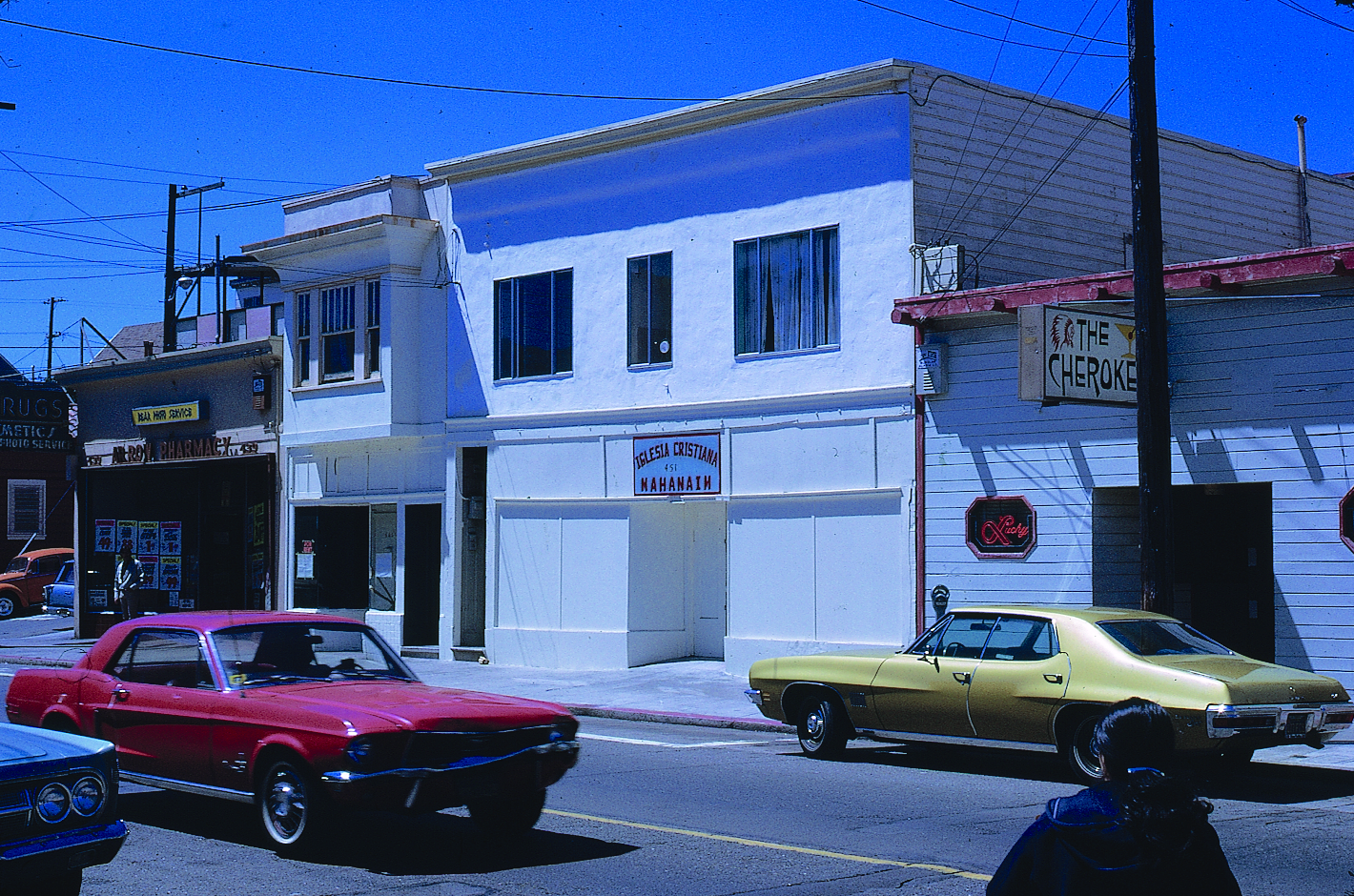
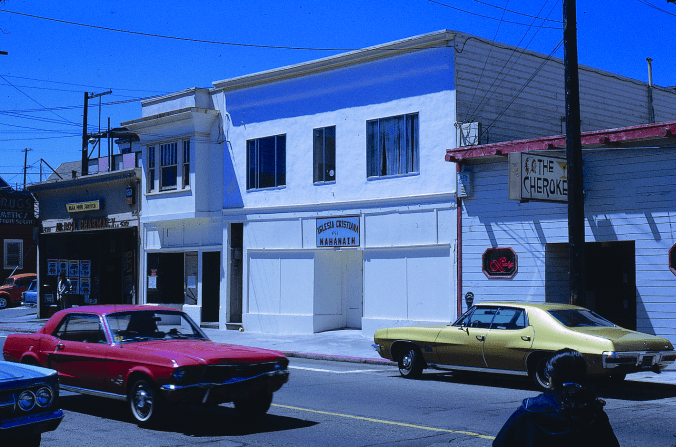
2. Iglesia Cristiana Mahanaim storefront Spanish-language church at 451 Cortland, 1973
iglesiacherokee1973

The church was sandwiched between Arrow Pharmacy and the Cherokee (today’s Lucky Horseshoe). Before the church moved in, the building’s history included a grocery store, a five-and-dime, and, briefly, artists from the National Center for Experiments in Television. Bald Eagle Sporting Goods replaced the church in 1977.

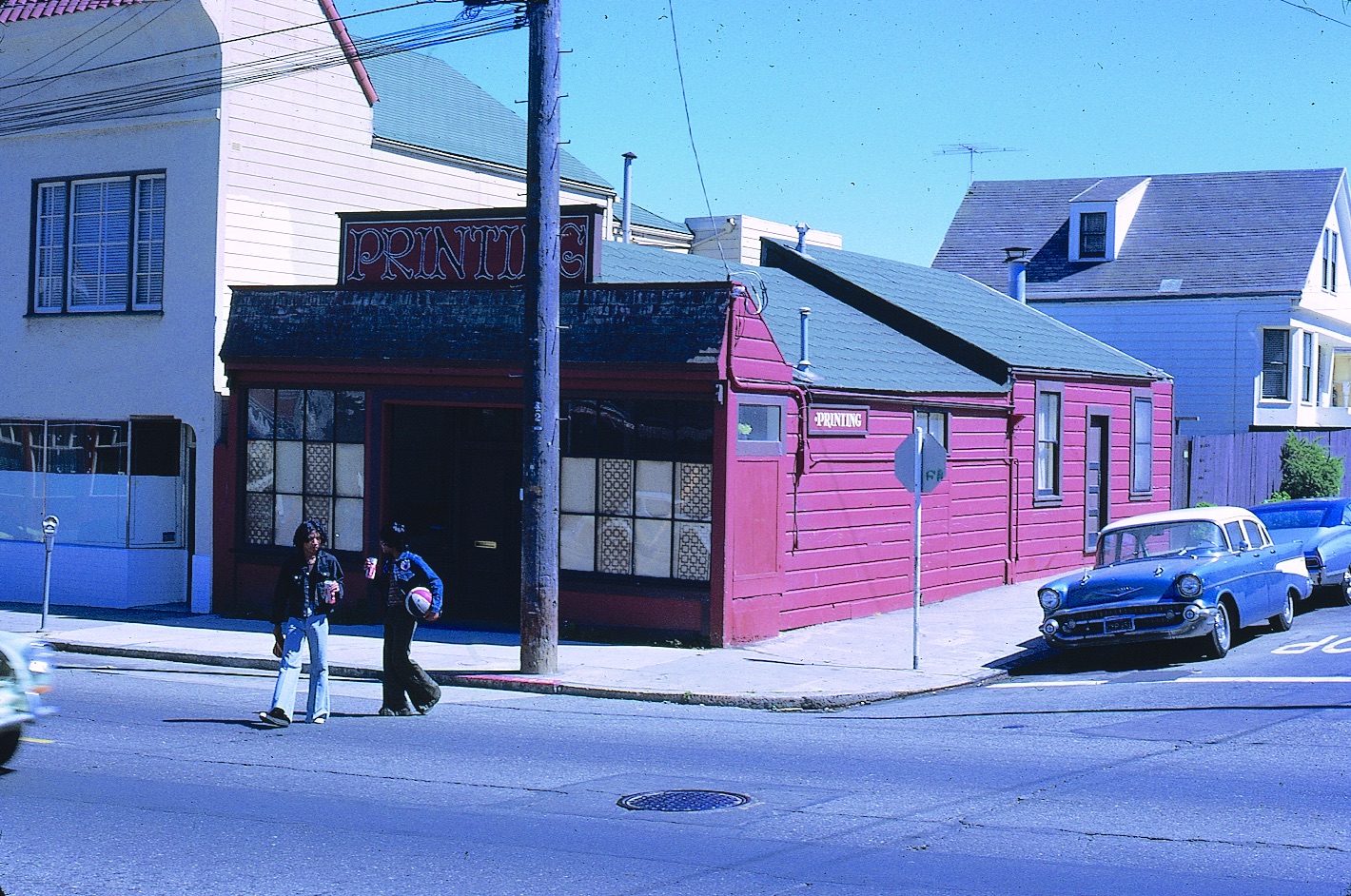
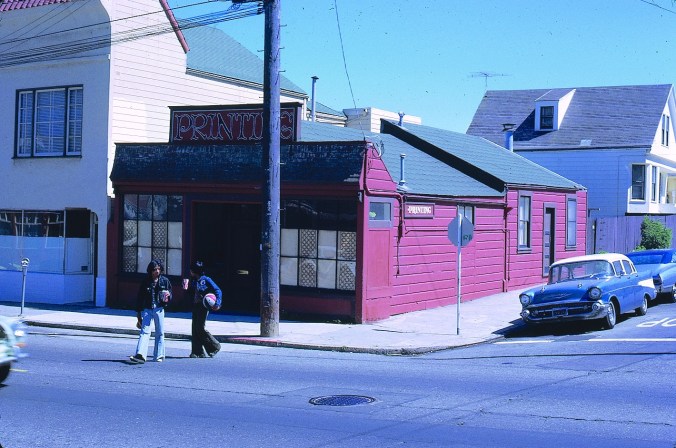
3. Goat Hill Printing, 400 Cortland, in 1973
goathillprinting

This building was a hardware store for years, run by the McCoys and then the Thorsens. After the printers closed, it was a clay art workshop. Progressive Grounds has been here since 1996.

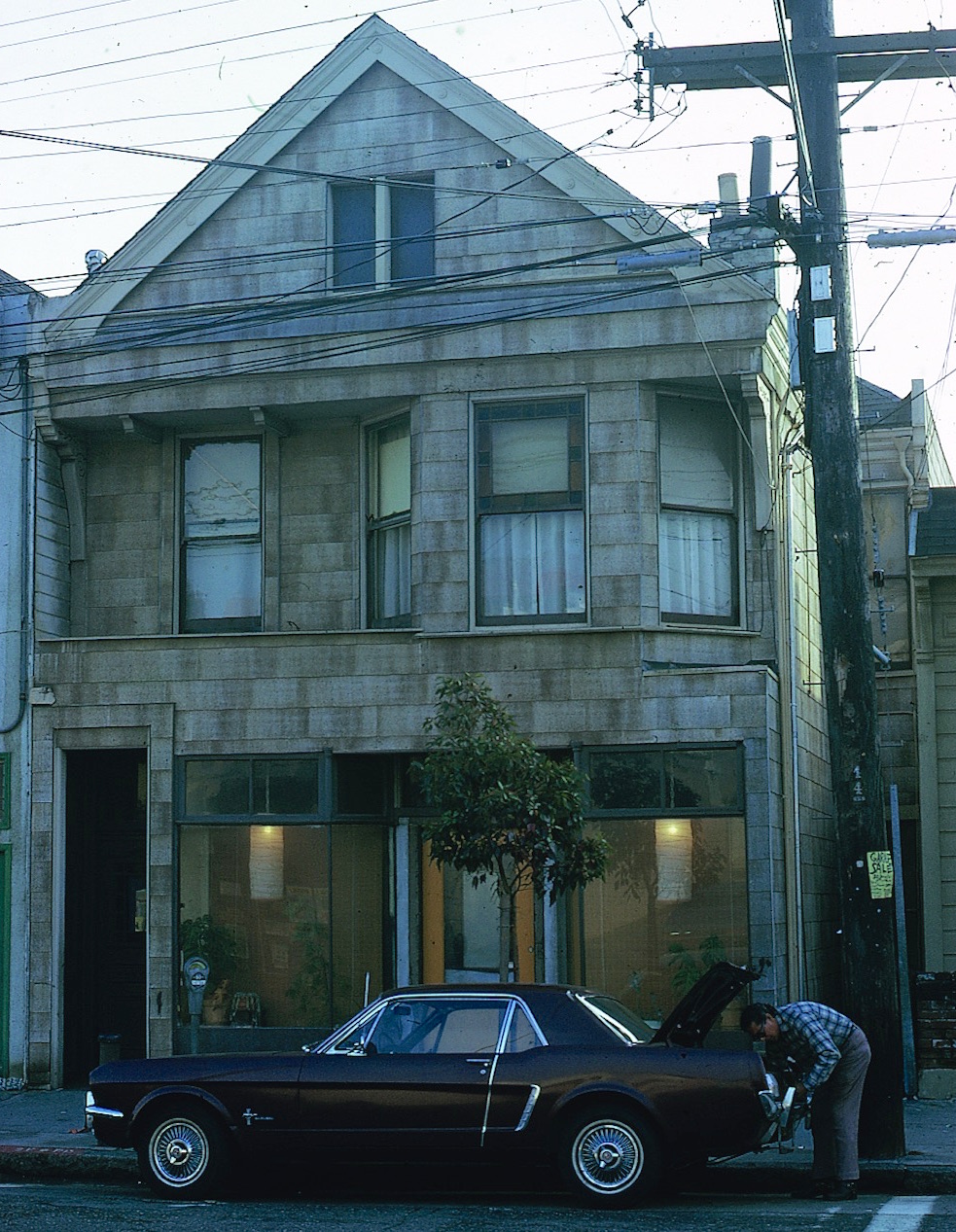
4. 424 Cortland in 1973
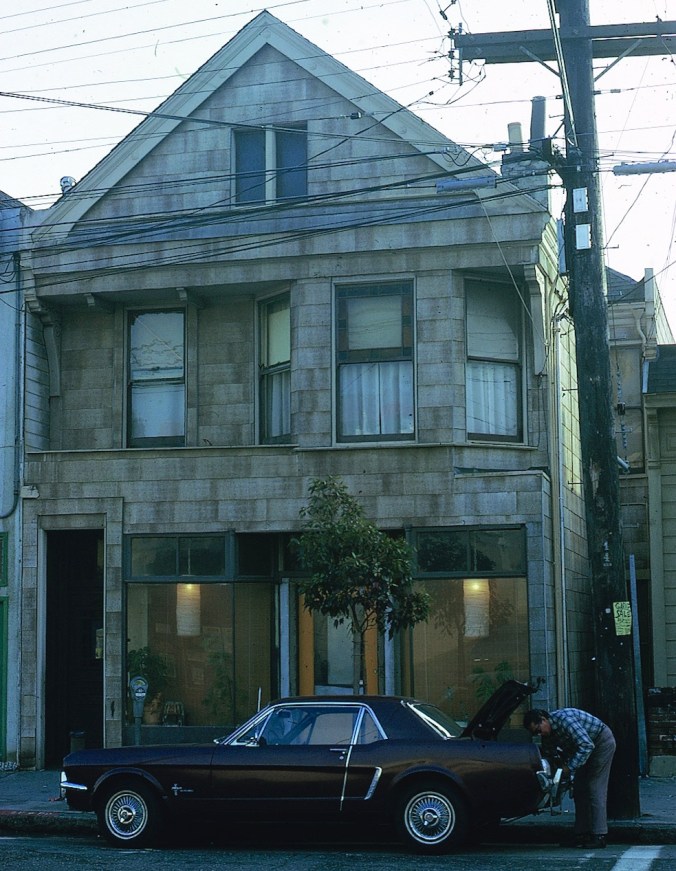
424cortland1973

Before the Wild Side West moved here from its Broadway location in 1976, the building was used as an office by architect Stephen Roake. The building was constructed around 1900, and housed a bakery run by the Gennheimers, the Hagemanns, and then the Perottos for its first thirty years.

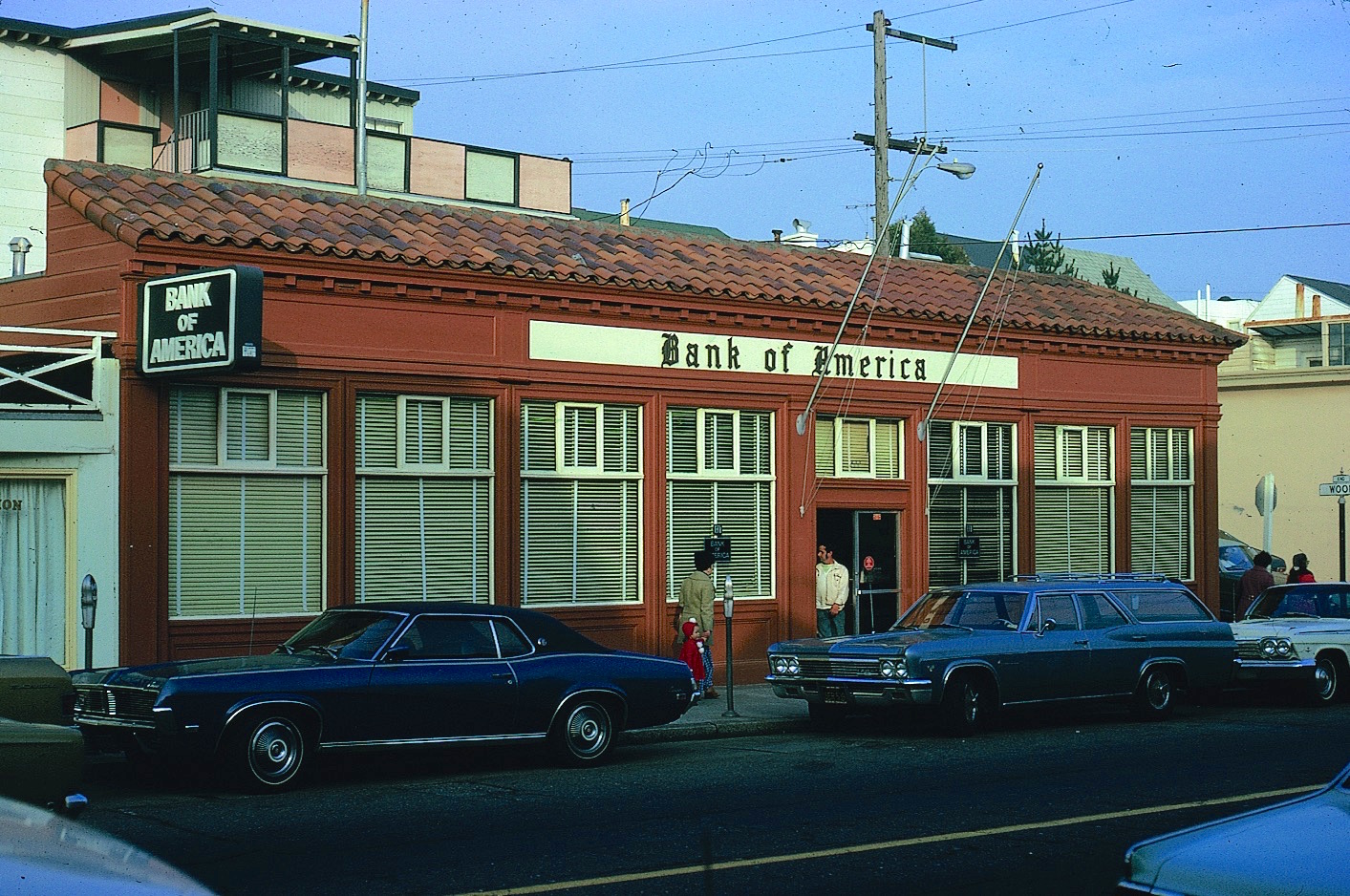
5. Bank of America in 1973
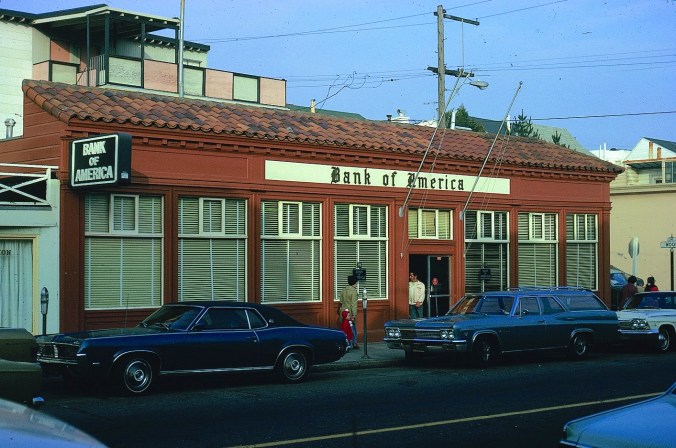
bofa1973

Northwest corner of Cortland Avenue and Wool Street. The Bank of America branch opened here in 1927 as the Bank of Italy; it has historically been the only bank on the street.

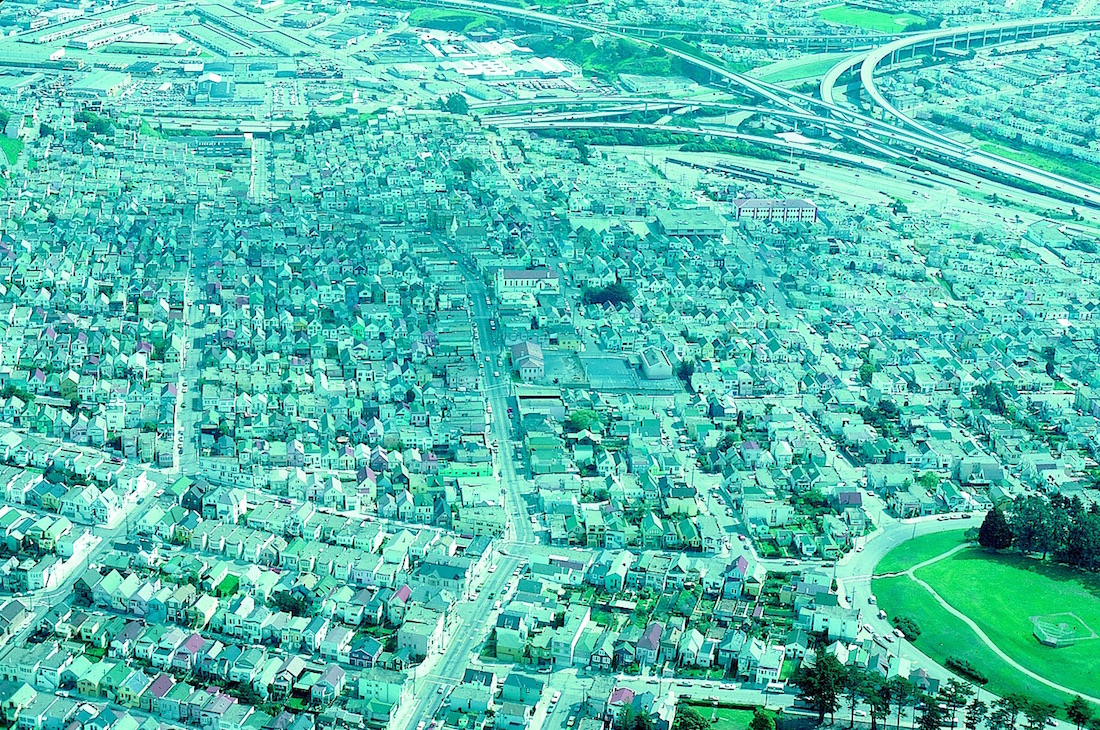
6. Aerial view of Cortland etc. 1975
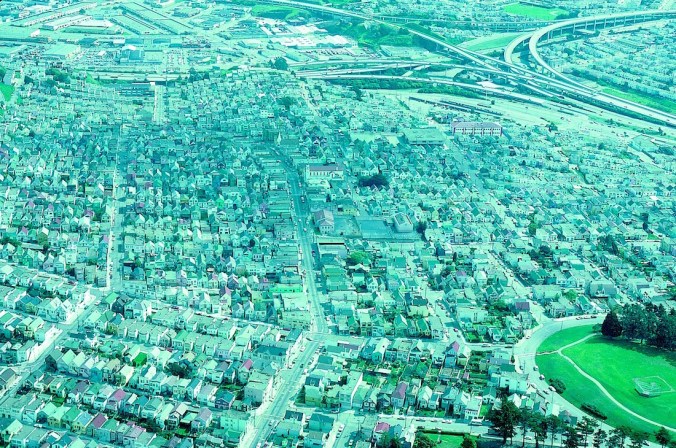
bernalaerialmax1975

You get a good idea of the topography of Bernal in this one, as well as the development on the south side. Cortland Avenue runs down the middle of the photograph; the large buildings visible are Paul Revere School, the Bernal Library, and St. Kevin’s Church. Holly Park is in the lower right corner. Just visible beyond St. Kevin’s is the Emmanuel Lutheran Swedish Church building at Cortland and Folsom, which was then the Community Church Assembly of God.

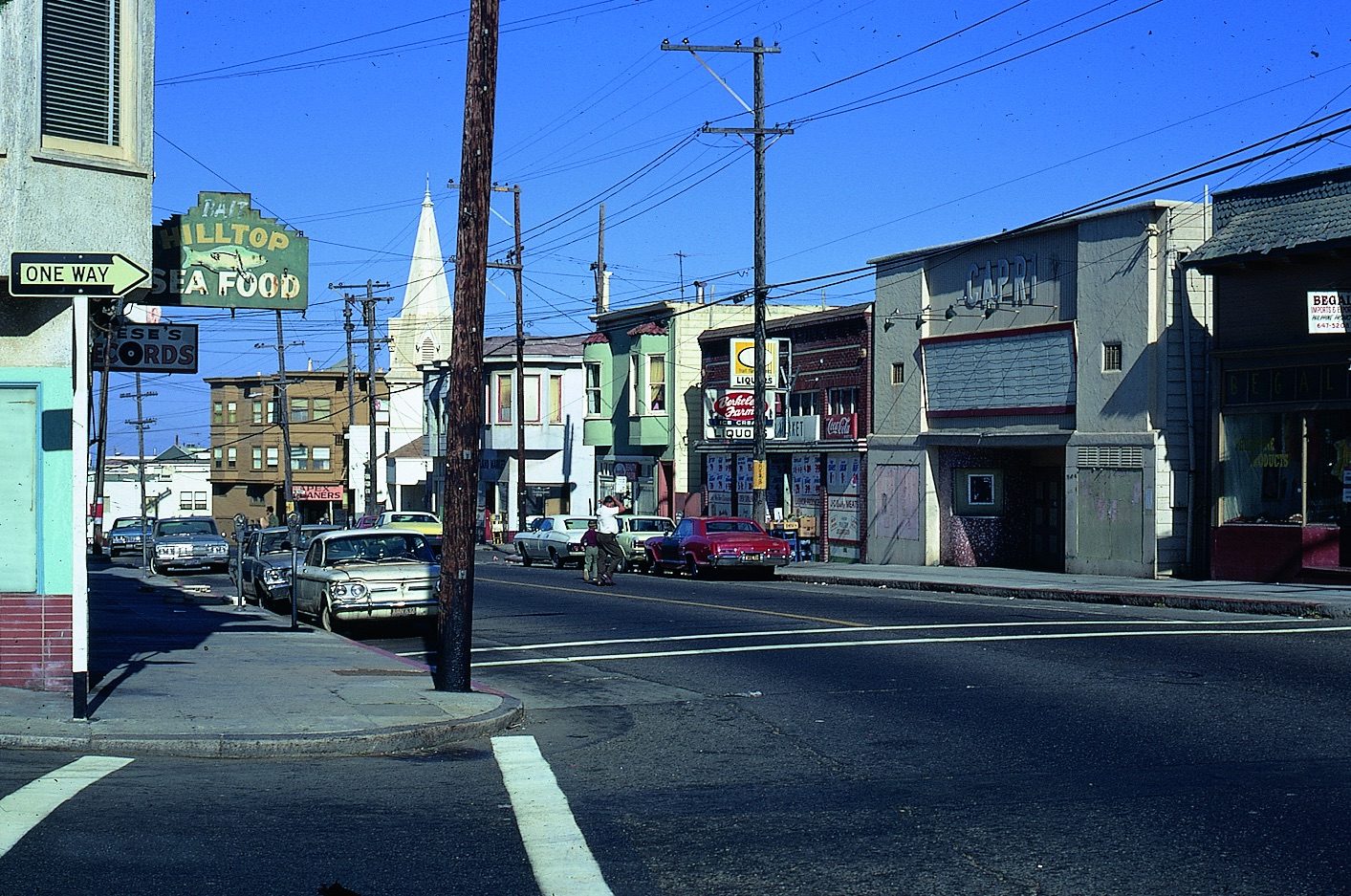
7. 800 block of Cortland/Ellsworth, 1973
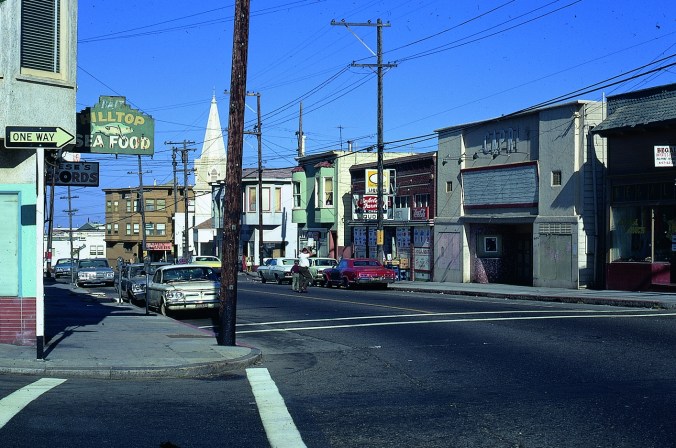
cortlandelssworth1973

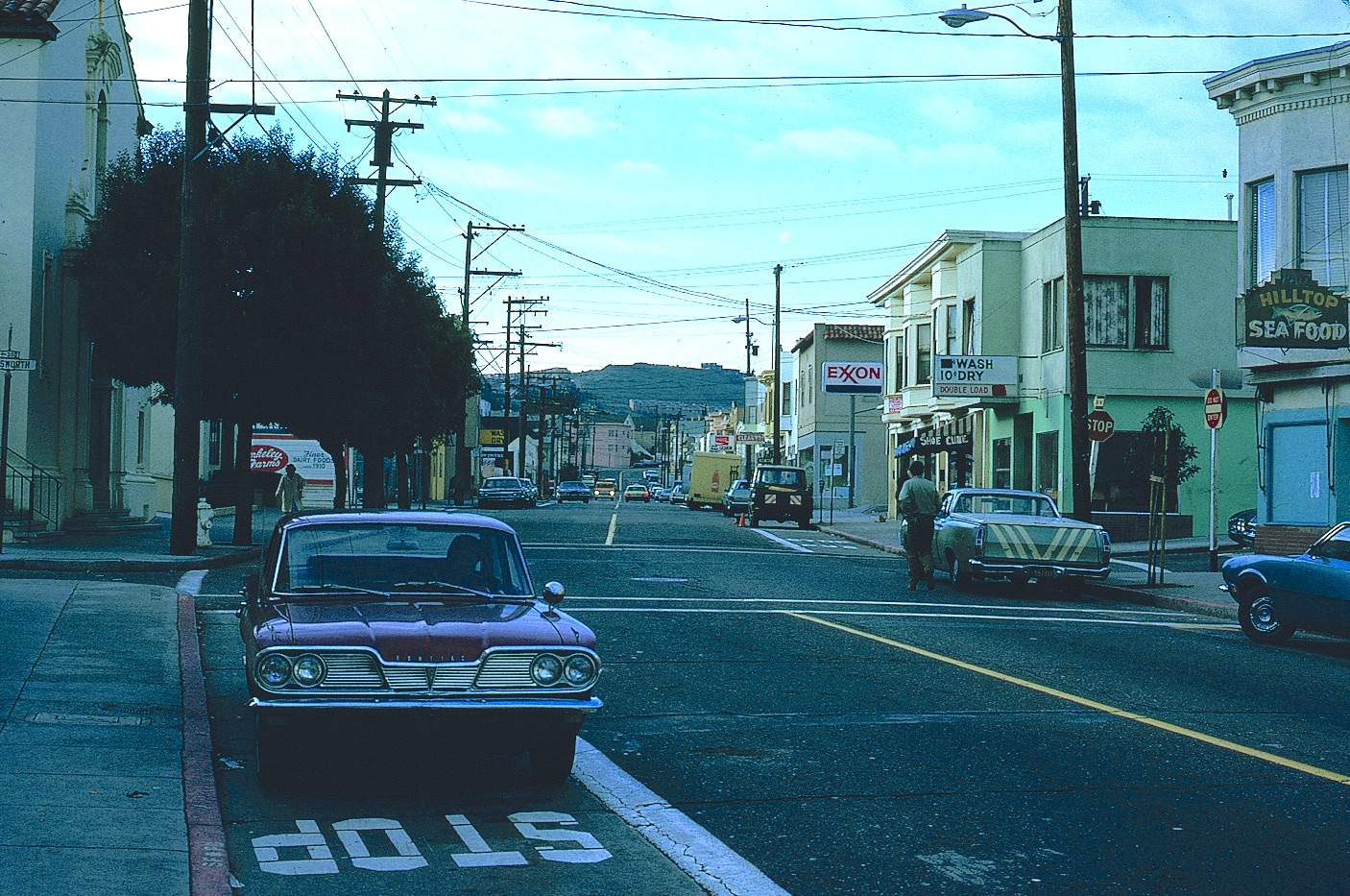
There’s been a lot of change on this stretch of Cortland. Frank Favaloro ran a fish market and bait shop at 801 Cortland from the mid-1950s until his death in 1961, after which Woodrow and Winifred Gaumond ran the store as Hilltop Fish Market. City records say 801 Cortland was vacant from 1967 to 1977 (but we would love to hear otherwise). Deese’s Records at 803 Cortland, run by Maude Deese, was only open for about a year.

You can see the white steeple of the Assembly of God church at Folsom and Cortland, while the second building on the right is the former Capri Theatre, which closed in 1969. Behind the church in the brown building is Apex Cleaners and Dyers at 1000 Cortland, which opened in the early 1950s. Cutting Edge Salon has been in this spot since 1999.

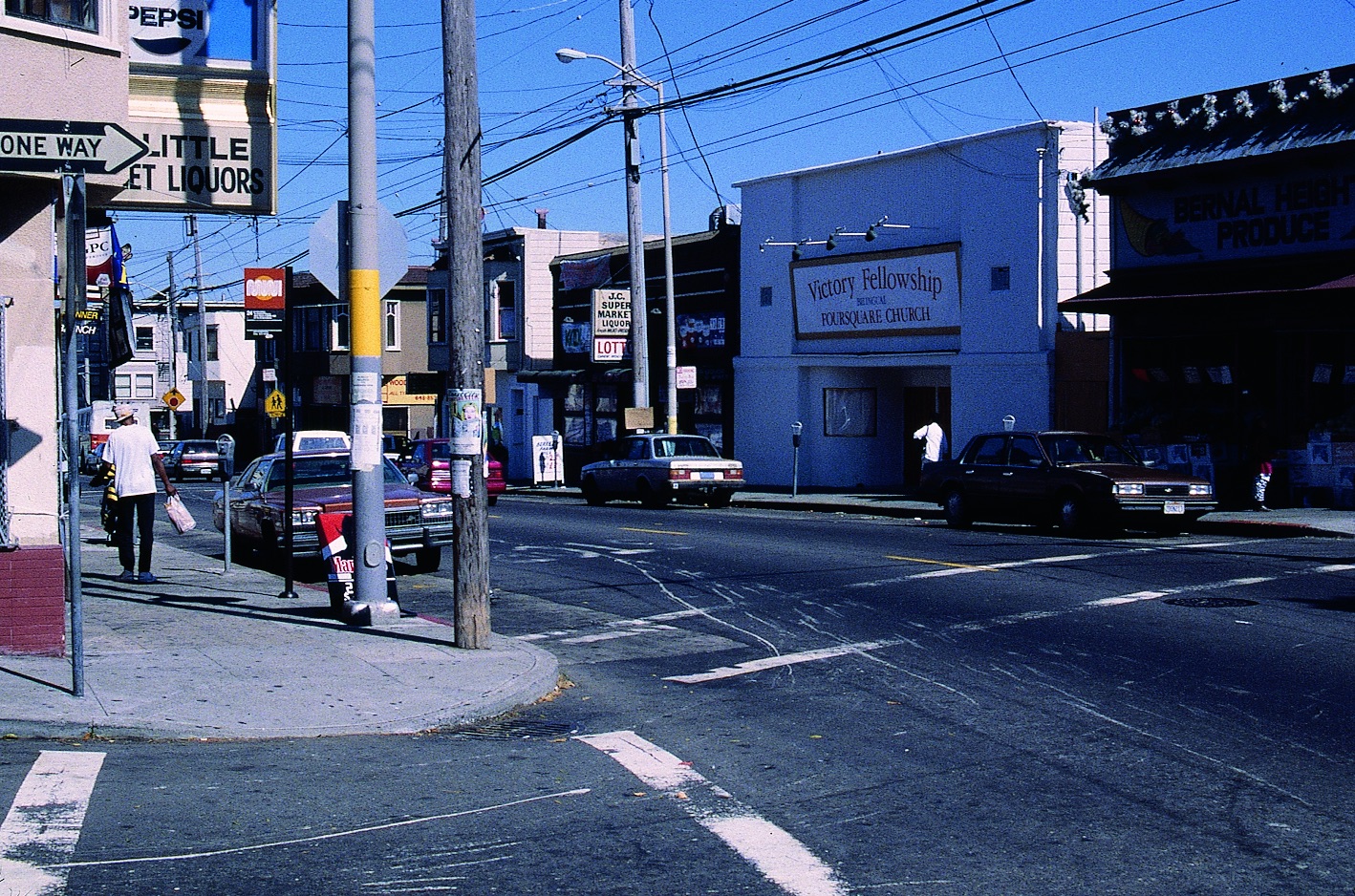
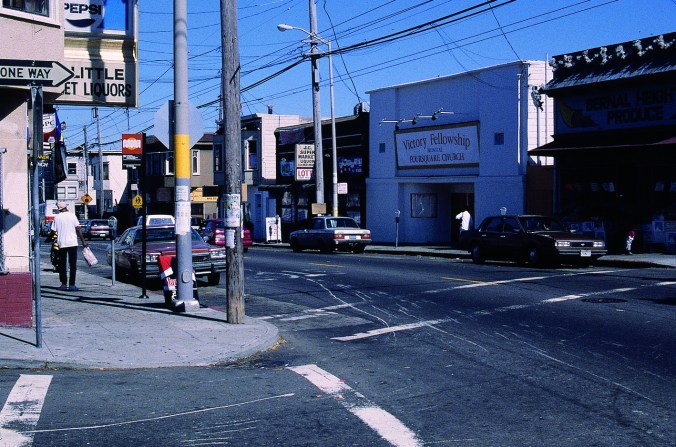
8. 800 block of Cortland at Ellsworth in 1995
800cortlandsouthside

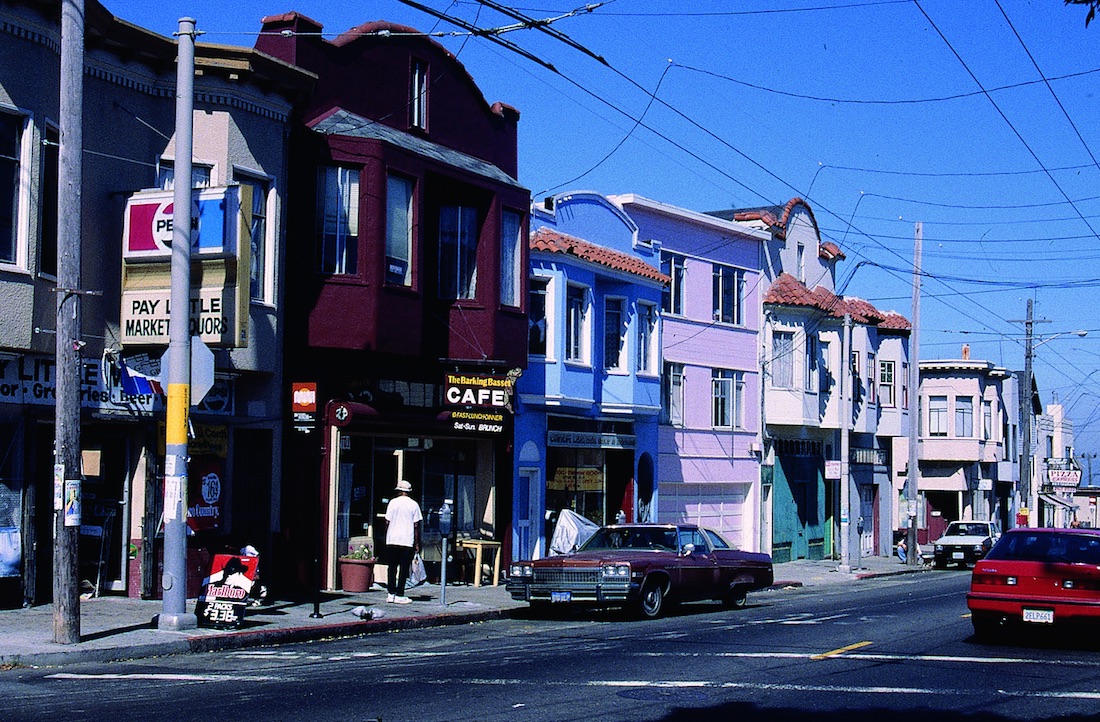
Sometime in the 1970s, the Capri Theatre building became the Victory Fellowship Bilingual Foursquare Church. The Assembly Church of God at Folsom and Cortland had a major fire in 1979 and is now gone. On the left side, Hilltop Sea Food has been replaced by Pay Little Market, which is still there today.

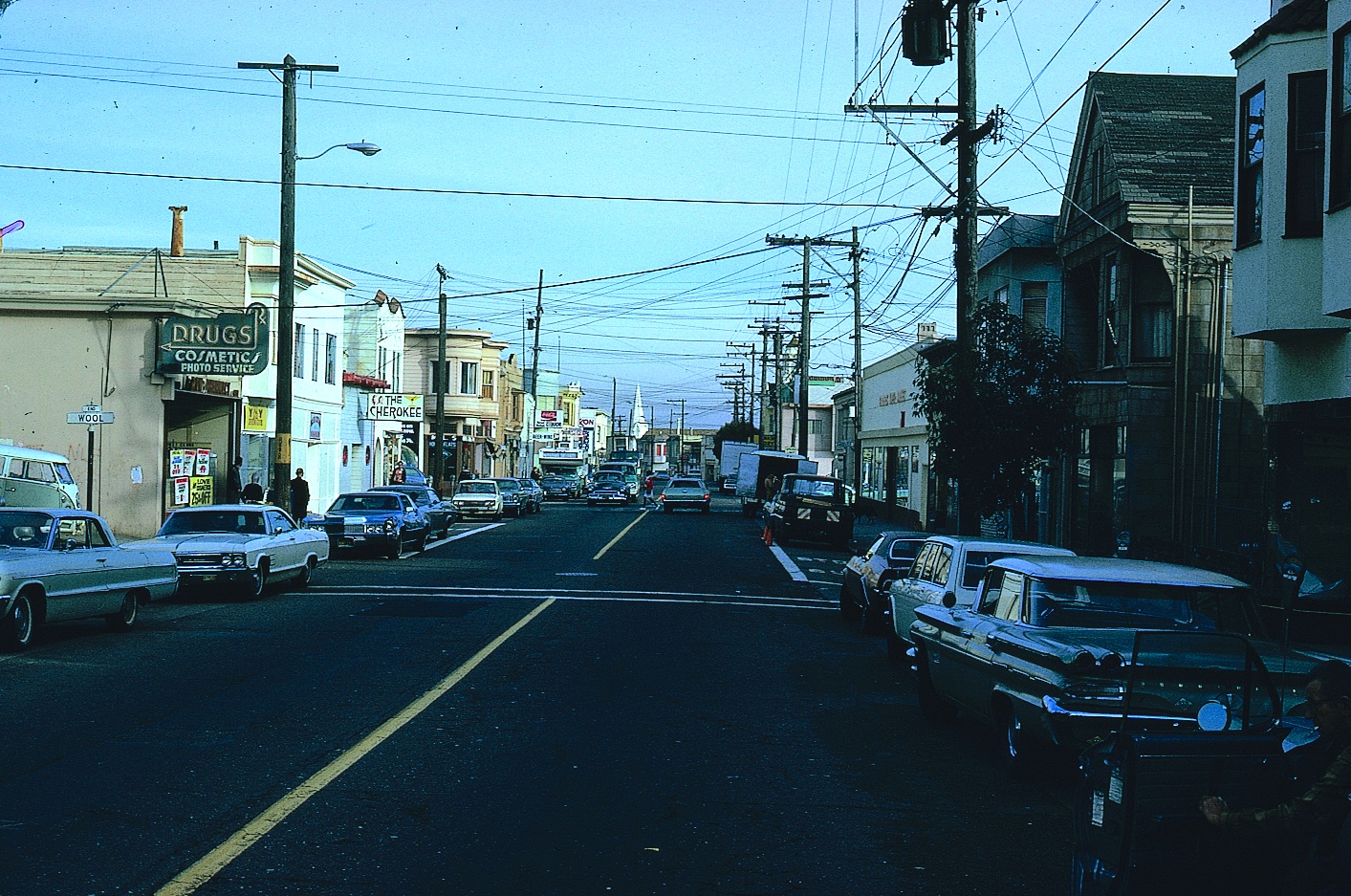
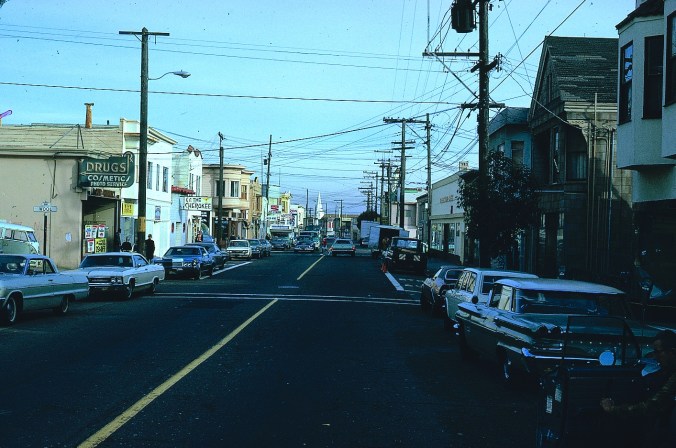
9. Cortland at Wool, 1973
cortlandandwool

On the left, Arrow Pharmacy and the Cherokee (now Discount Club Liquors and the Lucky Horseshoe, respectively).

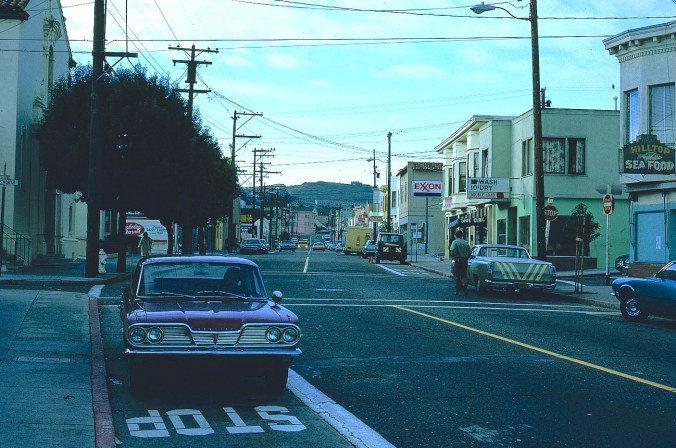
10. West on Cortland at Ellsworth, 1973
cortlandellsworth73

Notable for being one of the few photos of Cortland Avenue’s gas station, which was replaced with lawyers’ offices in the early 1980s. On the corner of Ellsworth and Cortland is a self-service laundromat that will be replaced by Martha and Brothers in 1999. The Shoe Clinic next door is now part of Tacos Los Altos.

11. Cortland and Ellsworth 1995
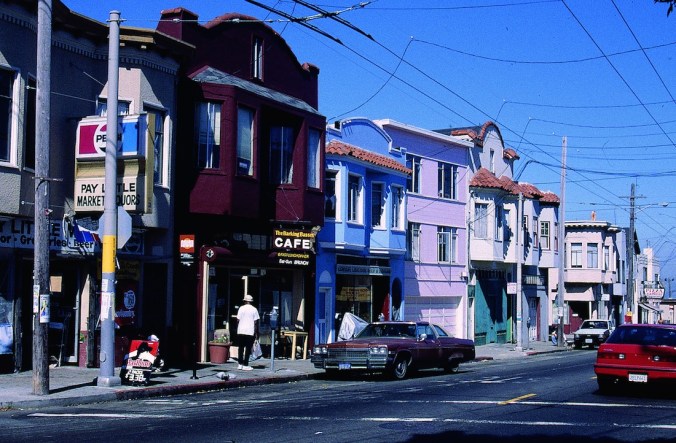
barkingbassetAfter Deese’s Records closed in 1973, 803 Cortland saw a lot of activity, including a thrift store run by Larry Banks; Apex Realty; and the King Tut restaurant and deli. The Barking Basset restaurant lasted from 1993 to 2000. Today it is Red Hill Station. 

Not Cortland but still interesting:

1. Newman at Holly Park 1973:
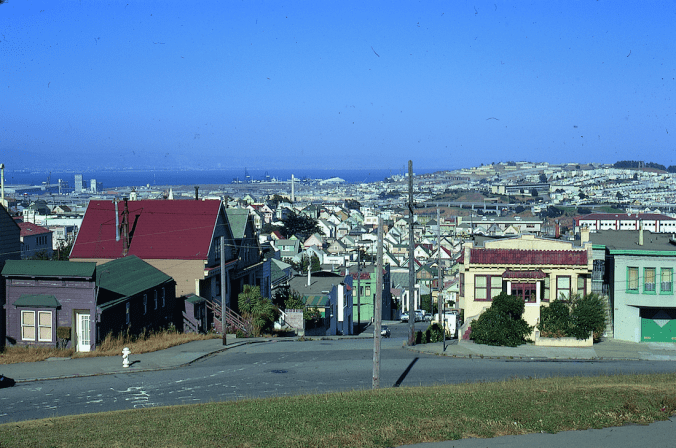
newmanholly

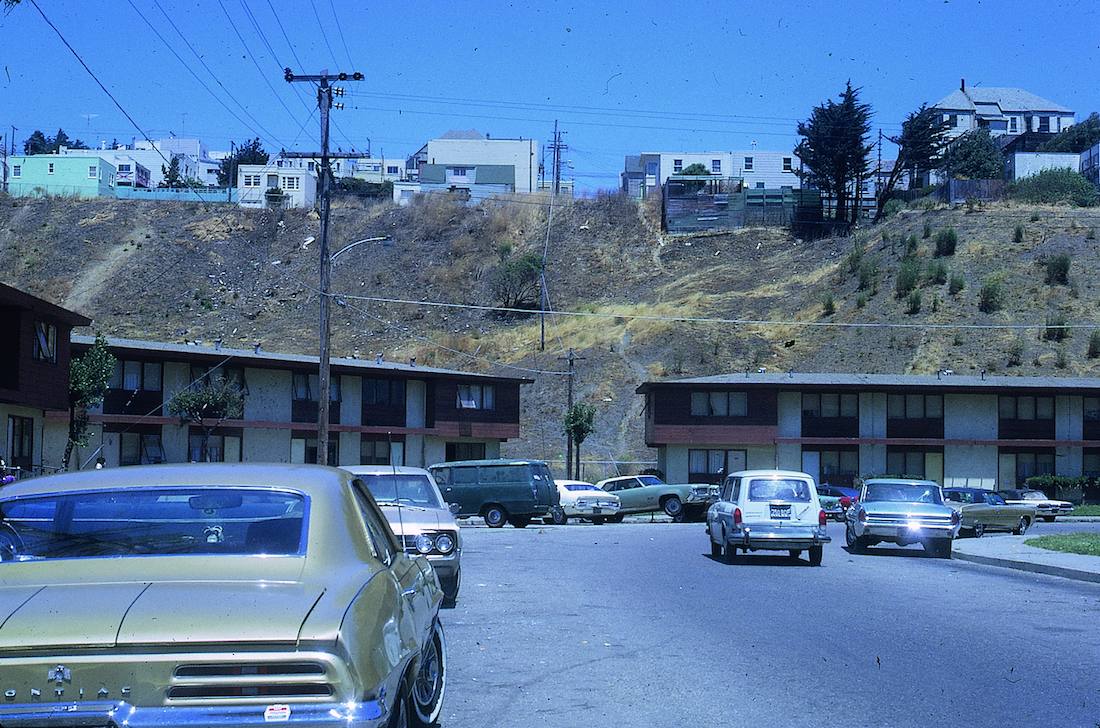
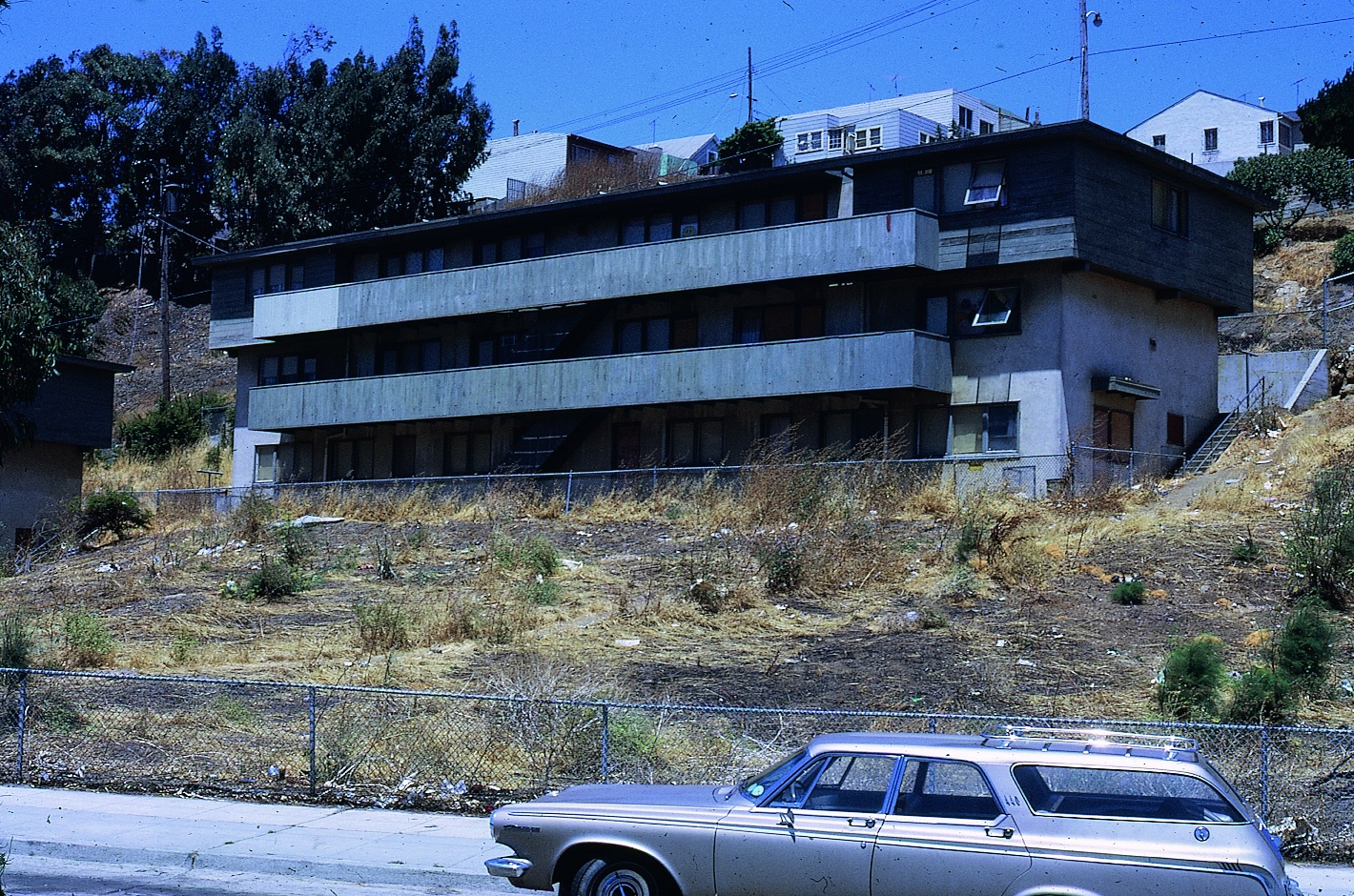
2. Alemany public housing 1973

alemanyhousing1973

3. Alemany public housing, looking a bit more bleak: 
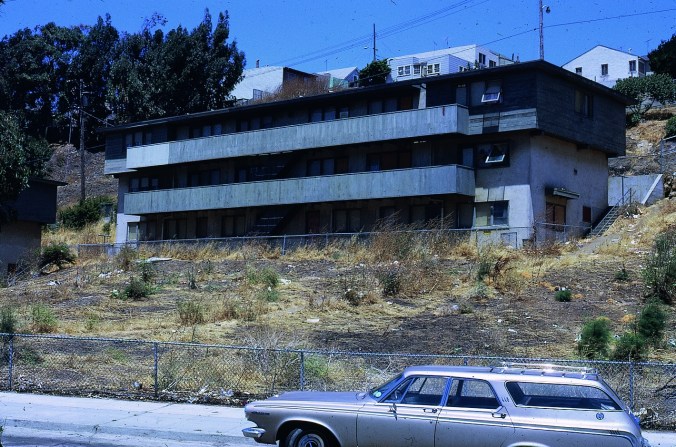
alemanyhousingbleak

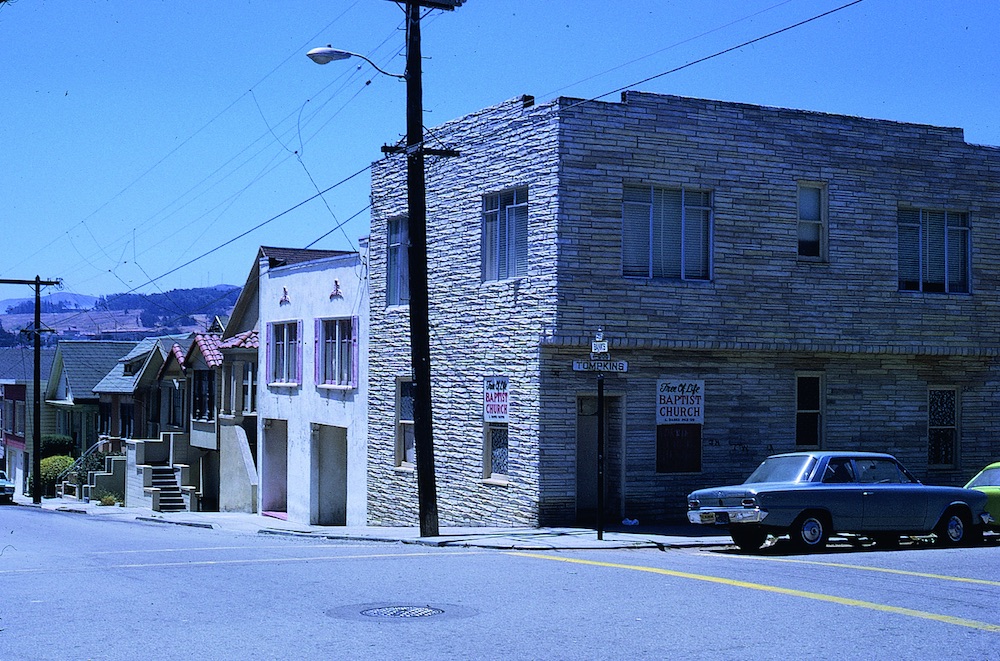
4. Banks and Tompkins 1973: Tree of Life Baptist Church:
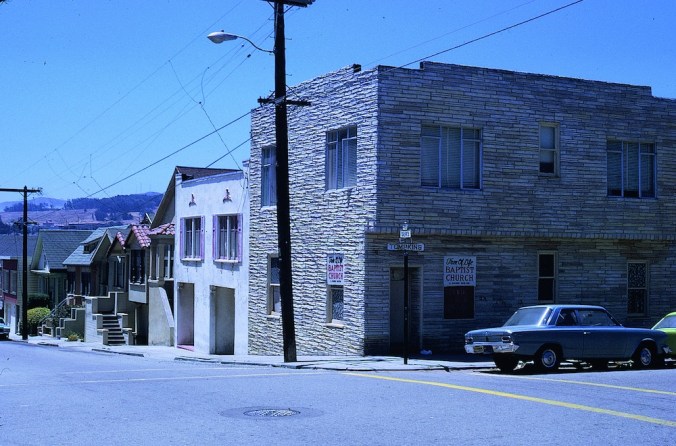
bankstompkins

Whew. Amazing. Thank you Neighbor Vicky, and super-thank you Neighbor Max!
And for the rest of us… good luck getting any work done for the rest of the day.

ALL PHOTOS: Max Kirkeberg Historical Photograph Collection. At top, view of Bernal Hill from Holly Park, 1973

Tonight: Learn More About How to Research the History of Your Bernal Heights Home

536Nevada

Tonight, your friendly neighborhood time-travelers from the Bernal Heights History Project will share part two of their series on how to learn about the history of your glamorous Bernal Heights home. It happens this evening, Wednesday, September 16 at 7 pm at the Bernal Library:

Following on from last month’s presentation on “How to Research Your Bernal Home,” John Blackburn of BHP will explain the life history of 22 Newman Street and show how he used our research tools to find out as much as he could about the building.

Feel free to bring your own research, photos, etc., and share with everyone.

If you missed last month’s slideshow, you can watch it on YouTube. Unfortunately the hyperlinks in the slideshow aren’t clickable, so we’ll compile them in a handout and update our Research Your Home page.

Wednesday’s meeting starts at 7 p.m. sharp in the downstairs meeting room at the Bernal branch library (500 Cortland at Anderson); turn left at the bottom of the stairs. As always, it is free and open to all.

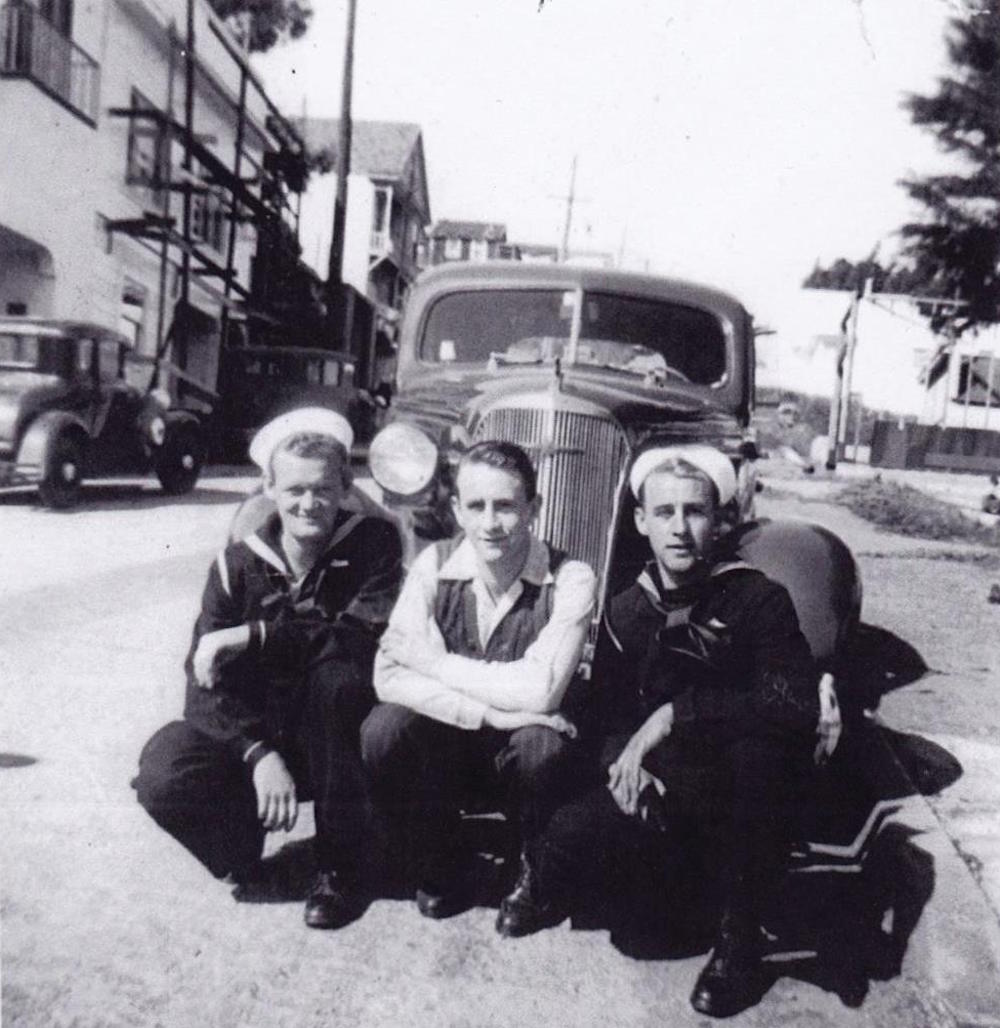
PHOTO: 1942 photo of the Schwery family, outside their home at 536 Nevada (visible on the left with the car outside). via the Bernal History Project on Facebook.

Bids Due, Tensions High as Trustee Says Precita Eyes Seeks to “Force Family to Sell to Them”

precitaeyes.aug2015

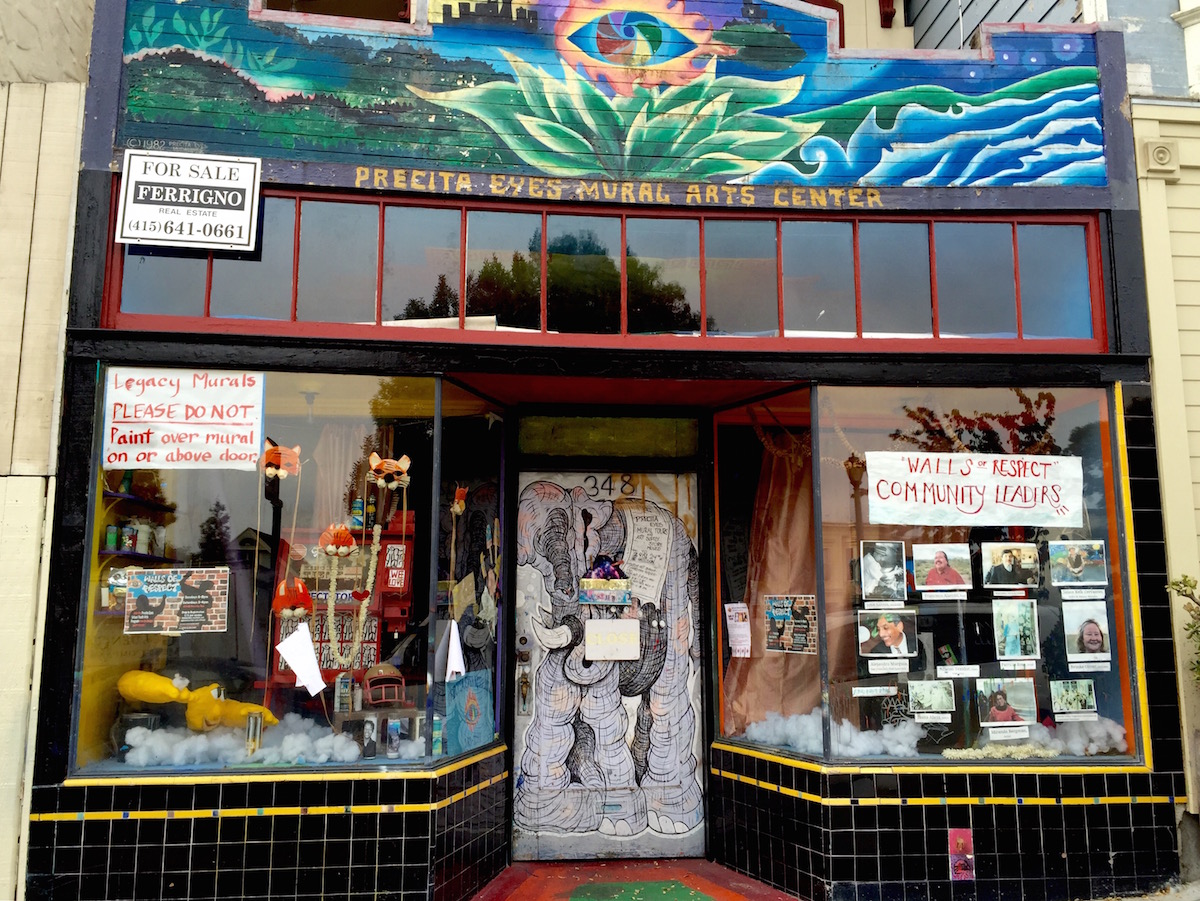
It’s been a big week for 348 Precita Avenue, the multi-unit building on Precita Park that’s long been home to the Precita Eyes mural studio. 348 Precita is for sale, and Precita Eyes hopes to avoid possible eviction by deterring would-be buyers from bidding on the property. (For more backstory, read Bernalwood’s item about this from  Monday.)

Here at week’s end, let’s catch up on where thing stand.

Neighbor Ledia dropped by Precita Eyes during a Protest Art Class for kids on Tuesday, where she learned more about Precta Eyes, their history in Precita Park, their other property holdings, and their (at times confusing) arrangement with the Mission Economic Development Agency (MEDA). Neighbor Ledia tells Bernalwood:

Went to the free art class and talked to Precita Eyes today: Now I understand.

So Precita Eyes wants the owners [of 348 Precita] to accept MEDAs offer to buy the building, which has 3 residential units plus the commercial Precita Eyes space, for $1 million.

It’s obviously “worth” more. MEDA would then be the owner/landlord, with the possibly of current tenants being able to buy their spaces in some way.

348 is the original Precita Eyes space. Precita Eyes has been around since 1977, and in this space since 1982. In 1998, [Precita Eyes founder Susan Cervantes] bought the Precita Eyes space on 24th St., so the organization also has that.

The goal of the free art class/gathering is to discourage offers on the building, other than MEDA’s lowball offer.

This provides helpful context. Precita Eyes uses 348 Precita as a satellite facility, and in the comments to Monday’s post, several Bernal neighbors noted that the studio at 348 is rarely occupied. (As a neighbor, Bernalwood can confirm this.) The Precita Eyes branch at 2981 24th Street is the organization’s main office, but we did not know (and Mission Local confirms) that Precita Eyes actually owns the 24th Street building. That means the future of Precita Eyes on 24th Street is secure.

Of course, there are two sides to every transaction, and in the comments to Bernalwood’s Monday post, a member of the family that’s selling 348 Precita shared some details (which are merged here for clarity):

My name is Michael Silva. I am not the owner of 348 Precita (certainly not the only owner), but only the trustee of my late mom’s estate.

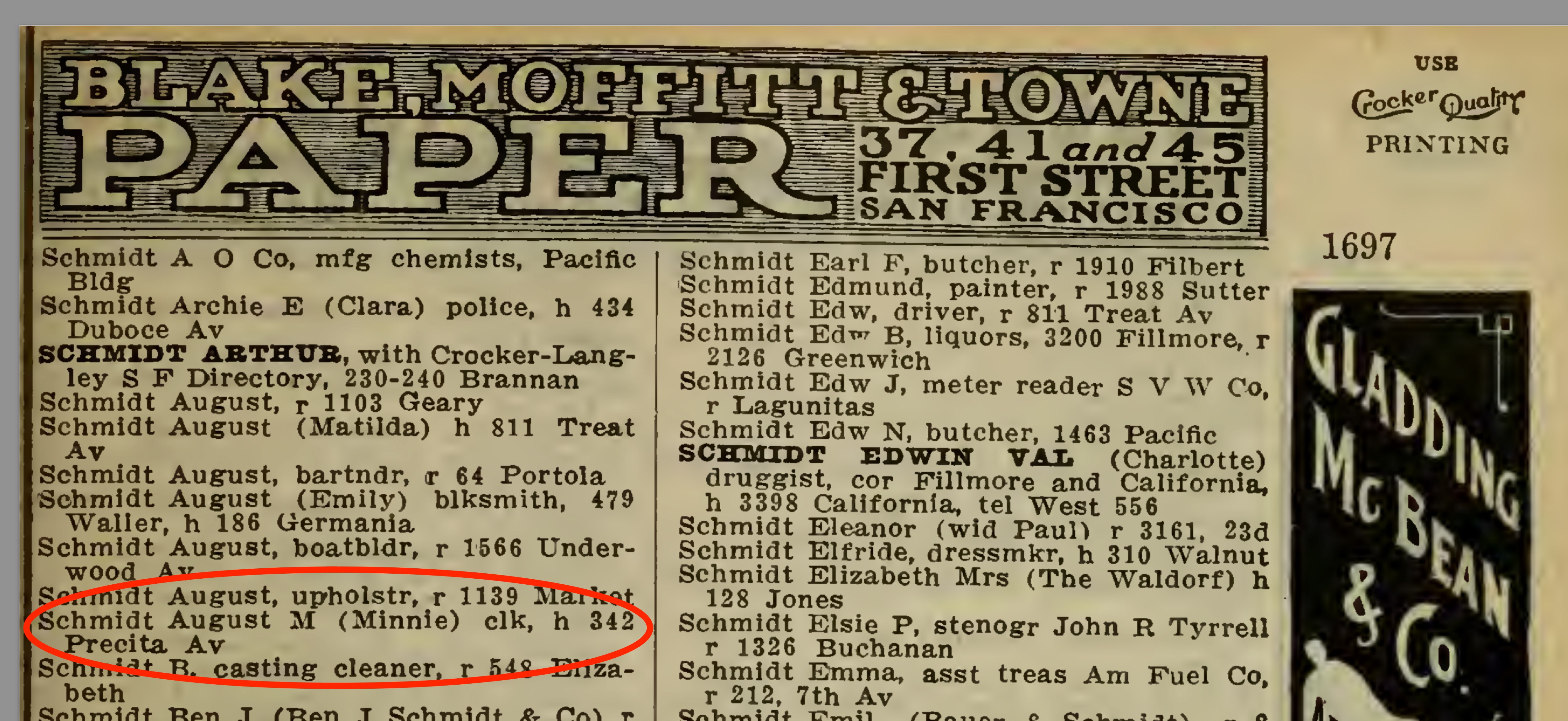
I am a member of the family that owns this property. Our presence in SF dates back to before the 1906 earthquake (they camped out in the park during the repairs). It has been in our family for a hundred years. Look up August &Minnie Schmidt in the 1915 online directory.

schmidt.1915

1915 San Francisco Directory, via Bernalwood

One of the owners is the 83 year old granddaughter of August and Minnie. Another is a great-grandson who worked all his life in SF until he had to retire under medical disability, and who has had multiple surgeries to help the back injuries he suffered while working as a printer. His entire life savings consists of $11,000.

These are the owners to whom Precita Eyes is trying to dictate sale terms. This is the one and only commercial property the family owns, in SF or anywhere else. We are not “big investors” by any stretch of the imagination.

I am actually just the Trustee of my mom’s estate (born in SF in 1932). She and her twin sister co-owned the property until she passed away a few years ago. Now my mom’s estate, along with her twin sister, are trying to sell the property. And Precita Eyes is trying to make sure we do not receive fair market value for a property that has been in our family for at least 100 years.

What Precita Eyes is trying to do is to force the family to sell to them, on their terms and on their terms alone, and obviously below market value (or else they would just submit their bid along with any other potential buyers). Who thinks this is moral behavior on their part?

This sets up a curious dynamic. In a town where one’s standing on questions of housing policy and social entitlement often correlates to how long you’ve lived here, the story of 348 Precita now contrasts a nonprofit arts organization that’s been in Bernal for 30+ years with a multigenerational family that’s been in Bernal for 100.

Last Tuesday, there was a open house at at 348 Precita for potential buyers to view the property. Precita Eyes put signs in the windows, brought in some local kids for an ad hoc protest art class, invited a few journalists from around town to drop by, and launched their campaign to ward off potential bidders.

Sarah Hotchkiss from KQED Arts was there:

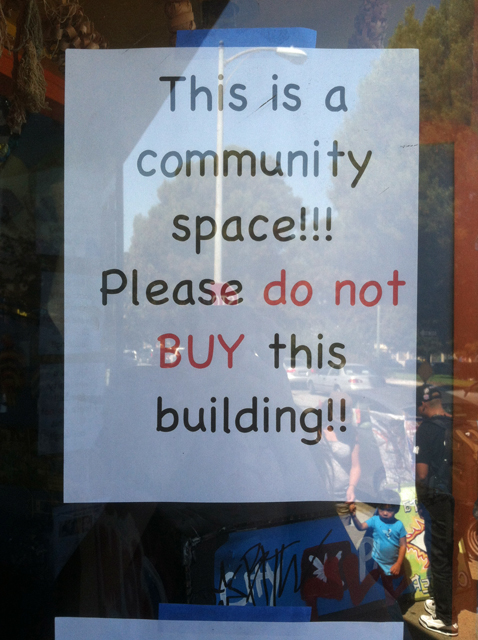
As toddlers covered in tempera paint plastered their hand prints all over sheets of paper, community members surrounded the building holding their own pieces of paper, printed with the message, “Please do not BUY this building!! This is a community space!”

PEWindow

Photo: KQED

The organization staged the protest after landlords posted a brand-new For Sale sign on the studio center’s exterior the week before. Though Precita Eyes owns its arts and visitors center at 2981 24th St, they have rented the 348 Precita Ave space since 1977.

While impending doom lingers in the air, the building’s residents are not without hope. The Mission Economic Development Agency (MEDA), with advice from the San Francisco Community Land Trust (SFCLT), plans to make a bid on the property, which, if successful, will safeguard Precita Eyes and the residential tenants against eviction by forming a cooperative.

The dispatch from Mission Local’s reporter captured the kabuki-like flavor of the scene, as the participants performed familiar roles:

“We’re hoping to dissuade other prospective buyers from outbidding MEDA,” explained Nancy Pili Hernández, a Precita Eyes muralist.

Several prospective buyers came and went without comment. Some stopped to talk with the activists and neighbors standing outside. In some cases, the exchanges became heated.  Pili Hernández said one potential buyer became incensed when a woman approached him asking his intentions for the building. Pili Hernández said the man told the woman he would put in an offer for $2 million and evict her.

That’s the kind of possibility that makes Randy Odell, an upstairs resident of 30 years, uneasy.

“It’s no fun having your home threatened.” Odell said. “When you have no right to keep people from coming in and looking at your home, and sussing out the value, it’s very hard to keep my dignity.”

Other potential buyers took a more diplomatic approach.

Micheal Zook, a San Francisco native and former building manager who was once evicted from a building he lived and worked in for 20 years, now works as a realtor but was considering the building as a potential home for himself, his wife and his children. He talked at length with community organizers about the property and how displacement could be avoided.

So what happens next?

Although the drama of 348 Precita is playing out in 2015, this story is really a flashback to the proto-gentrification tensions of 1970s Bernal Heights, when a young generation of activist Baby Boomers arrived and set out to transform Bernal in their own image, sometimes to the dismay of the older, blue-collar families who already lived here.

Back then, however, San Francisco’s population was in decline, and Bernal Heights was considered a faded part of town.  Homes were cheap,  rents were cheaper, Precita Park was rough, and Bernal was a funky bohemian backwater. Today, San Francisco’s population has grown by almost 200,000 since 1980, Bernal is a prime location, Precita Park is a four-star destination, countercultural lifestyles are difficult to afford, and the median home price in the neighborhood hovers around $1.4 million. A big property like 348 Precita could obviously fetch more.

But should it? Will it? We’ll find out soon; Mike Silva tells Bernalwood the last bids for the property are coming in today.

PHOTOS: Top, Precita Eyes studio by Telstar Logistics

Emperor Norton Is Still Alive, Still Well, and Still Living in Bernal Heights

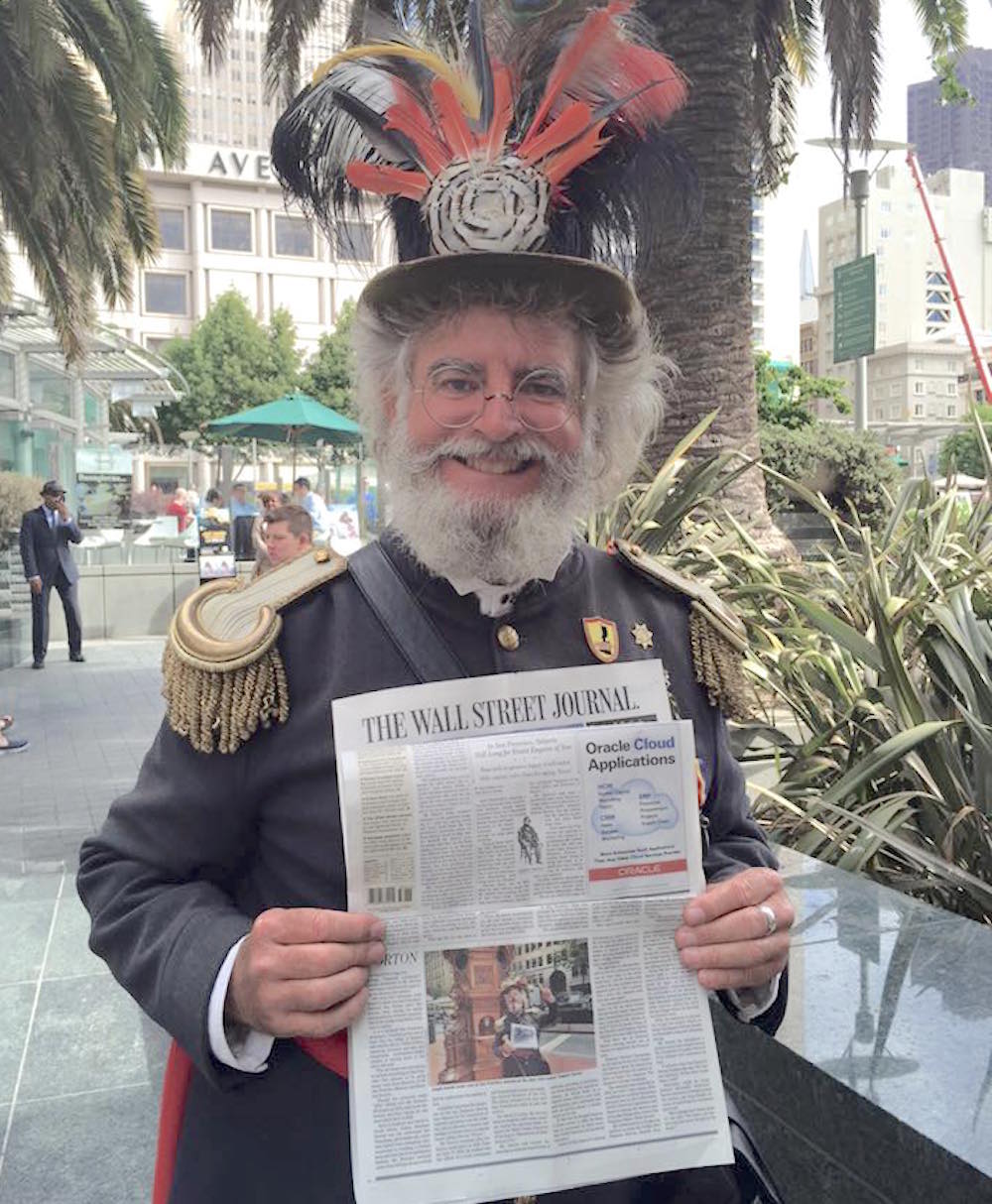
emperornorton.wsj

Last week, the Wall Street Journal published a front page (!!!) story about the odd history of Emperor Norton I, the 19th century San Francisco eccentric who declared himself “Emperor of the United States,” and Neighbor Joseph Amster, the Bernal Heights resident who re-enacts him today.

The WSJ writes:

Wearing a top hat festooned with multicolored feathers, Joseph Amster stopped in front of a Ghirardelli Chocolate Co. store on bustling Market Street and began shouting at the shop’s bemused clientele through its large glass windows.

“Look at them! Ignoring me! Mocking me! They have not heard the last of me!” Mr. Amster exclaimed, the feathers quivering with his wild gesticulations. “I will issue a special proclamation demanding they bring back my sundae!”

Patrons likely had no idea what he was talking about. But Mr. Amster was playing the role of this city’s most celebrated 19th-century eccentric: Norton I, the self-styled “Emperor of the United States and Protector of Mexico.”

Mr. Norton’s was once a household name here. Numerous things were named after him, including Ghirardelli’s Emperor Norton Sundae. But the sundae, like Mr. Norton in general, has since faded from view.

Now some San Franciscans are pushing to return the emperor to prominence. Mr. Amster, 59 years old, who conducts tours dressed as Emperor Norton, is among those trying to bring him back, to rekindle the city’s celebration of society’s oddballs and outcasts.

PHOTO: Joseph Amster as Emperor Norton, holding a print copy of the Wall Street Journal, via Joseph Amster

Wednesday: Learn How to Learn About the History of Your Bernal Heights Home

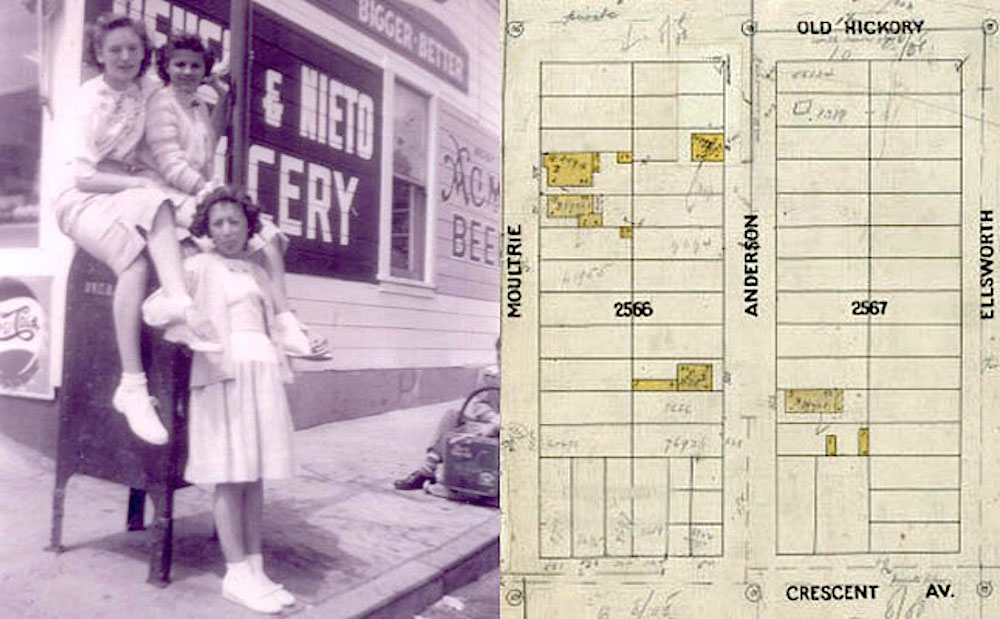
nietohousehistory

Tomorrow night, Wednesday, August 19, those intrepid time-travelers from the Bernal Heights History Project will share some tips on how to research the history of your Bernal Heights home:

“How to Research Your Bernal Home”
Aug 19, 2015 7:00pm-8:30pm (Wednesday) at Bernal Heights Branch Library

We have an admittedly ambitious plan: We want to research and record the history of every building on the hill, and we’d love your help.

On Wednesday, August 19, we’ll present a slideshow that explains how to investigate your own home and all the resources you can use, including city directoriestap recordsSanborn (fire insurance) mapsneighborhood newspapers, and many more free databases.

We’ll be using several examples of Bernal homes and businesses in our show, but this is an interactive presentation, so feel free to come with stories and photos of your own, especially if you want to find out more about your street and the people who lived in your home before you did.

PHOTO: Left, Anita Nieto, cousin Betty Reyes, and a friend outside the Reyes and Nieto grocery store at Crescent and Anderson, late 1940s; Right, 1905 Sanborn map. (Family photo courtesy Anita Nieto; map courtesy David Rumsey) — at 511 Crescent Avenue, San Francisco.

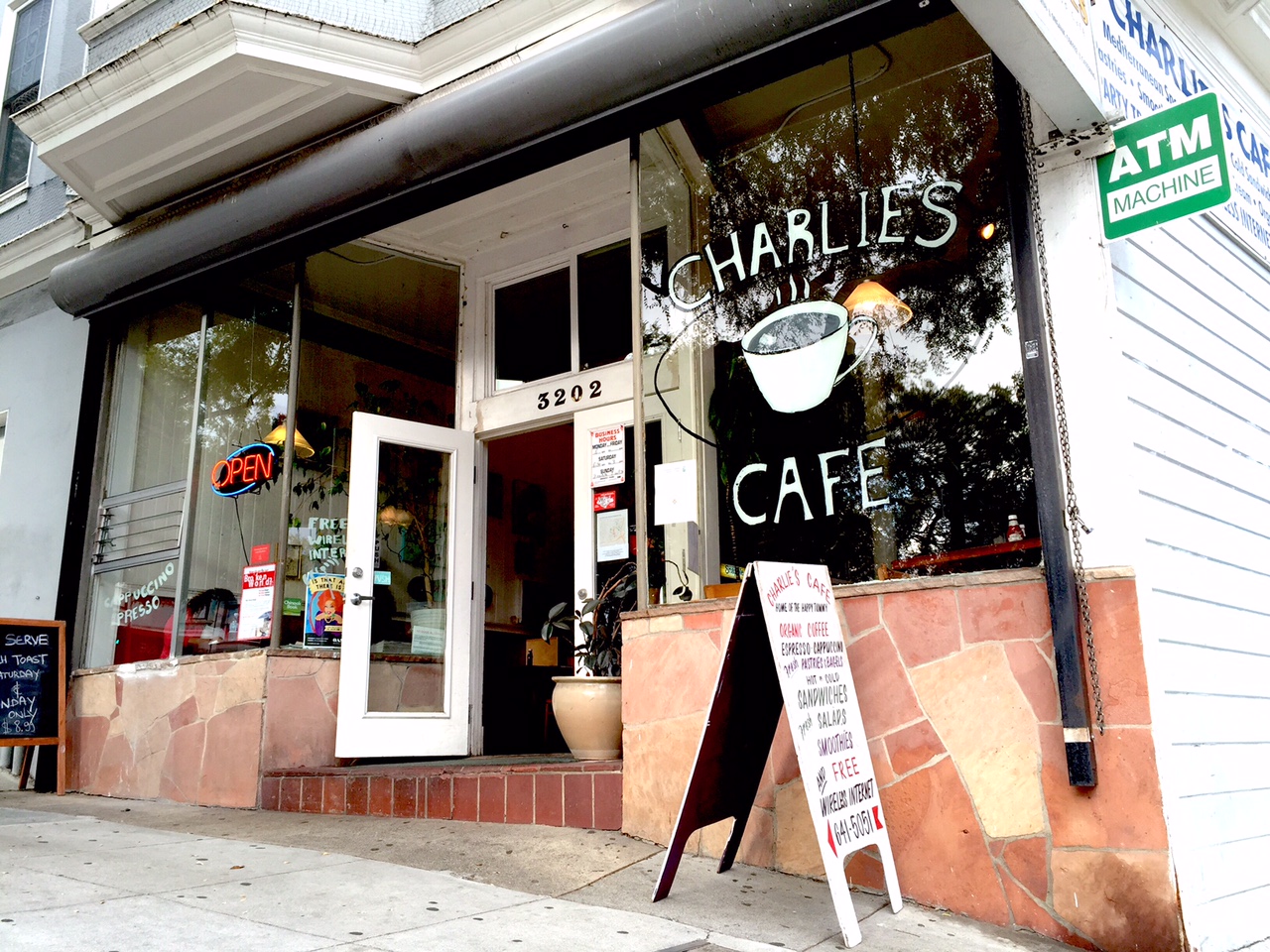
Charlie’s Cafe on Precita Park Is For Sale

charliescafe2015

It’s sometimes hard to remember how much Precita Park has changed in just the last five years.

Think back, however, and you may recall that the Precita Park of 2010 was lovely, but rather lifeless. The eastern side of the park near the playground was home to two beer-and-chips corner stores, one of which was frequently shut down because of run-ins with the law. On the western side, along Folsom, Cancilla’s Market was yet another corner store offering beer and chips. Cafe Cozzolino was sometimes open and always empty, in no small part because it offered some of San Francisco’s most disappointing Italian food. The Park Bench Cafe coffee shop was also sad and empty, which left Charlie’s Cafe as Precita Park’s only real restaurant and community gathering place.

Fast-forward to today, and the landscape is transformed. The Precita Park Cafe now occupies one of the former corner stores across the street from the playground, and it’s such an institution that it already feels like it’s always been there. Hillside Supper Club moved into Cafe Cozzolino, Harvest Hills Market is a walkable alternative to schlepping to a supermarket, and Neighbor Eliza is building a new pizza shop inside the former Park Bench Cafe.

Now Charlie’s Cafe proprietor Charlie Harb writes Bernalwood to tell us that his cafe has just been listed for sale, and he wants Bernal neighbors to have first dibs:

After over 14 years in the neighborhood, it’s time for me to sell my beloved cafe. Adam, the current manager, is leaving town after running Charlie’s for 2 years, and I now have other interests. If you are interested, or know of someone who is interested in purchasing the cafe, feel free to contact me at charliescafesf AT gmail DOTCOM.

All the particulars are in this Craigslist ad.

A personal footnote: Your Bernalwood editor would like to extend my gratitude to Charlie for running his cafe. When I first landed in Bernal Heights after moving from the alien shores of The Mission, all the way on the other side of Cesar Chavez, Charlie was one of the very first people to welcome me here, and his kitchen fed the construction crews that rebuilt my home during two grayhair-producing years of renovations. In so many ways, he was the first person to teach me about the strength of the Bernal Heights community. Thank you Charlie!

PHOTO: Charlie’s Cafe on August 10, 2015 by Telstar Logistics

Welcome to the Bedrock District, Bernal Heights, USA

bernalwooddistrict

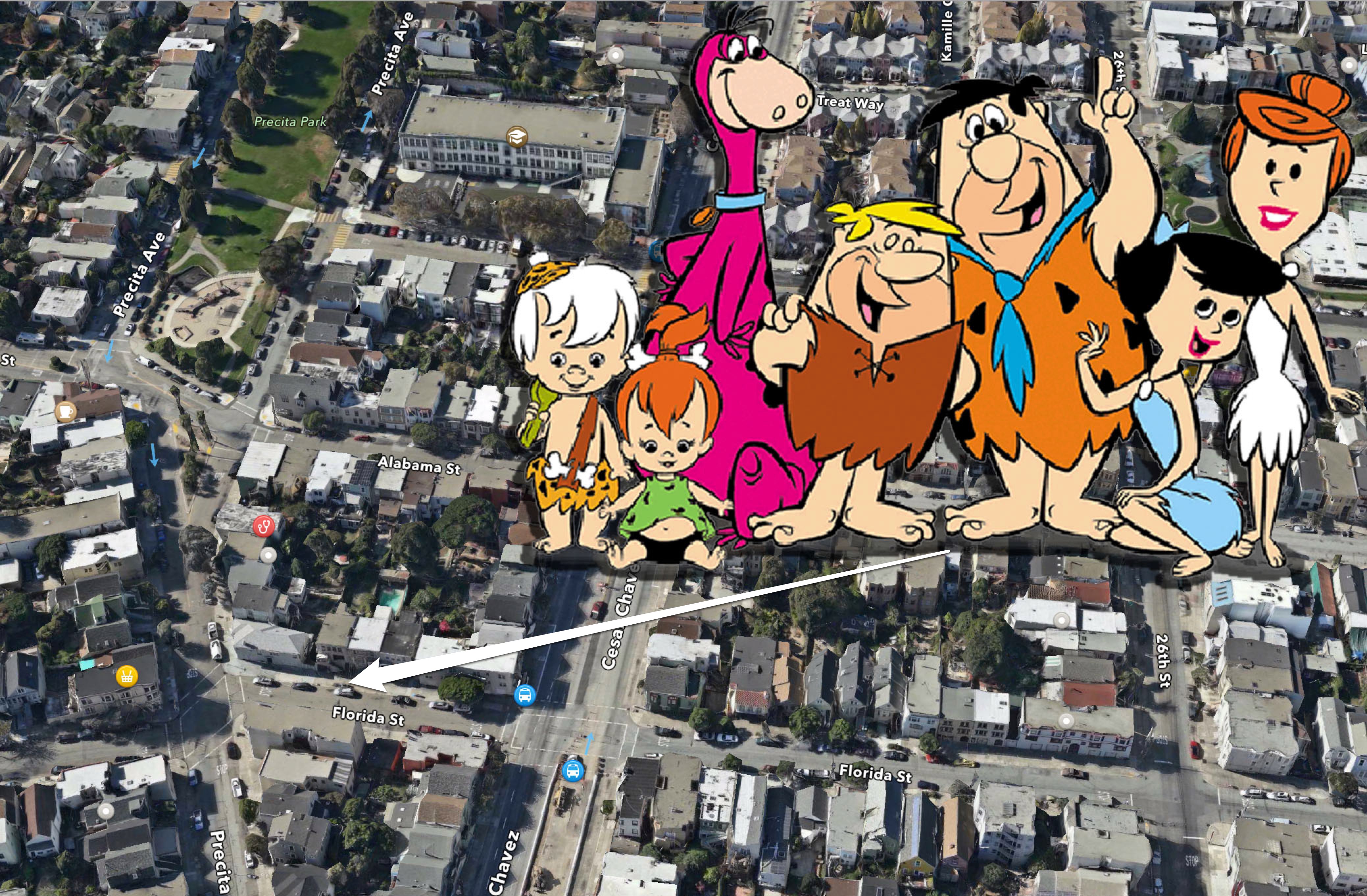
Two of the most retro-distinctive homes in Bernal Heights are even more so because they sit side-by-side together.

We’re talking about the two houses with the faux-stone facades located on Florida between Precita and Cesar Chavez in theEven  flatlands of northeast Bernal Heights. Each is totally over-the-top, because each looks like it could be home to Fred and Wilma Flintstone, if Fred and Wilma Flintstone lived in mid-century Bernal Heights. But there are actually two of these houses, so you can also imagine  Barney and Betty Rubble living right  next door.

flintstones.Bernalwood3e-1

How did this happen?

Well, to understand that, you need to imagine yourself owning one of these homes in the 1950s or early 1960s. Each of these houses was built during the early decades of the 20th century, so by the time the ’50 rolled around, each was already 40 years old. That means the original wooden facades were likely faded, aging, and in need of repair.  That’s probably about when Mr. and Mrs. Homeowner opened up their newspaper and saw an ad that looked something like this:

Permastone

You can practically see the lightbulbs going off: YES! We can Perma-Stone!  We can Add Beauty, Permanence, and Strength to our Home at Low Cost! We can Eliminate Painting Forever!

The Noe Valley SF blog recently wrote a capsule history of Perma-Stone:

Perma-Stone – and several other variations of the artificial molded stone such as FormStone, FieldStone, Dixie Stone, and yes, Stone of Ages were popular in the 1930s, 40s and 50s and applied like vinyl siding to existing homes. Perma-Stone was invented in Columbus, Ohio and [was] most popular in places like Baltimore and the East Coast, but found a foothold in San Francisco too, mostly in the Avenues. According to this article in SF Gate from 2010, film director John Waters dubbed Perma-Stone “the polyester of brick.”

So how did both of these houses, side-by-side, end up getting the faux-stone treatment? It’s not to hard to envision the scenario:

THE SCENE: Fred and Barney are grilling brontosaurus burgers in Barney’s Florida Street back yard. Eisenhower is president, and in the distance, a radio is tuned to the baseball game that’s underway at Seal Stadium on 16th and Bryant.

BARNEY: Hey Fred, have you noticed our houses are looking a little shabby? They’re starting to show their age.

FRED: Careful with the brontosaurus Barney. You know Wilma likes hers medium rare.

BARNEY: Yeah yeah. Look, did you see that ad in the paper for the Perma-Stone? They put it up once, and the house never needs painting again.

FRED: Can you hand me another Rolling Rock?

BARNEY: Sure thing, Freddy-Boy. [Tosses can of beer]  But you know, I’ve gotta tell you, I kind of like that “Modern Stone Age” look.

FRED: Yeah, Wilma won’t shut up about it ever since we got that subscription to Dwelling magazine. No painting, ever again, huh?

BARNEY:  Never again.  [Pokes a burger tepidly with a spatula, then flips it over] Whaddya say we do both our houses at the same time? Maybe we can get a package deal. Plus, we could split the cost of the construction parking permit.

FRED: Now you’re talking, Barney-Boy! You know, I do kind of like that Bernal Boulder treatment they have.

BARNEY: Betty said she likes the Manor Flagstone. I’ll have guy come by to do an estimate for both of us.

FRED: Dammit, Barney, keep an eye on those burgers! [long pause] Oh hey I’m ready for another Rolling Rock.

… and the rest, as they say, is pre-history.

PHOTOS: Permastone ad, courtesy of Eric Fisher

Six Timely Thoughts About Bernal Heights from Neighbor Darcy of Heartfelt

darcystorm

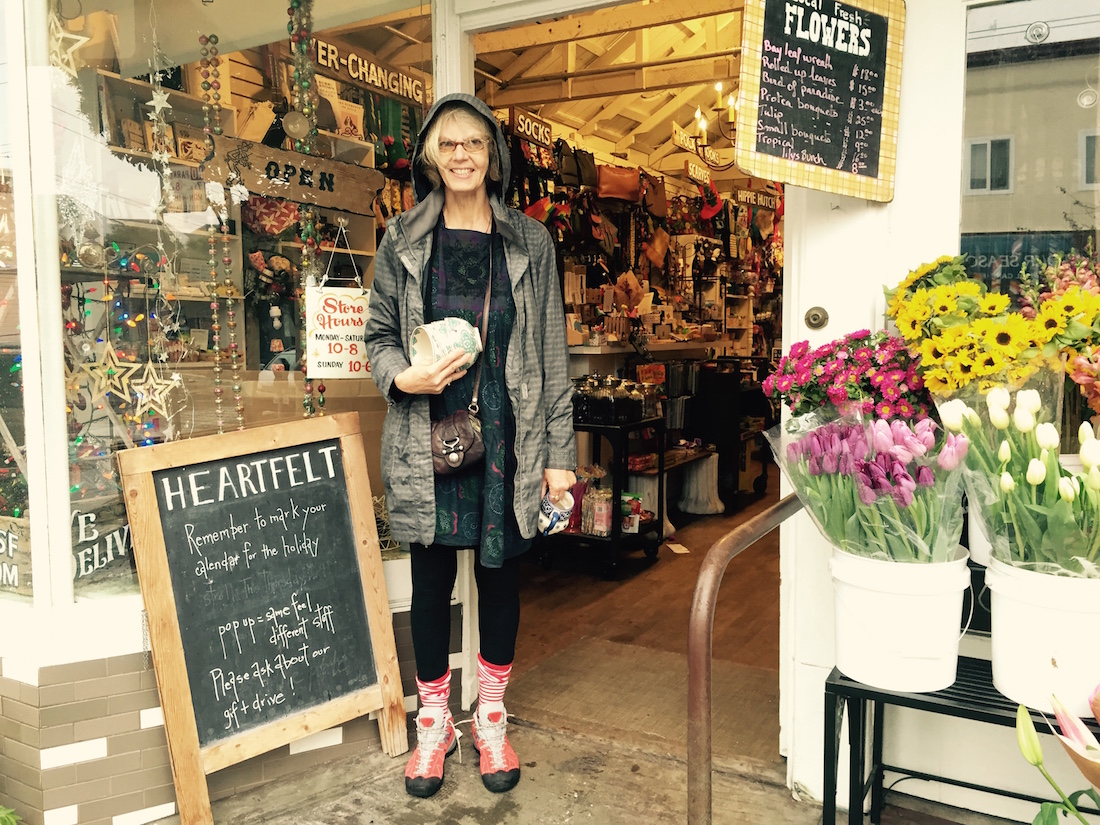
Neighbor Darcy Lee, a resident of Alemanistan and owner of Heartfelt on Cortland, recently shared some miscellaneous thoughts about the July 21 Epicurean Trader vandalism incident and several other matters of topical concern to the people of Bernal Heights:

I read all these comments when [the vandalism] first happened and I just read them again. Because this vandalism hit retail I am chiming in:

1. Retail takes long hours and many days a week. I have worked 7 days a week for years and am now down to 6 days. There is no whine tone here, because I love what I do. I have thought long and hard at what the graffiti person was trying to express, and it seems that it was aimed at the customer that shops at these posh shops, and the storefront or what the business symbolized got caught in the crossfire. Thus I loved the comments that said ‘Hey I do not make a ton of money but I appreciate a business that is selling food from the little makers that are concerned with how we farm and manufacture stuff affects the environment and our bodies.’ Same with Pinhole Coffee; I think we could not have landed a more kindcontributor to the neighborhood, or a more concerned-with-the-world kind of person. (ie. JoEllen) My mantra here, bear with me, is that it is important to not assume new is bad.

2. Random vandalism to prove a misdirected point is lame.

3. Change happens within a city. I know a family that lives in the ‘burbs and rent out their family home in Bernal. They inherited it from working class parents and grew up in the small Bernal house. They maintain it, but they have not remodeled, and they rent it out at less than market rent (not way less, but less). Their mildly disabled sister lives in an inlaw unit in the back. The three kids feel this extra income has allowed them to buy their own homes outside of the city. They have no desire to live here, and they do not get why it is appealing. But they are respectful of what the changes in the neighborhood have brought them. The son told me that their parents, both from Mexico and now deceased, would be very surprised if they knew.

4. The other day on the radio I heard a short clip about Japan and why they are now in financial trouble. Excuse my summary if I got the facts wrong, but as I heard it, Japan loved itself too much. Japan thought it was invincible, and that it would always be the leader in selling the world shiny, modern stuff. (think Walkman) I think we in Bernal love ourselves too much, and we are trying to hold onto something that is already gone. Thus we stay in this sort of negative rant-mode. And SF, too. This way of thinking lets us hold to an ideal in our minds instead of looking around us. Walk the streets of Bernal. We are not just shiny dark grey and black homes; there are lots of different stories within our midst. Volunteer at the local public schools, visit our library, go to the Bernal Heights Neighborhood Center, visit the farm on Alemany, chat with your neighbor who is elderly and ask if they ever need help. I find this much more productive towards preserving what you miss as opposed to constantly whining what you loved is gone. I found this article Todd posted on Facebook to be fascinating.

5. Some say Airbnb is bad, because it takes apartments off the market.  Some say Airbnb is good, because it allows folks to get extra income to rent out rooms and stay in the ‘hood. Regulations are good, they make it so landlords cannot rip off tenants. Some tenants take advantage of this, so some landlords do not want to get anywhere near the rental market after a bad tenant. As a person who works on the street in Bernal, the stories we hear are endless and every point of view is expressed.

6. If you insist you are right, then someone else has to be wrong. Perhaps it is more important to take a breath and listen. I hear you Cortland graffiti person, I am curious about you, and I hate that you expressed yourself this way, but I hear your frustration. There are so many stories out there.

PHOTO: Neighbor Darcy Lee outside Heartfelt, December 13, 2014. Photo by Telstar Logistics

Remembering Karen Huggins, Holly Courts Advocate

karenhugginstribute

Neighbor Sarah Rogers tells Bernalwood about the passing of Neighbor Karen Huggins:

Neighbor Karen Huggins died of cancer in mid-June.

Karen was an activist who lived in Bernal’s Holly Courts public-housing development, and she was committed to social justice on behalf of both public-housing residents and the larger community. She frequently worked with the Bernal Heights Neighborhood Center, Supervisor David Campos and his staff, and many Bernal neighbors and groups. She served on the Ingleside Police Station’s community police advisory board and helped author the city’s 2011 ordinance on community policing. She was president of the Holly Courts Resident Council and a tireless advocate for residents of public housing.

Karen “fought fiercely for economic and racial justice, with a twinkle in her eye and great love and humor,” says neighbor Buck Bagot.

Karen “was one of the most incredible people I’ve met,” adds Supervisor Campos. “She was brilliant, driven, and passionate. She was also a character, with a great sense of style and class. She was the kind of person who made an entrance, someone you were bound to remember. She was one of a kind, a quintessential Bernal personality.”

“Karen had a vision,” recalls Bobby Cochran, a Holly Courts resident and sergeant-at-arms of the Holly Courts Residents Council. He first met Karen when he was sweeping up broken glass at Holly Courts, and she asked if he needed a push broom. “Everything you needed, she had,” he said. After he retired from his job, she persuaded him to join the Residents Council, even though he was reluctant at first, having never participated in local politics. “You’ll learn,” she told him, advice she gave many others at Holly Courts.

Soon, he found himself traversing San Francisco to attend and speak at hearings and “meeting people I never thought I’d meet.” Karen had a vision for making Holly Courts a place that was truly a part of the surrounding neighborhood, in its appearance and in its level of safety and civility. She worked tirelessly to get safety-related issues like broken lights and security gates repaired, and she helped get the units repainted. Karen had memorized all housing-related bylaws and knew how to navigate government departments and work with city officials and staff. “I learned a lot from her,” Cochran said. “I wish she was still here to teach me more.”

Karen was “a force to be reckoned with,” said Ailed Paningbatan-Swan, director of community engagement at the Bernal Heights Neighborhood Center. But Karen also had “a nurturing and loving side that radiated from her, rejuvenating those around her. She shared with me her struggles with her sickness while also taking care of me while I was pregnant. She called me every week to check in and made sure I was doing okay with my pregnancy, and she couldn’t wait to meet my baby. I’m truly sad that she wasn’t able to meet my son.”

Nicole Hatfield, youth coordinator (and former youth participant) at the BHNC, attributed her career choice to Karen’s influence and said, “I will never forget her spirit and tenacity to continue working in public housing and striving for her communities to flourish.”

Karen did not want people to know how sick she was, so her death came as a shock to many who knew her. As her cancer progressed, she held an emotional meeting with the Residents Council, Cochran says, explaining that she wanted them to step up, to watch each others’ backs, to trust each other, and to always remember that “you’re not in it for personal gain. You’re in it for Holly Courts, the residents, and the greater community.”

“It’s hard to imagine the world without Karen,” Supervisor Campos said in a Facebook post after her death. “San Francisco certainly will not be the same without her. I feel lucky and blessed that I got to know Karen. And I know that the best thing we can do to honor her is to rededicate ourselves to social justice and to her passion — making sure that we do right by the residents of Holly Courts and all of public housing in San Francisco.”

PHOTO: Karen Huggins

Bernal Streets Offer Guidance in Confederate Flag Debate

Fort_Moultrie_flag

The Moultrie Flag

In South Carolina, legislators are struggling as they reconsider the public display of the Confederate battle flag. Hey, better late than never, right?

But what about a replacement? On this matter, Bernal Heights can offer some guidance. We know of a lovely alternative flag design, stemming from the fact that many of our streets here in Bernal are named after American military heroes.

People of South Carolina, we, the Citizens of Bernalwood, here provide a polite tap on the shoulder to remind you about… The Moultrie Flag!

Yup. The Moultrie Flag, as shown above. And no, this isn’t an oddball Bernalwood flag design exercise. Neighbor Glenda tells us the Moultrie Flag, like our own Moultrie Street, is named after William Moultrie, whom the Bernal History Project describes as follows:

Moultrie Street
Although William Moultrie (1730-1805) led troops against Native Americans in 1761 and won election to the colonial assembly, the general is remembered chiefly for his surprising defense of a South Carolina fort (now Fort Moultrie) on Sullivan’s Island. It blocked the British in 1776 from capturing Charleston, his birthplace. Captured in 1780 and released after the war, he was elected governor of South Carolina in 1785.

Ah, but that’s the short version of the story. Blogger Juan Cole explains why the Moultrie Flag should make any South Carolinian proud:

If Southerners want a regional symbol of pride and valor, why not go back to the Moultrie or Liberty flag?

It was flown by South Carolinians in the fight against the Redcoats during the Revolutionary War and was the first American flag to fly over the South.

Best of all, the flag has the word “Liberty” written into the crescent moon, underscoring this key American value, so important for all peoples living in the South. It is better than the Gadsden flag (with the “Don’t Tread on Me” snake) because it expresses a positive value and emotion rather than a negative, reactive one.

So true. Here’s what the Wikipedia sayeth about the Moultrie Flag:

In 1775, Colonel William Moultrie was asked by the Revolutionary Council of Safety to design a flag for the South Carolina troops to use during the American Revolutionary War. Moultrie’s design had the blue of the militia’s uniforms and the crescent. It was first flown at Fort Johnson.[2] This flag was flown in the defense of a new fortress on Sullivan’s Island, when Moultrie faced off against a British fleet that had not lost a battle in a century.

However, there is much debate about the significance of the crescent. In 1775 Colonel William Moultrie was asked by the “Revolutionary Council of Safety” to design a flag for the South Carolina troops. In his memoirs, Colonel Wiliam Moultrie tells us: “A little time after we were in possession of Fort Johnson, it was thought necessary to have a flag for the purpose of signals: (as there was no national or state flag at that time) I was desired by the council of safety to have one made, upon which, as the state troops were clothed in blue, and the fort was garrisoned by the first and second regiments, who wore a silver crescent on the front of their caps; I had a large blue flag made with a crescent in the dexter corner, to be in uniform with the troops …”In the 16-hour battle on June 28, 1776, the flag was shot down, but Sergeant William Jasper ran out into the open, raising it and rallying the troops until it could be mounted again. This gesture was so heroic, saving Charleston, South Carolina, from conquest for four years, that the flag came to be the symbol of the Revolution, and liberty, in the state and the new nation.

Soon popularly known as either the Liberty Flag or Moultrie Flag, it became the standard of the South Carolinian militia, and was presented in Charleston, by Major General Nathanael Greene, when that city was liberated at the end of the war. Greene described it as having been the first American flag to fly over the South.

Raise the Moultrie Flag, people of South Carolina! Raise the Moultrie Flag, people of Moultrie Street!

But wait! There is another Bernal street connection to today’s Confederate flag removal debate. Neighbor Richard reminds Bernalwood about the namesake of Ellsworth Street:

Ellsworth Street
Fascinated by military history and panoply, Colonel Elmer Ephraim Ellsworth (1837-1861) was a friend of Lincoln’s. He raised a regiment of volunteers from New York firefighters, who invaded Virginia the day after it seceded. When he cut down a Confederate flag atop a hotel, the owner killed him with a shotgun blast and was shot dead in return. “Remember Ellsworth” became a rallying cry of a regiment known as the Ellsworth Avengers.

Oh my. Ellsworth was killed while removing a Confederate flag! Even more, in the process of doing so, the Wikipedia sayeth that Ellsworth actually became “the first conspicuous casualty of the American Civil War.”

Woooa!  Mind. Blown.

Anyway, to the People of South Carolina, we, the Citizens of Bernalwood send our sincere hope that you will make a wise choice.

HAT TIPS: Neighbors Glenda Brewer and Richard Everett